Showing posts with label tomato. Show all posts
Monday, August 13, 2018
Tomato and Eggs over Rice (Updated)
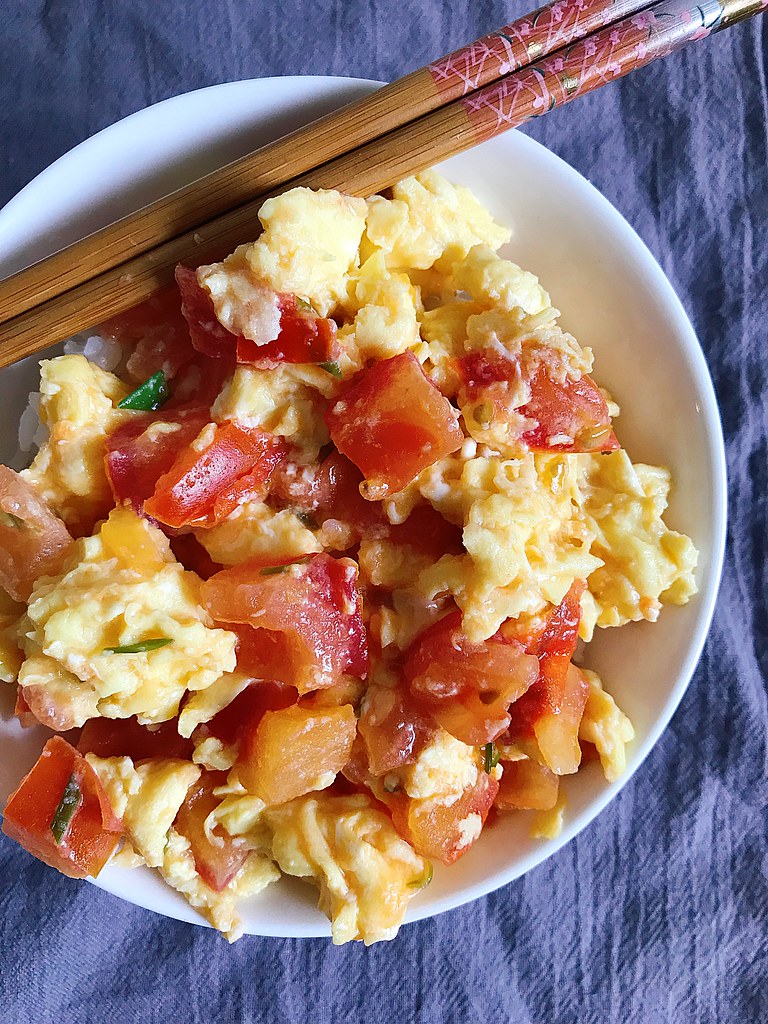
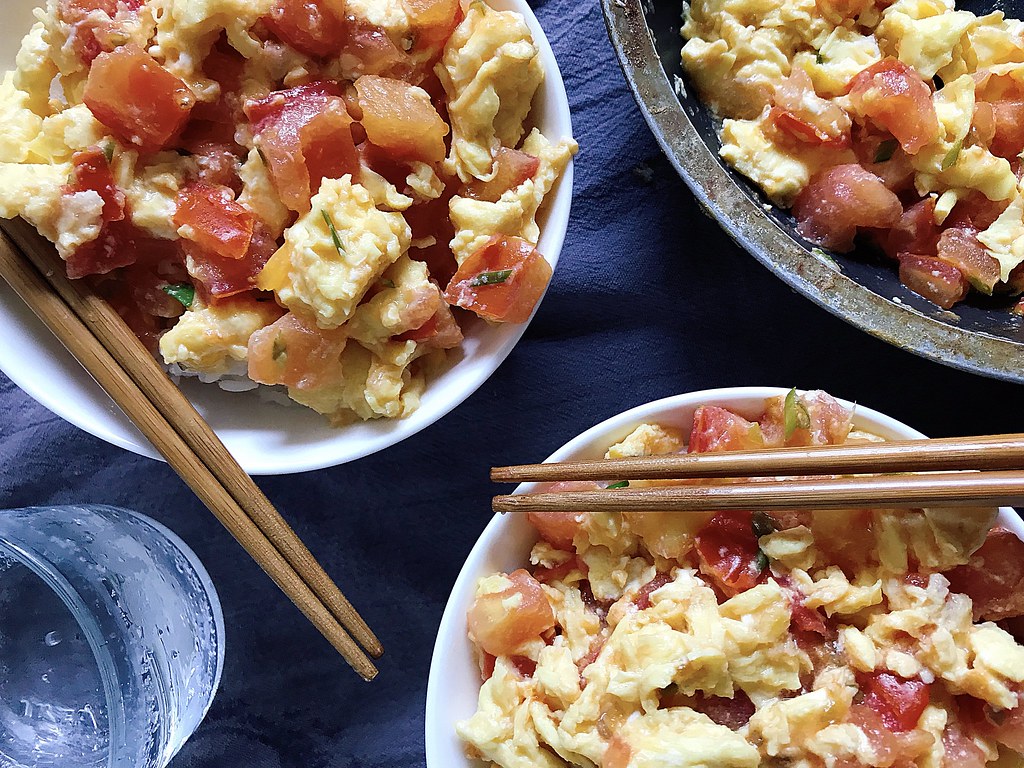
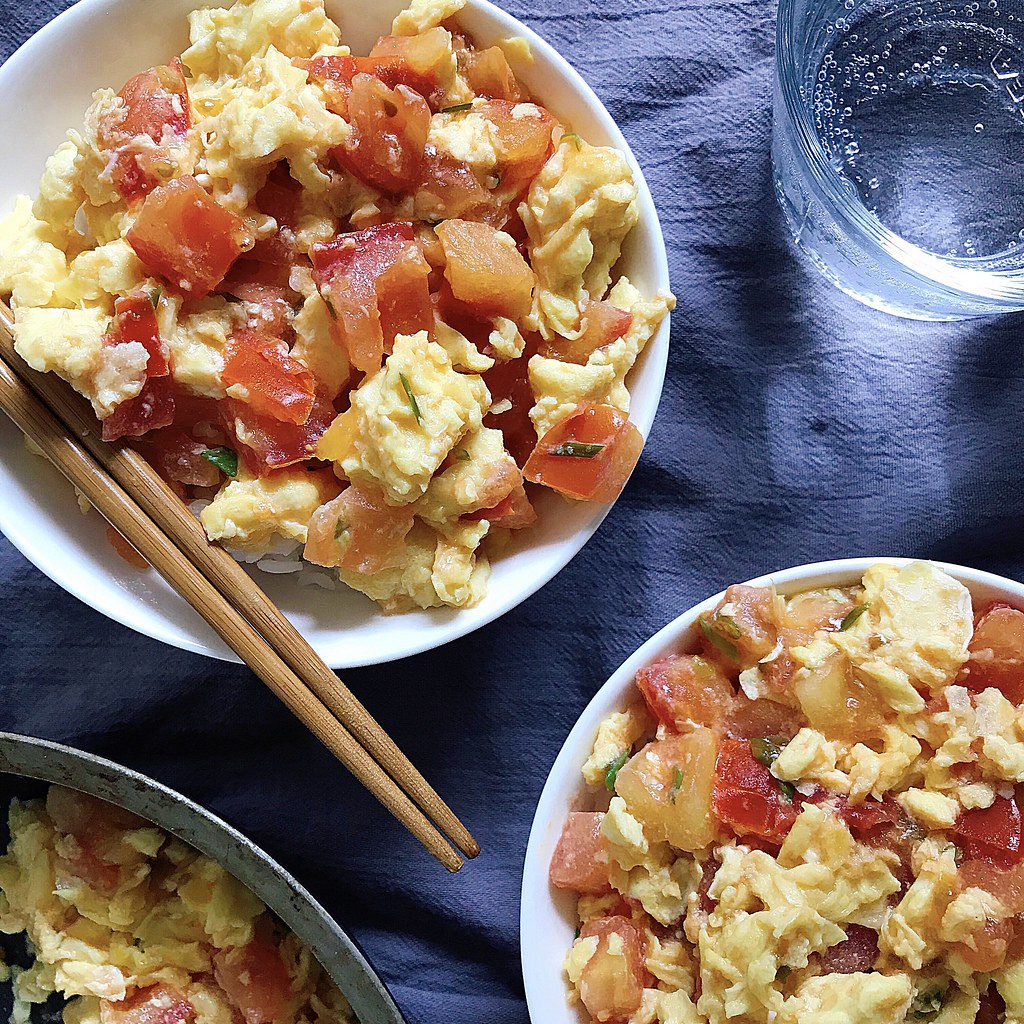
When I first found out that the summer collaboration star ingredient was going to be tomatoes, I envisioned a really photogenic heirloom tomato pizza or shakshuka, but the more I thought about it, the more my mind kept going back to this homely, homey dish. It will never win awards for its looks, but it's so incredibly easy to make and delicious that I thought it was worth dusting off from my archives and writing up again.
The thing is, after making this over the many years, it's become one of the few dishes I can make without consulting a recipe. So I figured I'd write it the way I make it. If you really need to follow one (at least the first few times), check out my old post about it. But I bet you'll be making this so many times that eventually you'll be able to make it like I do!
Tomato and Eggs over Rice
serves 1 hungry girl or 2 as a side dish
1 large tomato or 2 smaller tomatoes, total volume about the size of your first
3 eggs (add a 4th egg if your tomatoes are really big; you want about an equal volume of tomato:egg)
Kosher salt, to taste
About a tablespoon chopped scallions (I usually just harvest a few stalks from the ones I have growing on my windowsill)
A splash of rice wine
Sesame oil
Cooking oil
A splash of rice wine vinegar
A pinch of sugar
About 1/2 teaspoon of cornstarch
Cooked rice
Crack the eggs into a bowl and add a few pinches of salt. Whisk with a fork until nicely beaten. Let sit while you prepare the tomatoes and scallions.
Chop the tomatoes into a small dice. Chop the scallions. Add a splash of rice wine and sesame oil to the eggs and whisk again.
Heat a non-stick pan over medium heat and add some oil. When the oil is hot, add the beaten eggs and scramble into large curds. When the eggs are 90% cooked, transfer back to the small bowl.
Add a bit more oil to the pan and heat again. Add the chopped tomatoes, a splash of rice wine vinegar, a pinch of sugar, and a larger pinch of salt. Cook for a minute, then add the chopped scallions.
Add a tablespoon of water to the cornstarch to make a slurry and then add to the tomatoes. Stir until the liquid thickens, then add the eggs back into the pan. Cook until well combined and serve immediately over rice.
Check out the #wesaytomatoes hashtag on Instagram to see the rest of the collaborations!
Next: My Communion Bread
Previously: Cherry Pit Ice Cream with Cherry Ripple and Brown Butter Streusel
Two Years Ago: Zucchini Pizza
Four Years: Grace's Ginger Scallion Fish
Five Years Ago: S'mores Brownie Ice Cream Sandwiches
Monday, June 8, 2015
Tofu Tikka Masala
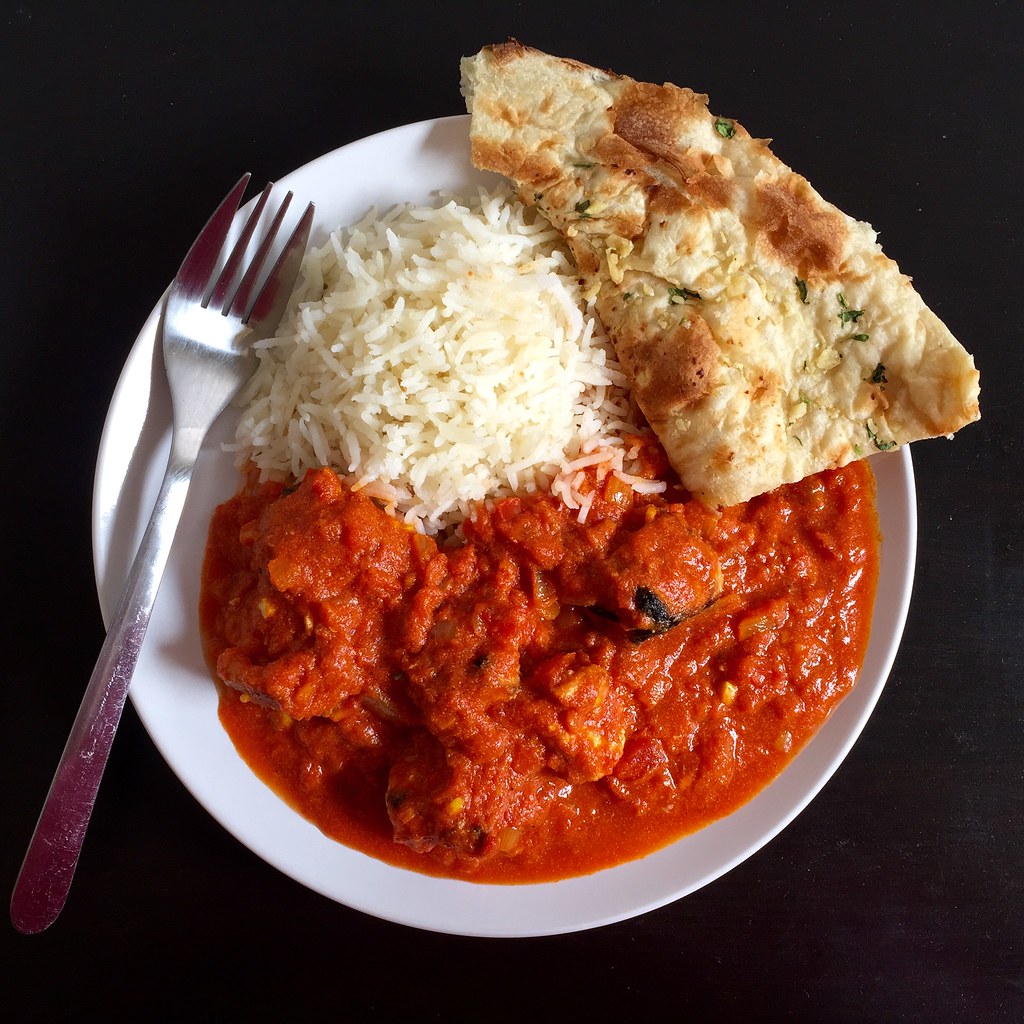
The Food52 recipe is itself adapted from the Cook's Illustrated chicken tikka masala recipe. I love that America's Test Kitchen took this exotic dish and made it accessible to the typical American home. All the ingredients are easily found at just about any grocery store, and you don't even need a tandoor to cook the tofu, just your broiler and a wire rack set over a rimmed baking sheet. I'd recommend spraying the wire racks with cooking spray beforehand so that they're easier to clean after.
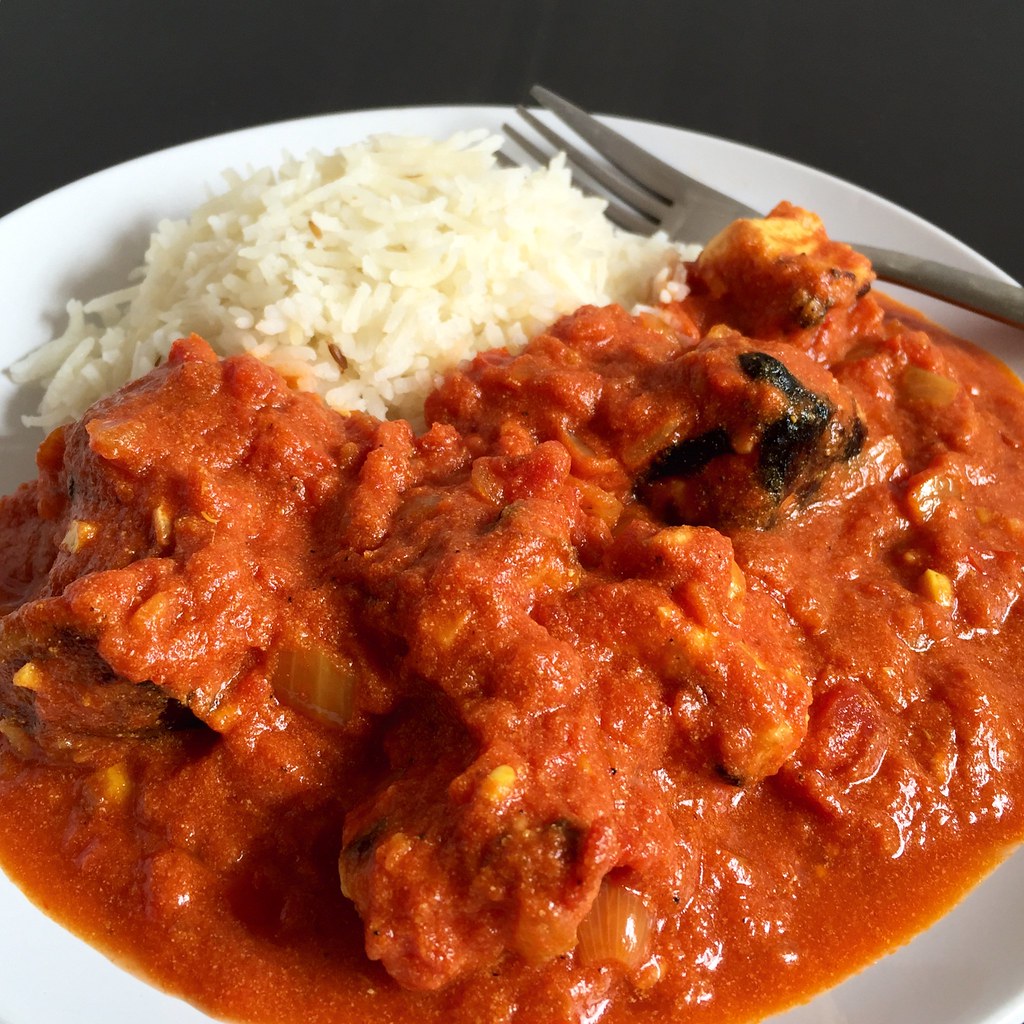
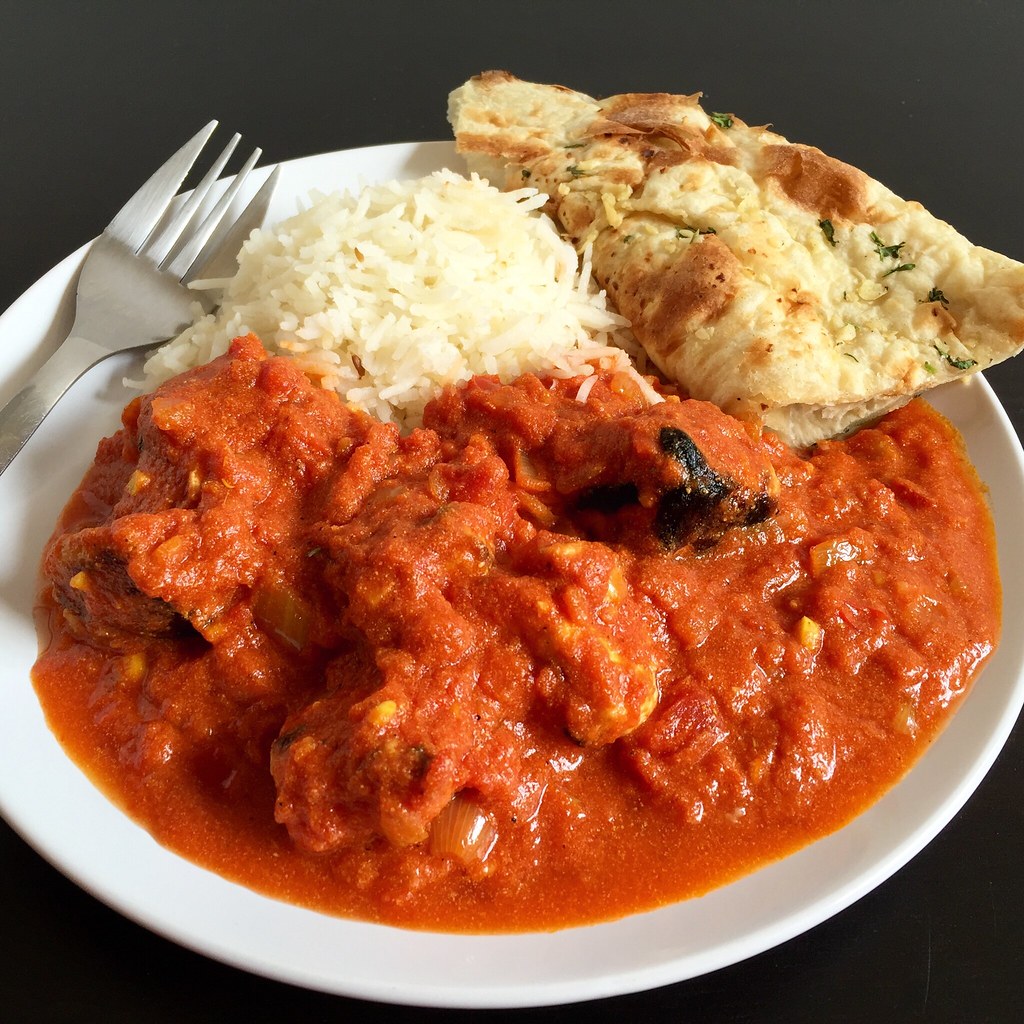
I think I like the tofu version even more because I used to find the chicken kind of dry. The tofu stays moist and is packed full of flavor from the spice rub and yogurt dip. For these pictures, I followed the Food52 version and used half and half, but in the recipe below I changed it back to heavy cream like it says in the Cook's Illustrated version because I like my sauce a little creamier. I also left out the cilantro since I hate the herb, but if it's your thing, definitely add some as a garnish at the end.
Tofu Tikka Masala (lightly adapted from Food52)
serves 4
For the tofu:
14 oz. extra-firm tofu, drained
1/2 tablespoon fresh ginger, minced
3 teaspoons garlic, minced
2 tablespoons vegetable oil
1 cup Greek yogurt
1/2 teaspoon ground coriander
1/2 teaspoon ground cumin
1 teaspoon salt
1/4 teaspoon cayenne pepper
Pat the tofu dry and slice into 3/4" slabs. In large bowl, whisk together the ginger, garlic, oil, and yogurt; set aside.
Combine the coriander, cumin, salt, and cayenne in small bowl. Coat all sides of the tofu slabs with the spice mixture. Set aside while you start making the masala sauce.
For the masala:
3 tablespoons vegetable oil
1 1/4 cups onion, diced
2 teaspoons fresh ginger, minced
3 teaspoons garlic, minced
1 tablespoon garam masala
1 tablespoon tomato paste
1/2 teaspoon salt, plus more to taste
2 teaspoons sugar
28 oz. can crushed tomatoes
2/3 cup heavy cream
Heat oil in large Dutch oven over medium heat until shimmering. Add the onion and cook, stirring frequently, until light golden, 8 to 10 minutes.
Add the ginger, garlic, tomato paste, and garam masala; cook, stirring frequently, until fragrant, about 3 minutes.
Add the salt, sugar, and crushed tomatoes and bring to boil. Reduce heat to medium-low, cover, and simmer for 15 minutes, stirring occasionally. Stir in cream and return to simmer. Remove from heat and cover to keep warm.
While sauce simmers, adjust oven rack to upper-middle position (about 6 inches from heating element) and turn on the broiler. Dip the tofu into the yogurt mixture (tofu should be coated with thick layer of yogurt) and arrange on an oiled wire rack set in a foil-lined rimmed baking sheet or broiler pan. Discard excess yogurt mixture. Broil tofu for 12-15 minutes, flipping halfway through cooking.
Cut the tofu into chunks and stir into the warm sauce (do not simmer tofu in sauce). Adjust seasoning with salt, and serve with basmati rice and/or naan.
Next: Garlic Naan
Previously: Drunken Noodles (Pad Kee Mao) with Tofu
Last Year: Homemade Ginger Beer
Two Years Ago: Rosemary Honey and Lemon Frozen Yogurt
Five Years Ago: Homemade Dulce de Leche and Dulce de Leche Ice Cream
Six Years Ago: Butter Mochi Cupcakes
Tuesday, February 17, 2015
First Night in Florence Spaghetti
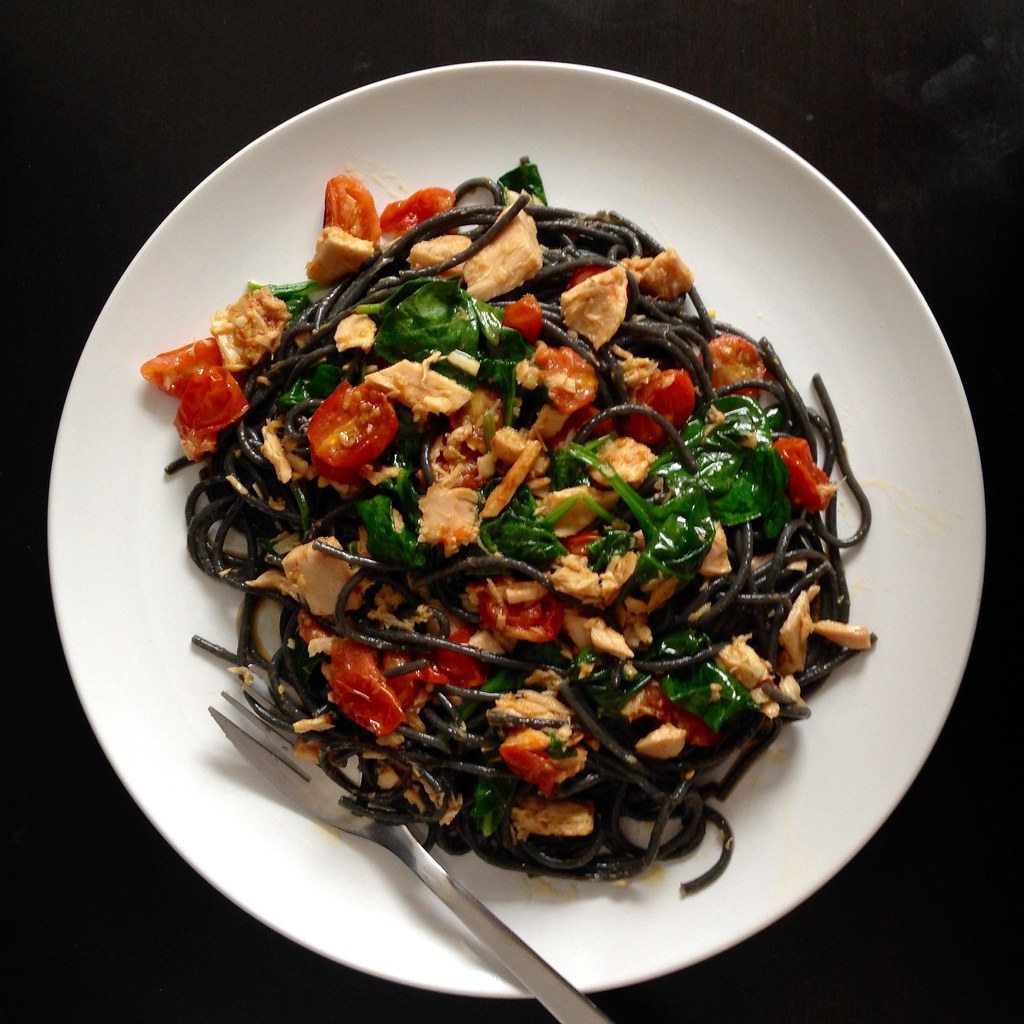
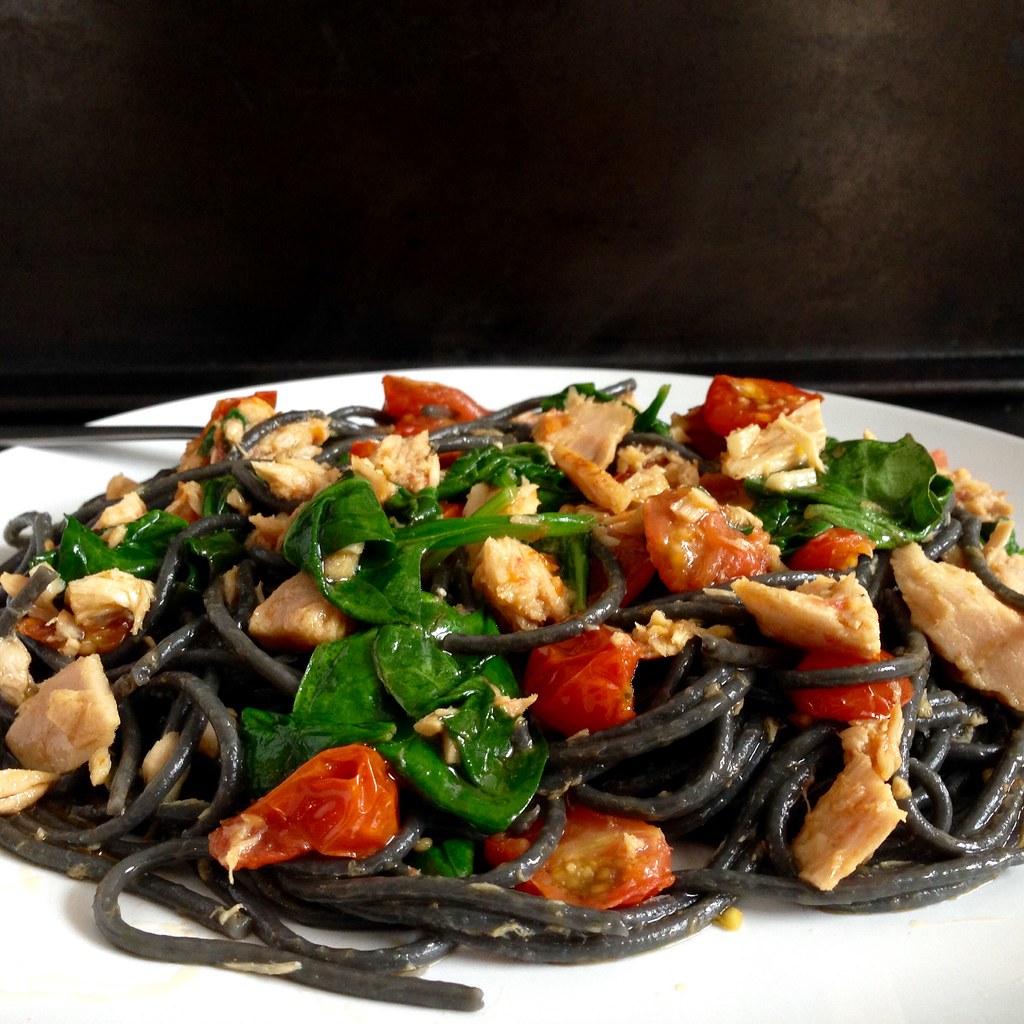
I have made this dish four times in as many days since I first discovered it. Maybe it's because I'm feeling nostalgic for Italy and wanting to get out of this crazy New England snow. Maybe it's the way the olive oil, tomatoes, and lemon juice come together like magic to make this unbelievably fresh tasting sauce. Or maybe it's the way the tuna and garlic linger on the tongue and then in my dreams. Whatever it is, you need to make this pasta stat.
This dish comes together quickly; while the pasta is cooking, you'll be starting the sauce so that by the time the pasta is almost al dente, you toss it into the pan that the sauce is in to finish cooking it. So I usually start cutting up the tomatoes and mincing the garlic while I wait for the water to boil.
For this recipe, make sure you use the tuna that's packed in olive oil, not water. And don't pour out the oil; add it to the sauce. Speaking of olive oil, you'll want to use a good one, and lots of it. I used the last of the olive oil I got from Tuscany for this, and it was worth it. I also used the last of the squid ink pasta I got from Venice since I figured the brininess would go well with the tuna (and because it's photogenic). All this just means I'll have to go back to Italy soon to stock up again!
First Night in Florence Spaghetti (adapted from The Solitary Cook by way of Food52)
serves 2
1/2 package of spaghetti
Kosher salt and freshly ground pepper, to taste
Good olive oil, and lots of it
1 pint grape tomatoes, quartered
3 cloves garlic, minced
1 tin of tuna packed in olive oil
A few handfuls of spinach or Swiss chard leaves
Juice of 1/2 a lemon
Get a large pot of salted water boiling. Add the pasta and start a timer to cook for 3 minutes less than what the package calls for (i.e. if the package says to cook the spaghetti for 10 minutes, cook it for 7).
In a pan large enough to hold all the pasta, add 5-6 generous glugs of olive oil heat on medium-high (it should be at least twice what you think you'll need). Once the oil starts to shimmer, add the tomatoes and a generous pinch of salt. While the tomatoes soften, you may want to (carefully!) smoosh them to help release their juices. When there are 2 minutes left on the pasta, add the minced garlic. When there is 1 minute left on the pasta, add the tuna plus the oil it's packed in, breaking up any large chunks of fish.
When the timer is up on the pasta, use tongs or a pasta spoon to add the spaghetti to the pan. Add some of the pasta cooking water to the pan too (the original recipe calls for a few ladlefuls, but I like a little less than that). Add the greens and lemon juice and toss everything around, cooking until the leaves is just wilted. Taste the sauce and season with salt and pepper as needed.
Next: Hugo & Victor's Pink Grapefruit Tart
Previously: Odile's Fresh Orange Cake
Last Year: Okonomiyaki
Six Years Ago: New England Clam Chowda with Homemade Oyster Crackers
Friday, September 26, 2014
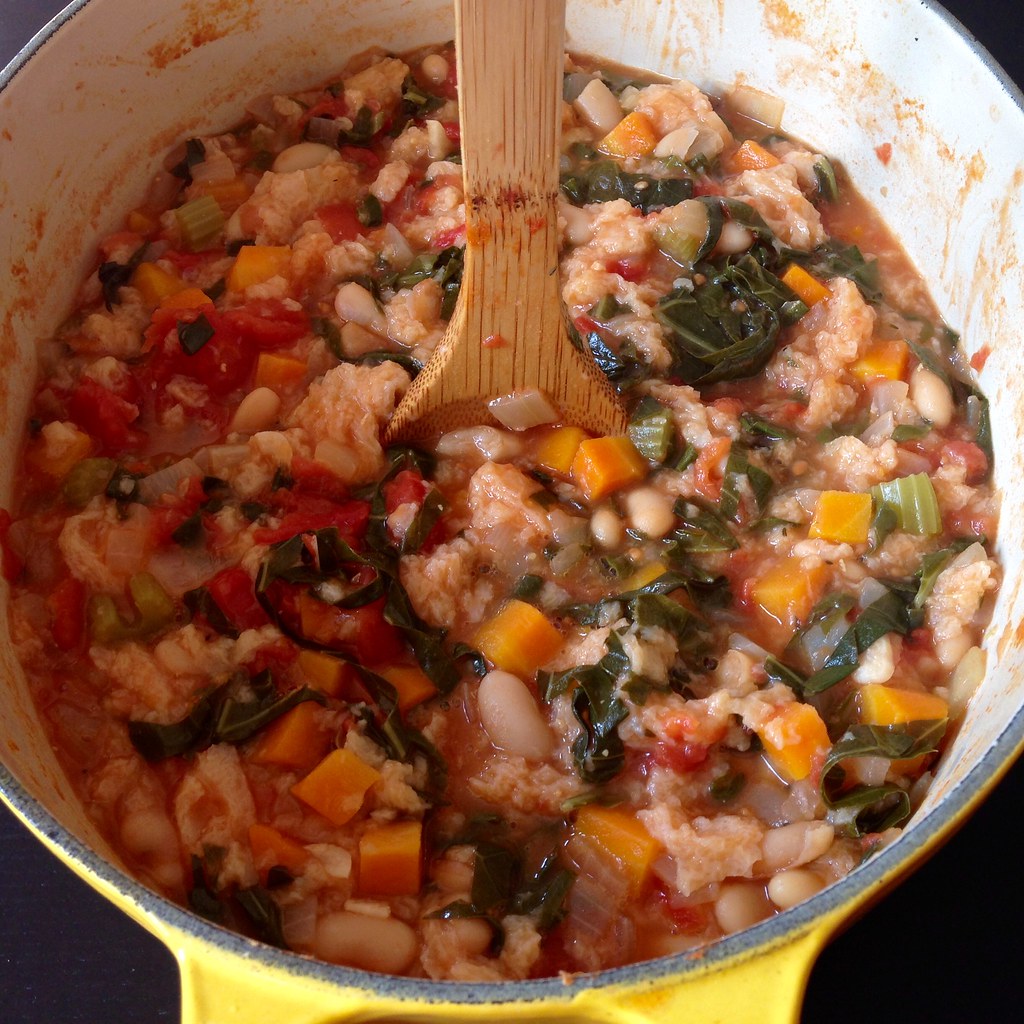
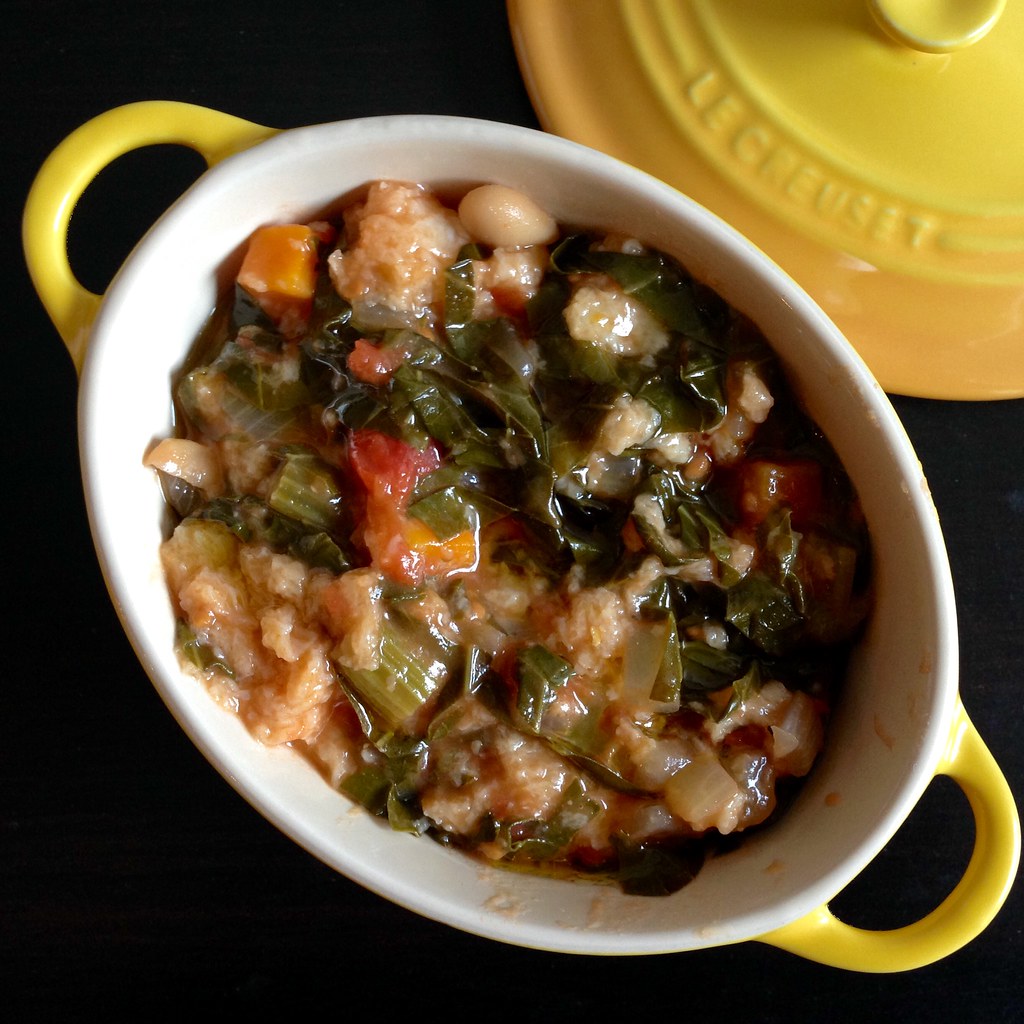
Ribollita (Tuscan Bread Soup)
I was lucky enough to go back to Italy again for the third time in 15 months thanks to my cousin, Leslie. Last time we did Rome and Venice; this time we explored Florence, northern Tuscany (pictured above) and Cinque Terre and were joined by my friend, Sarah Ruth.
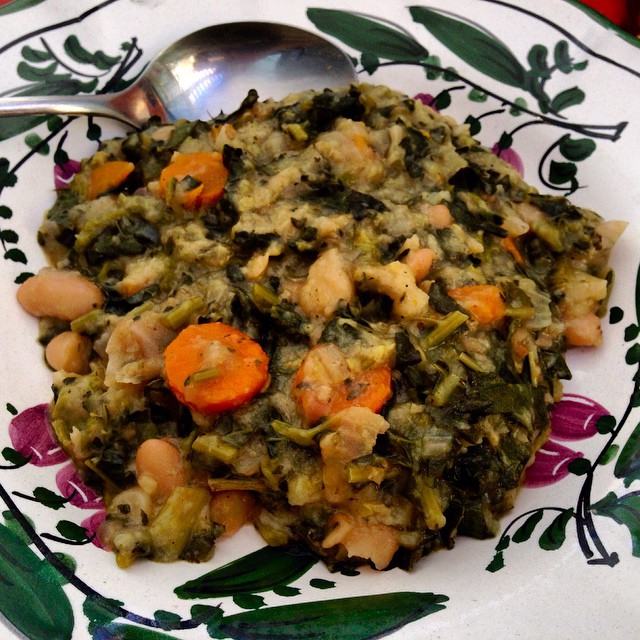
My main purpose in Florence was to eat as much good gelato as I possibly could. To that effect, our first stop after checking into our hotel was to go to Triangolo delle Bermuda to try their artisanal gelato. Once we realized they also served food, I figured it would be better to eat lunch before getting our gelato, so I ordered the ribollita, a soup I'd heard was a Tuscan specialty.
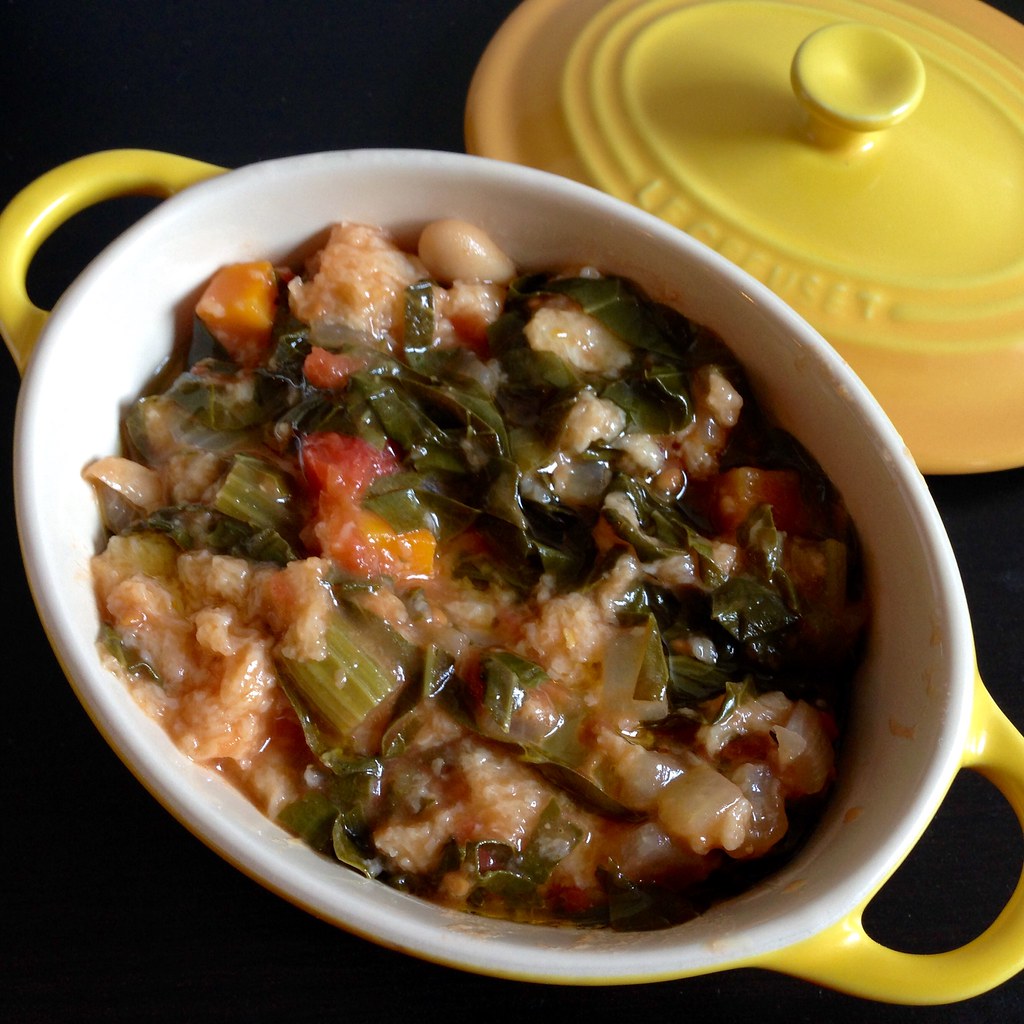
Ribollita translates to "reboiled" and is a result of reheating leftover minestrone-like soup with stale bread to create a thick, hearty potage. I've read there's actually a three day process where on the second day you layer the leftover soup with the bread and bake it with a layer of thinly sliced red onions on top and then reboil it on the third day. For simplicity's sake, I skipped the second day and jumped straight to the reboiling.
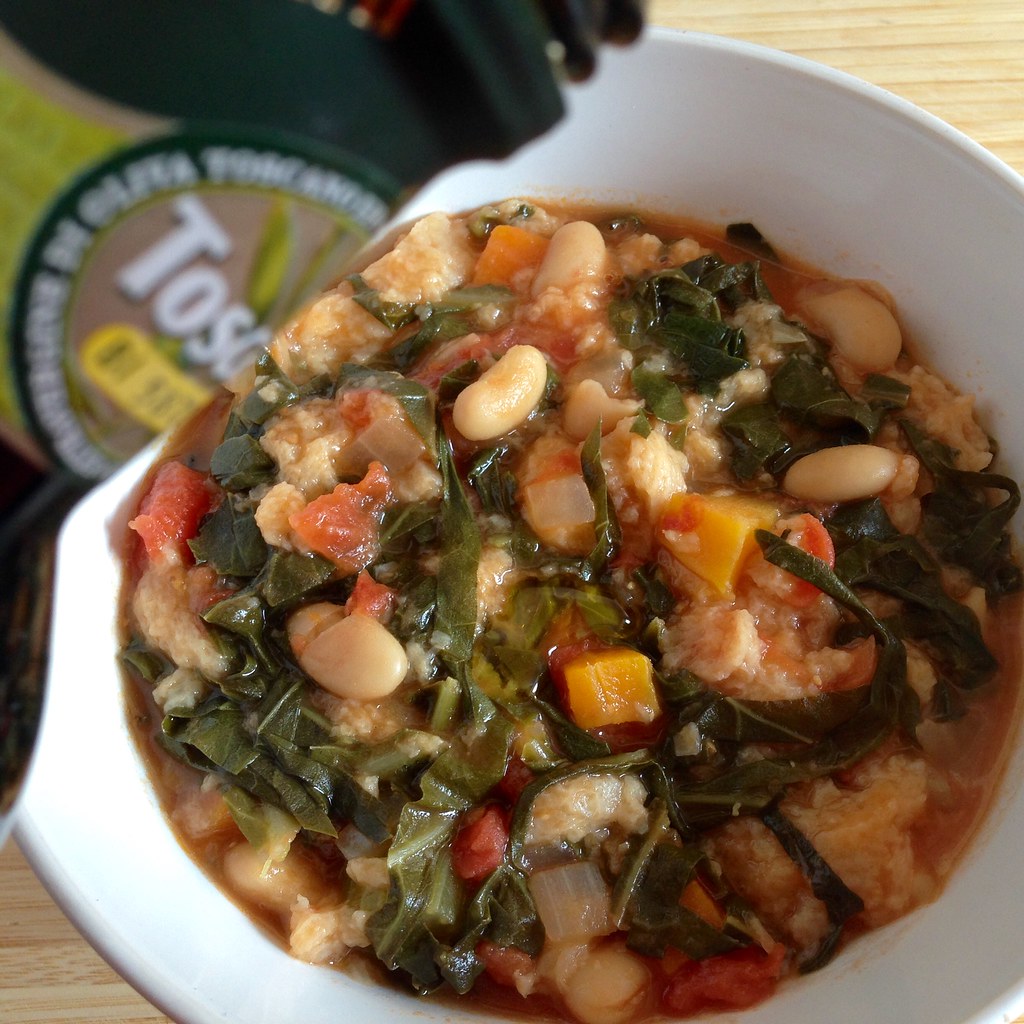
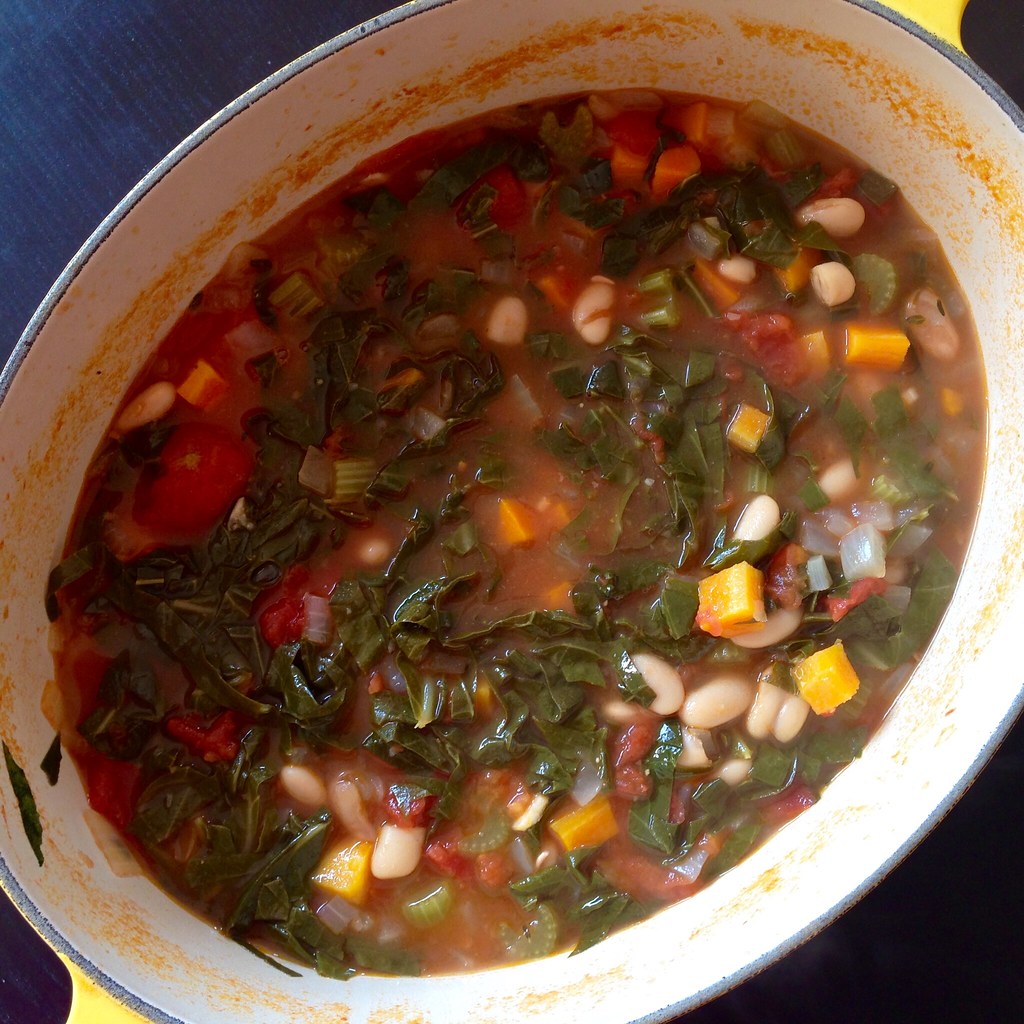
Since ribollita is originally peasant food, there's a multitude of recipes for it (some even argue that since it was created before the advent of tomatoes in Italy, there shouldn't be any tomatoes in it), but traditionally the main ingredients are always cavolo nero (also called lacinato kale or Tuscan kale), cannellini beans, and stale Tuscan bread. Since I had recently received collard greens in my Boston Organics delivery, I opted to use that instead of the cavolo nero, which I realize is taking great liberties with the dish, but it still ended up tasting really good, if with a slight Southern twist. You can also another hearty green (like kale or Savoy cabbage) or a combination of a hearty green and a more delicate green (like Swiss chard or spinach).
I learned that Tuscan bread traditionally doesn't contain any salt because the city-state of Pisa used to control the salt trade in that region, and the Florentines hated the Pisans. I found a loaf of bread labelled "Tuscan bread" at my local grocery store, but when I looked at the label, I wasn't surprised to see salt listed in the ingredients. It'll probably be impossible to find a loaf of bread without salt in it outside of Tuscany, so just use a hearty, country-style bread.
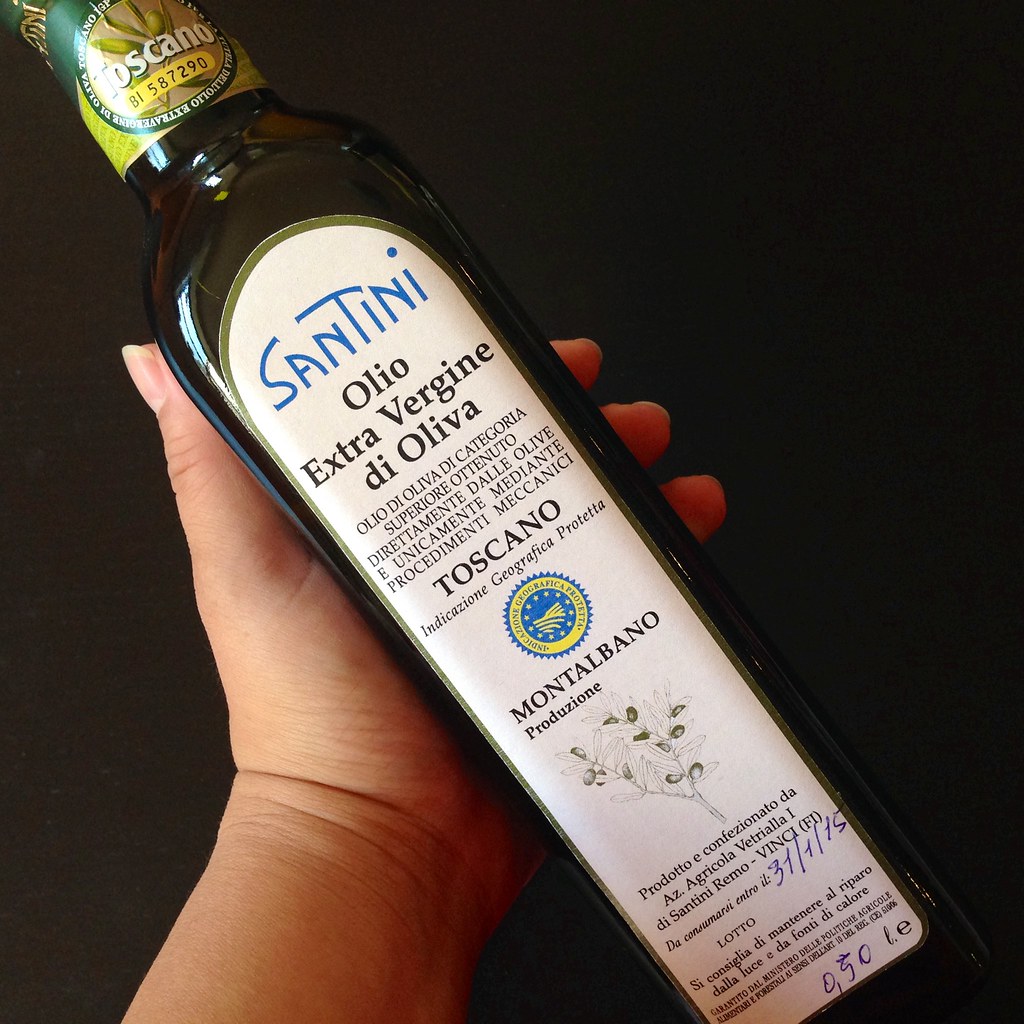
Back to the ribollita at Triangolo delle Bermuda: the owner, Vitullio, stopped by to talk to us and explained that the soup needed to be topped with some Tuscan olive oil. He grabbed a green bottle and liberally poured some all over my bowl. I took a bite, and and it was like the heavens had opened and I could hear harp music playing. I had never, ever tasted olive oil like that. It was bold and bright and fruity and really elevated the other flavors in the soup. I asked Vitullio for the brand so I could buy that exact bottle, but I think he misunderstood because he just started telling us about the Toscano IGP designation for olive oils and how important it was to buy olive oils with that label. Alas, I never did find out which brand of olive oil that was, but I was now on the hunt for official Toscano IGP olive oils.
A few days later, I went on a truffle hunting and wine tasting tour, which if you ever get the chance, you should definitely do! We spent the first part of the tour following Ciocco (short for cioccolata), the truffle hunting puppy, around a hazelnut grove. He managed to find 5 black summer truffles, which were used in our "light lunch" back at the farm. The "light lunch" turned out to be a three course meal with a splendid antipasto plate, a main course of truffle pasta, dessert, and lots and lots of local wine.
Afterwards, we drove to Fattoria di San Michele a Torri, an organic farm and winery in the Chianti region, for the wine tasting. We started off with one of their olive oils, which although beautifully bottled, was way too grassy and spicy for me. I realized that not all olive oils made in Tuscany were going to taste the same and decided I was going to have to taste test the olive oil before I bought one.
Luckily, I had a chance to do so in the town of Vinci (Leonardo's birthplace). I ended up picking up this Santini, which although fruity, was a little milder than I remember that first olive oil being. All this is to say that not all olive oils are the same, and you should try to find one that you really like to use as a finishing oil.
Ribollita (Tuscan Bread Soup)
serves 6
3 tablespoons olive oil
1 large onion, chopped
2 carrots, chopped
2 celery stalks, chopped
2 garlic cloves, thinly sliced
1 tablespoon fresh thyme, chopped
28 oz. can of whole, peeled tomatoes
1 lb. cavolo nero, or a combination of kale, Savoy cabbage, collard greens, Swiss chard, and/or spinach, de-ribbed and sliced
16 oz. can of cannellini beans, drained
3 cups water
Kosher salt and fresh ground pepper
8 slices of day old Tuscan bread, crusts removed
Good quality extra virgin olive oil, to finish
Day 1: In a large Dutch oven or saucepan, heat the olive oil over medium heat. Add the chopped onion, carrots, celery, and a pinch of salt and cook until the onion is soft and translucent, about 10-15 minutes. If the vegetables start to brown, lower the heat. Add the garlic, thyme, and another pinch of salt and cook for another minute or two, until fragrant.
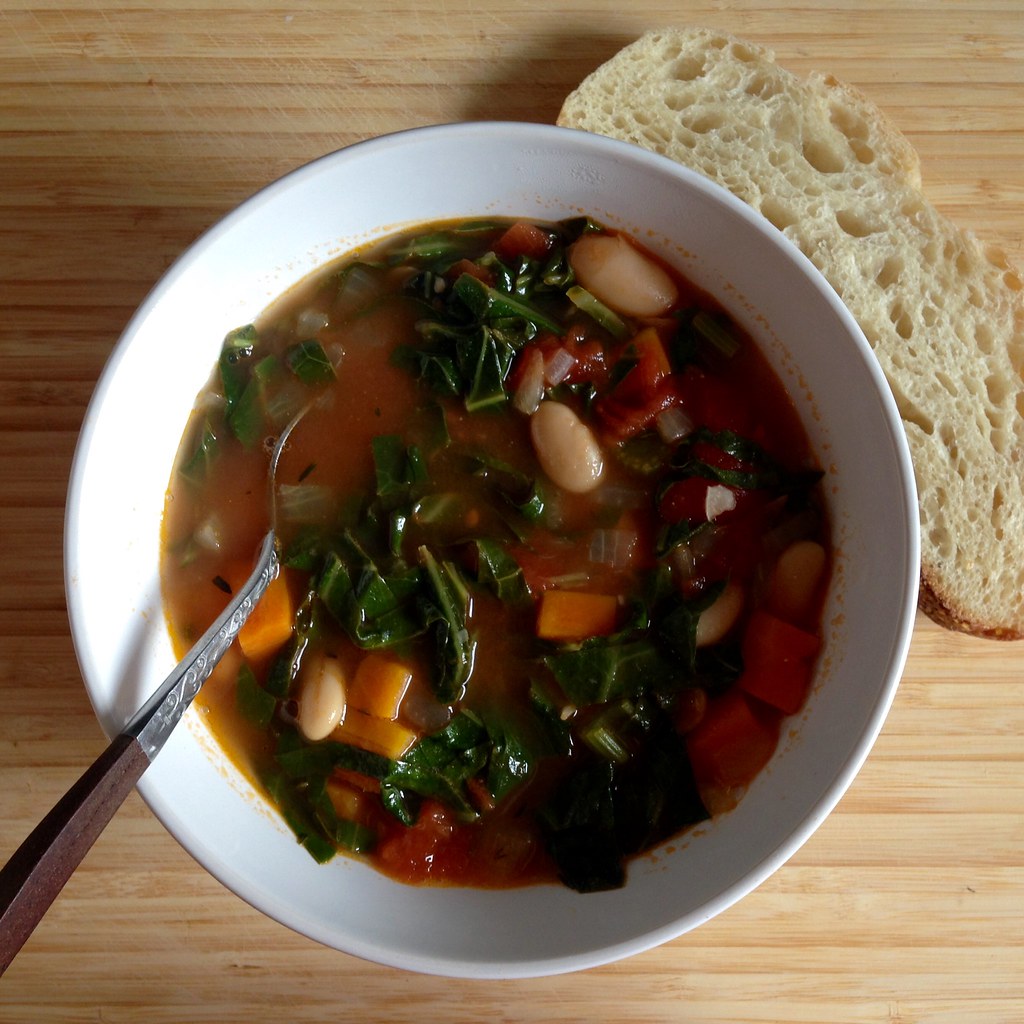
Add the tomatoes and their juices and the sliced greens. Bring to a boil and keep stirring until the greens are wilted and cooked down. Add the beans and enough water to just cover all the vegetables, about 3 cups. Bring to a boil and then lower the heat and simmer until all the vegetables are tender. Salt and pepper to taste. You can serve the soup at this point with some fresh Tuscan bread. Refrigerate the remaining soup.
Day 2: Tear the bread into small pieces and add to the soup. Bring to a boil again, and then simmer for 30 minutes, stirring to dissolve the bread into the soup.
It should be thick enough that you can stand a wooden spoon in the soup. Ladle the soup into bowls and drizzle with a generous amount of your favorite finishing olive oil.
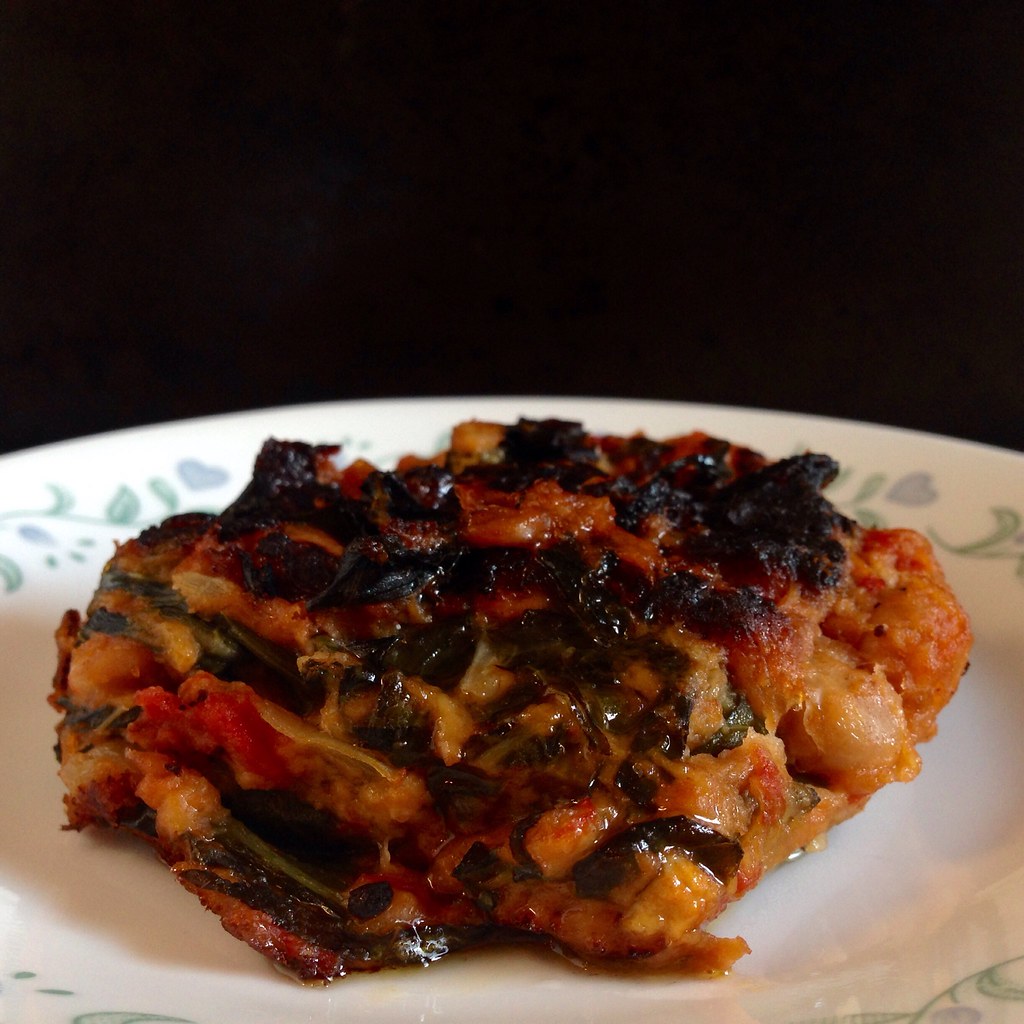
I've also read about Ribollita "Da Delfina" where they make a super thick ribollita and then form patties out of the soup and pan-fry them. I tried doing that with my ribollita on day 3, but it was still a little too watery to keep its shape when I tried to flip the patties. Still, it was an interesting experiment, distilling all the flavors of the soup into a solid form with the added dimension of the caramelization that occurs during the frying.
Previously: Hokkaido Milk Bread Three Ways (Traditional, Braided, and Taro Swirl)
Last Year: Salted Butter Caramel Apple Pie with Vodka Pie Crust
Two Years Ago: Caramelized Onion and Swiss Chard Quiche
8 slices of day old Tuscan bread, crusts removed
Good quality extra virgin olive oil, to finish
Day 1: In a large Dutch oven or saucepan, heat the olive oil over medium heat. Add the chopped onion, carrots, celery, and a pinch of salt and cook until the onion is soft and translucent, about 10-15 minutes. If the vegetables start to brown, lower the heat. Add the garlic, thyme, and another pinch of salt and cook for another minute or two, until fragrant.
Add the tomatoes and their juices and the sliced greens. Bring to a boil and keep stirring until the greens are wilted and cooked down. Add the beans and enough water to just cover all the vegetables, about 3 cups. Bring to a boil and then lower the heat and simmer until all the vegetables are tender. Salt and pepper to taste. You can serve the soup at this point with some fresh Tuscan bread. Refrigerate the remaining soup.
Day 2: Tear the bread into small pieces and add to the soup. Bring to a boil again, and then simmer for 30 minutes, stirring to dissolve the bread into the soup.
It should be thick enough that you can stand a wooden spoon in the soup. Ladle the soup into bowls and drizzle with a generous amount of your favorite finishing olive oil.
I've also read about Ribollita "Da Delfina" where they make a super thick ribollita and then form patties out of the soup and pan-fry them. I tried doing that with my ribollita on day 3, but it was still a little too watery to keep its shape when I tried to flip the patties. Still, it was an interesting experiment, distilling all the flavors of the soup into a solid form with the added dimension of the caramelization that occurs during the frying.
Previously: Hokkaido Milk Bread Three Ways (Traditional, Braided, and Taro Swirl)
Last Year: Salted Butter Caramel Apple Pie with Vodka Pie Crust
Two Years Ago: Caramelized Onion and Swiss Chard Quiche
Labels:
beans,
boston organics,
bread,
collard greens,
Italian,
kale,
olive oil,
soup,
tomato
Tuesday, September 2, 2014
Melanzane alla Parmigiana (Eggplant Parmesan)
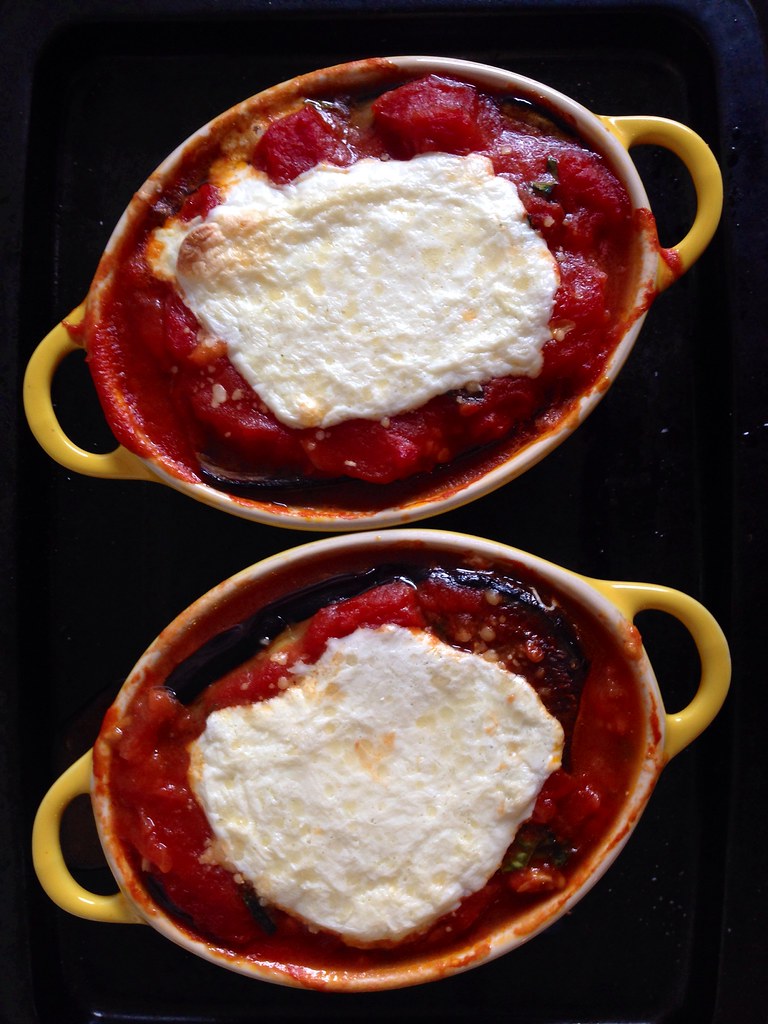
When I used to have to go to the Upper East Side for work, I loved going to this little sliver of an Italian restaurant called Tre Otto. I always ordered the melanzane alla parmigiana, which was actually an appetizer, but quite filling with their awesome bread. It wasn't the usual eggplant parmesan with fried, breaded eggplants cutlets (although an eggplant parm sub is my go to order at pizza/deli joints); this was layers of delicate eggplant, fresh basil, and the most delicious tomato sauce topped with fresh mozzarella and baked to perfection. Sadly, I no longer go to New York for work, and apparently Tre Otto is no more, but luckily, I've been able to recreate the dish at home!
Melanzane alla Parmigiana (Eggplant Parmesan)
serves 2
1 medium eggplant (about 1 lb.)
Kosher salt
Extra virgin olive oil
2 garlic cloves, minced
28-oz. can of San Marzano whole, peeled tomatoes
Small handful of fresh basil leaves, chopped
2-3 tablespoons grated Parmesan cheese
8 oz. ball of fresh mozzarella, sliced thinly
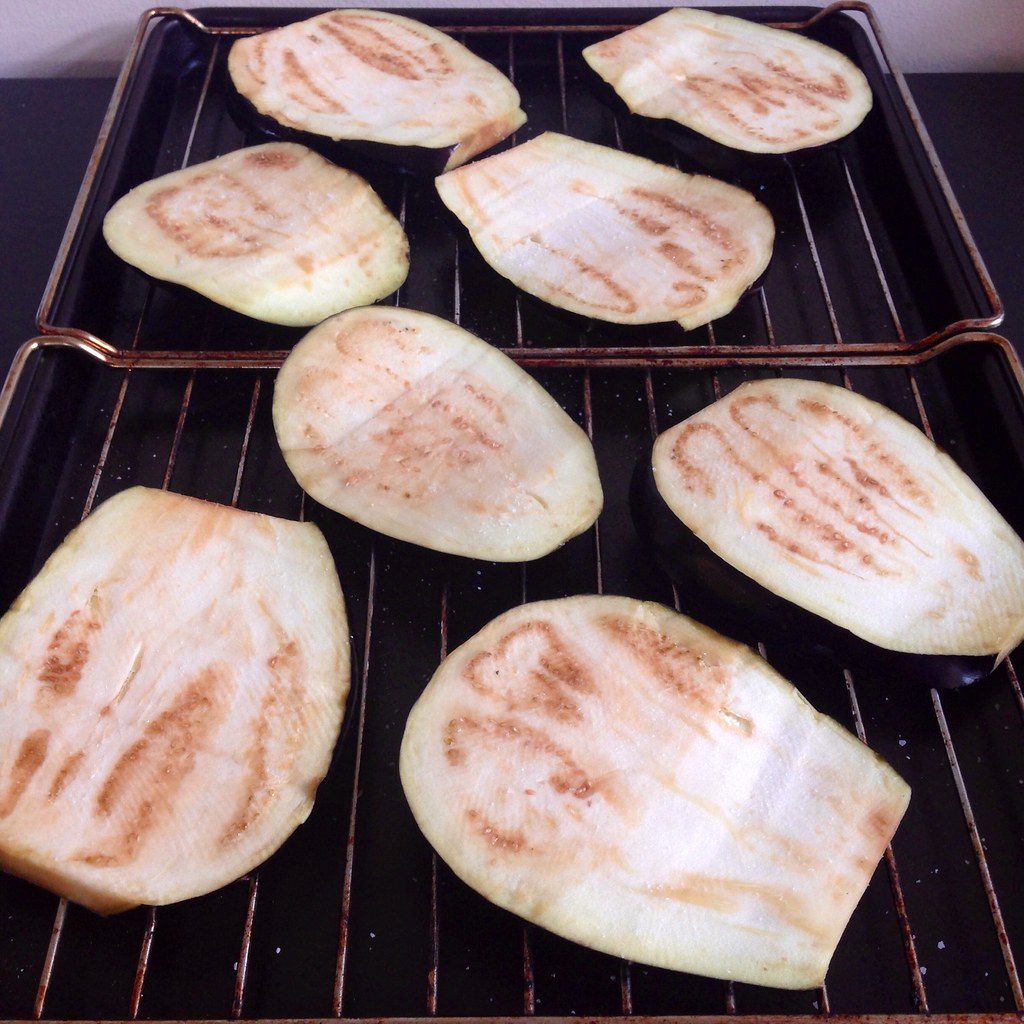
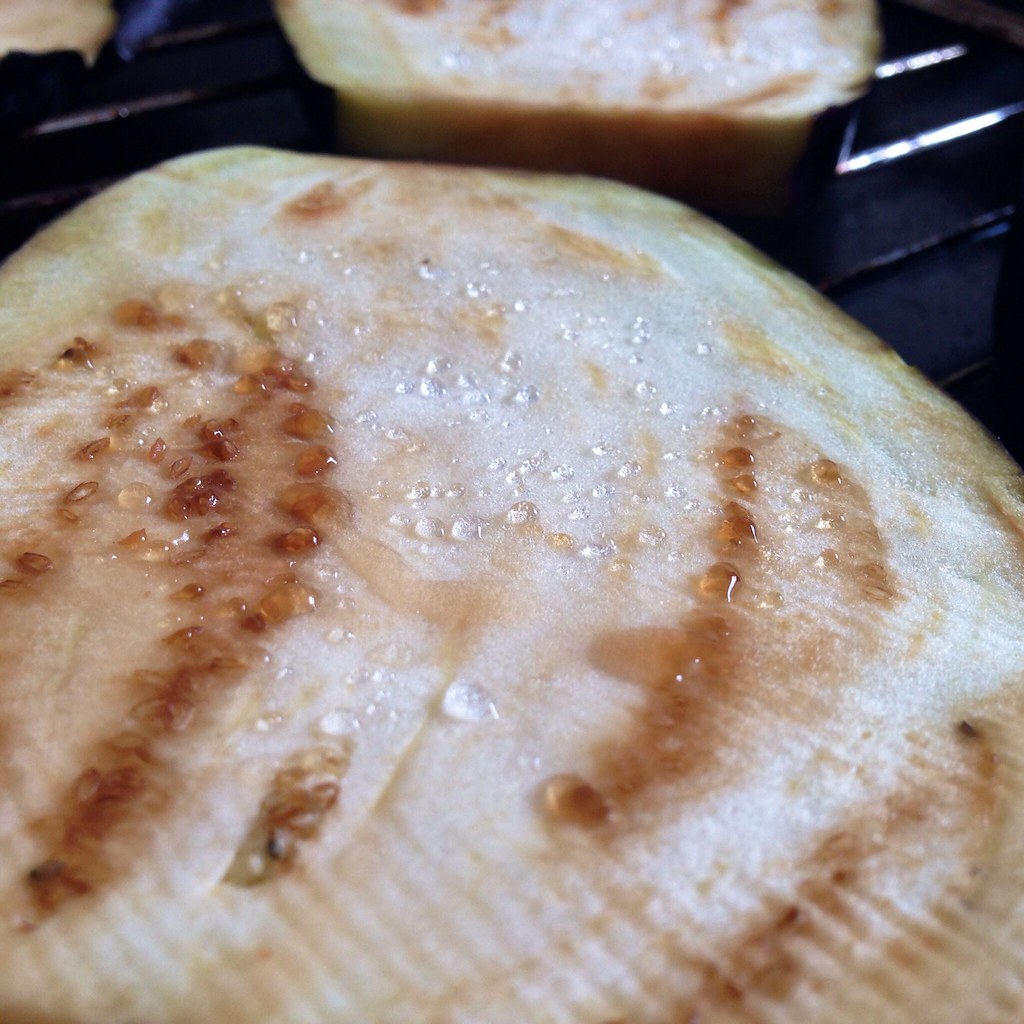
Slice the eggplant into 1/4"-1/2"slices, either lengthwise or crosswise, whatever will best fit into your baking dish. Place the slices on a rack over a rimmed baking sheet or on paper towels and lightly salt on both sides. Set aside while you start the tomato sauce.
Add a tablespoon of olive oil to a large saucepan over medium heat. When the oil is hot, add the minced garlic and cook for minute or two, until softened but not browned. Add the tomatoes with their juices (I like to use kitchen shears to cut the tomatoes up in the can before adding them) and bring to a boil. Lower the heat and simmer while you cook the eggplant, stirring occasionally.
Preheat the oven to 350°F.
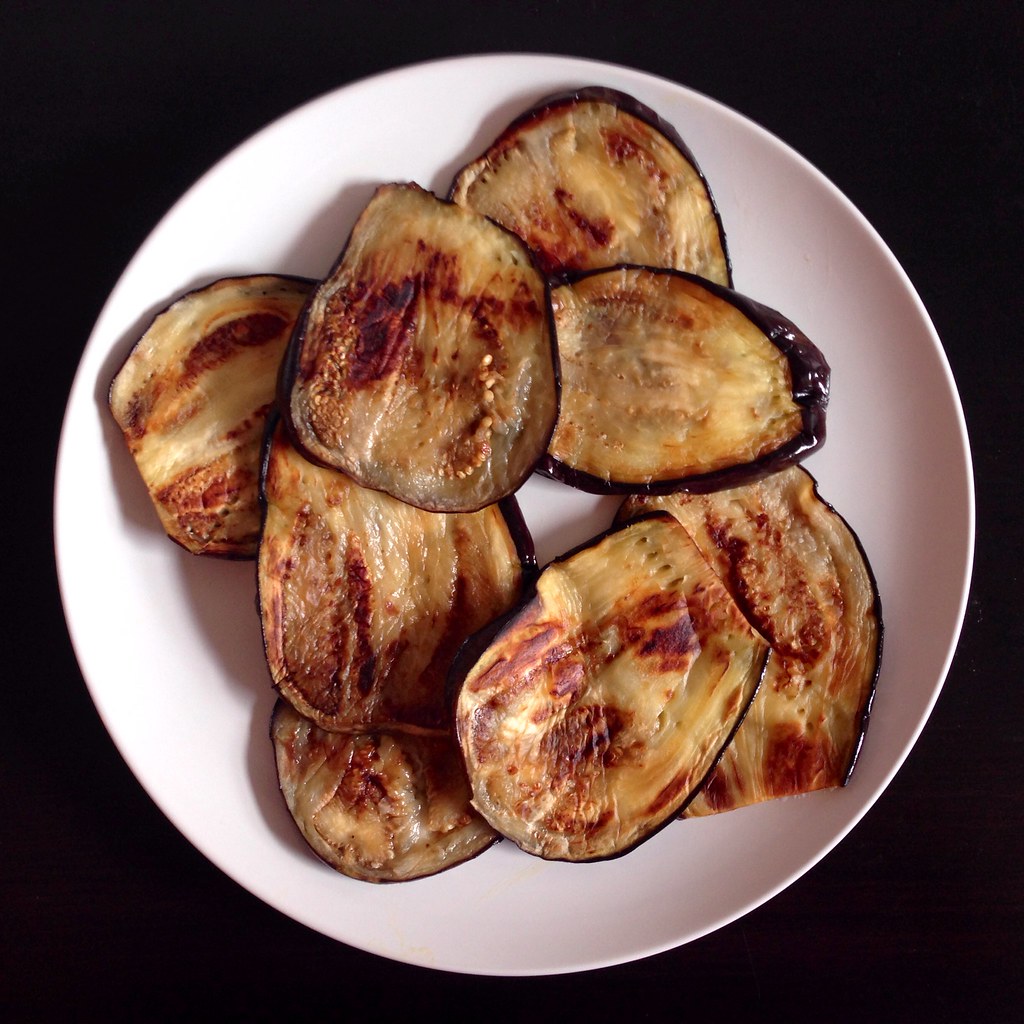
By now, the eggplant slices should have started to sweat. Rinse under cold water and pat dry. Add enough olive oil to lightly cover the bottom of a large skillet and heat on medium-high. Add only enough eggplant slices to cover the bottom of the pan in a single layer. Brush the top of the eggplant slices with olive oil while they are cooking. Cook each side for a couple of minutes until soft and cooked through.
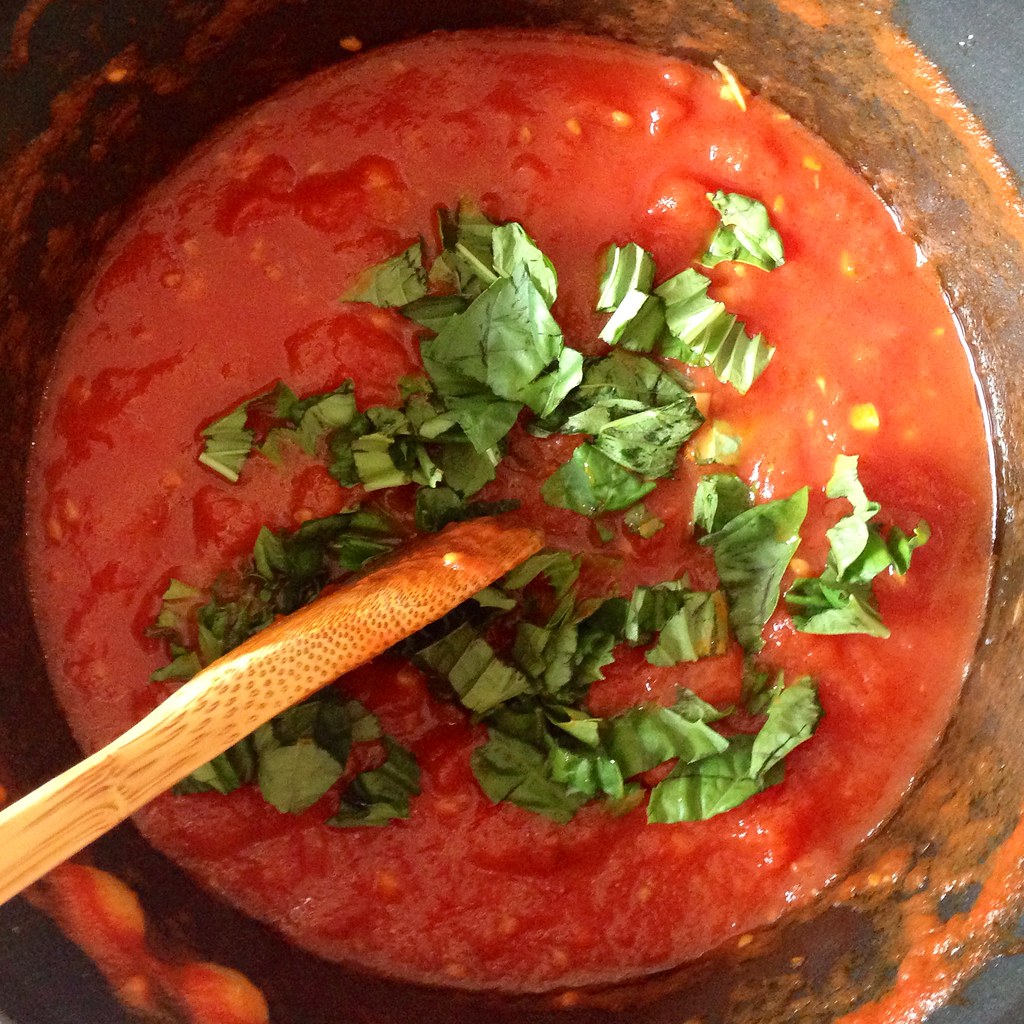
By now the tomato sauce should be almost done. Stir and few times and mash any leftover big pieces of tomato. Salt and pepper to taste. Stir the chopped basil into the tomato sauce and remove from heat.
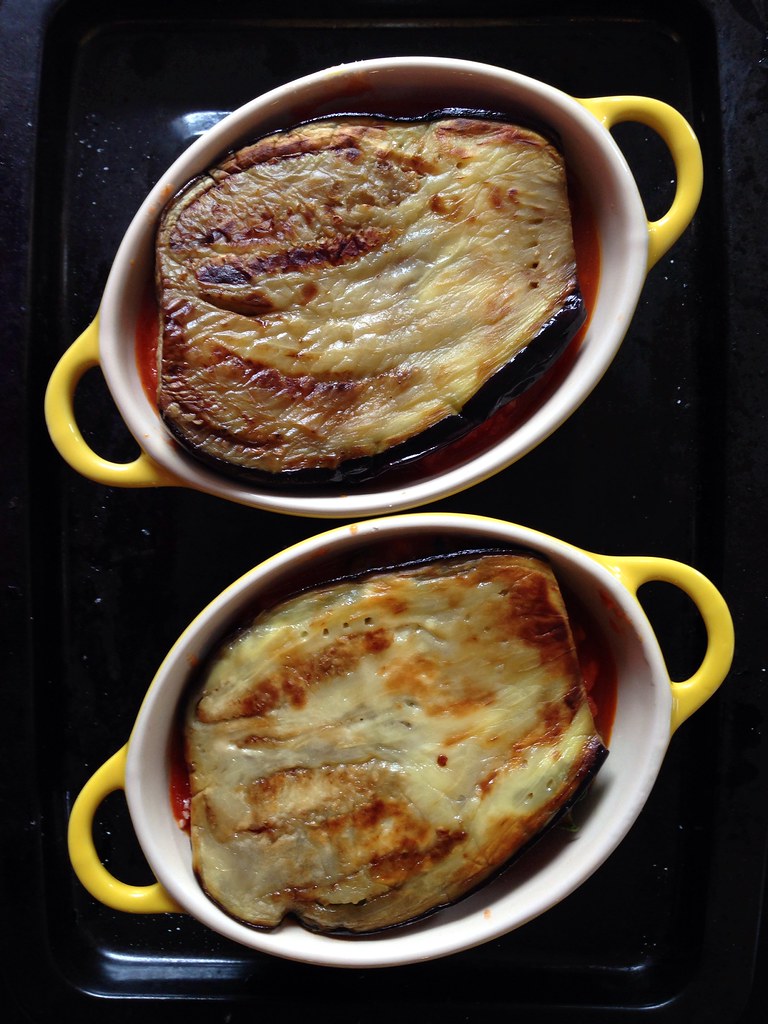
Lightly brush the bottom of a small baking dish or two individual sized ramekins with olive oil. Start with a layer of tomato sauce, then add a layer of eggplant, a sprinkle of grated parmesan cheese, and a layer of fresh mozzarella.
Repeat layers, finishing with a layer of tomato sauce and cheese. Bake for 30 minutes. Let sit for 10 minutes before serving with some crusty bread.
You may have leftover sauce and/or mozzarella cheese, which would be perfect for making a margherita pizza!
Next: Thomas Keller's Caramelized Scallops
Previously: Salt and Pepper Tofu
Friday, June 27, 2014
Shakshuka with Polenta
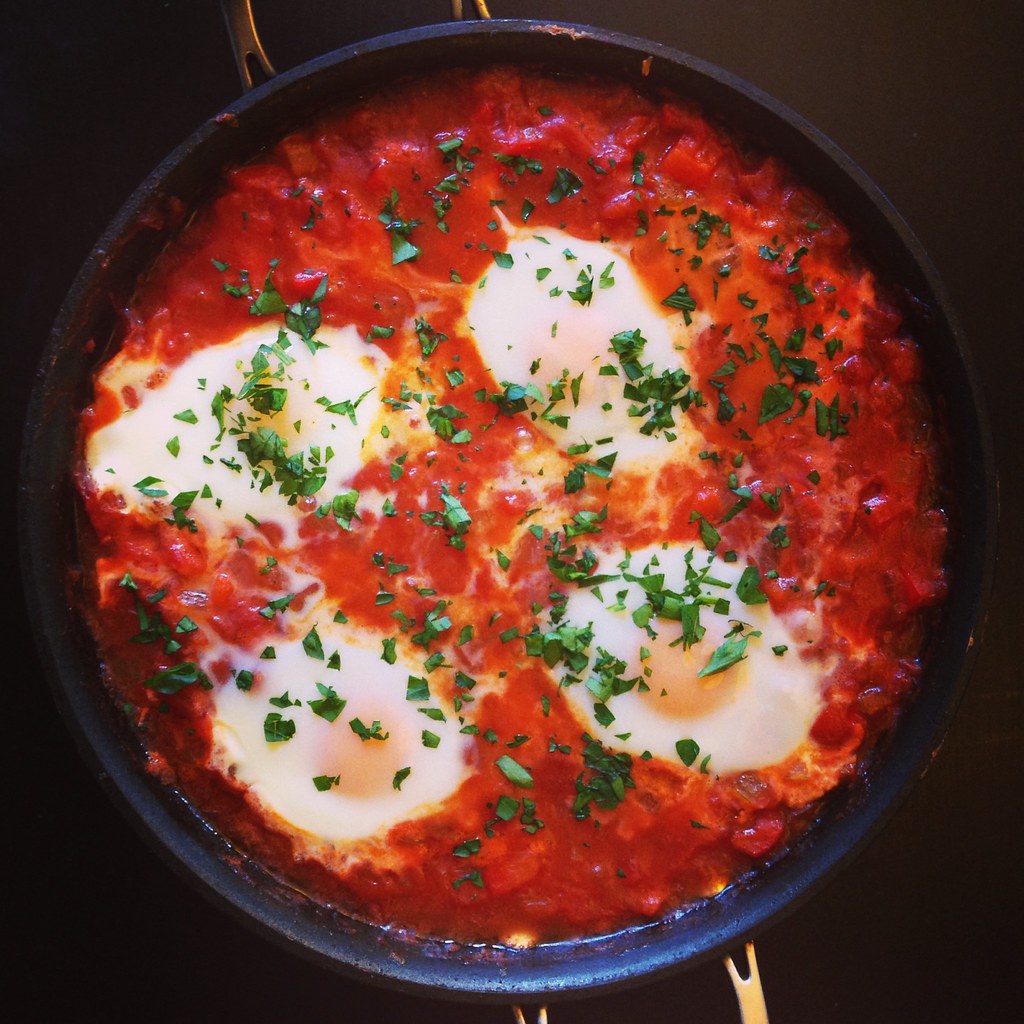
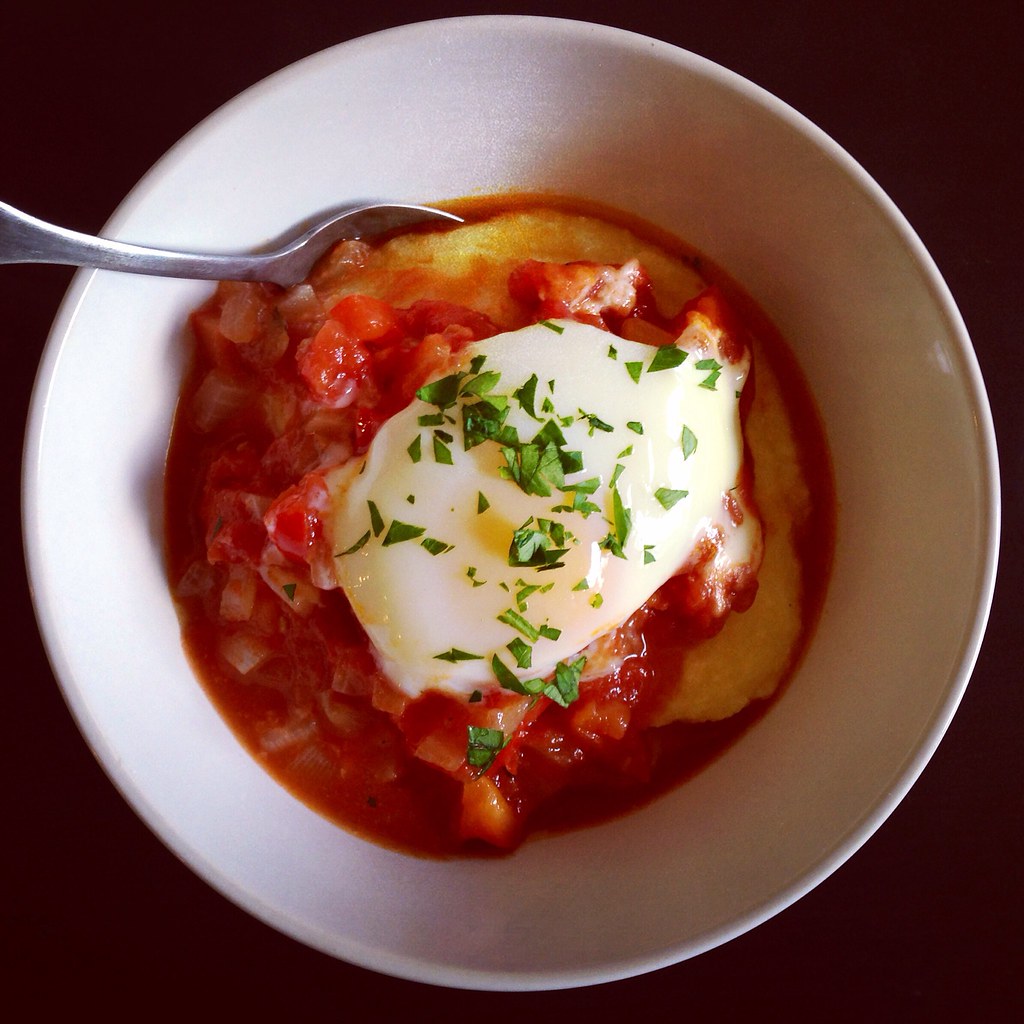
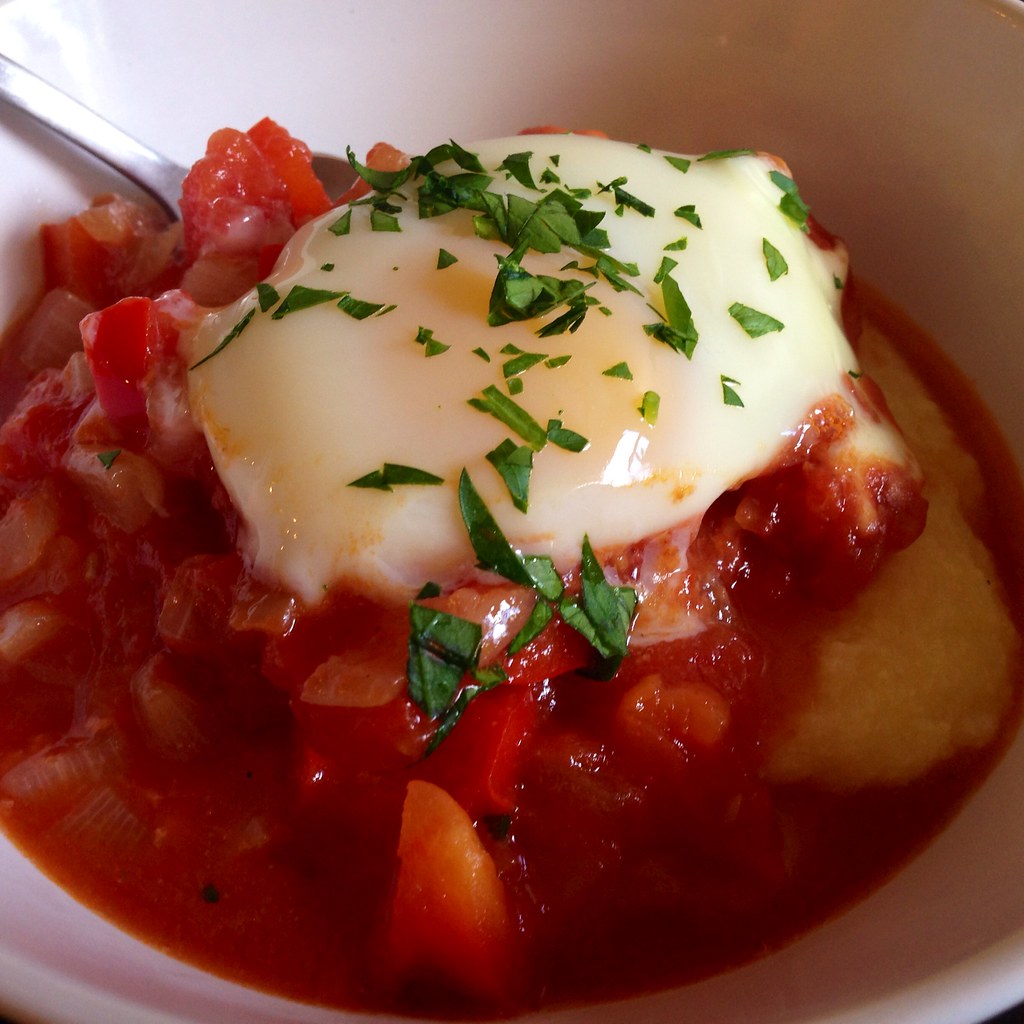
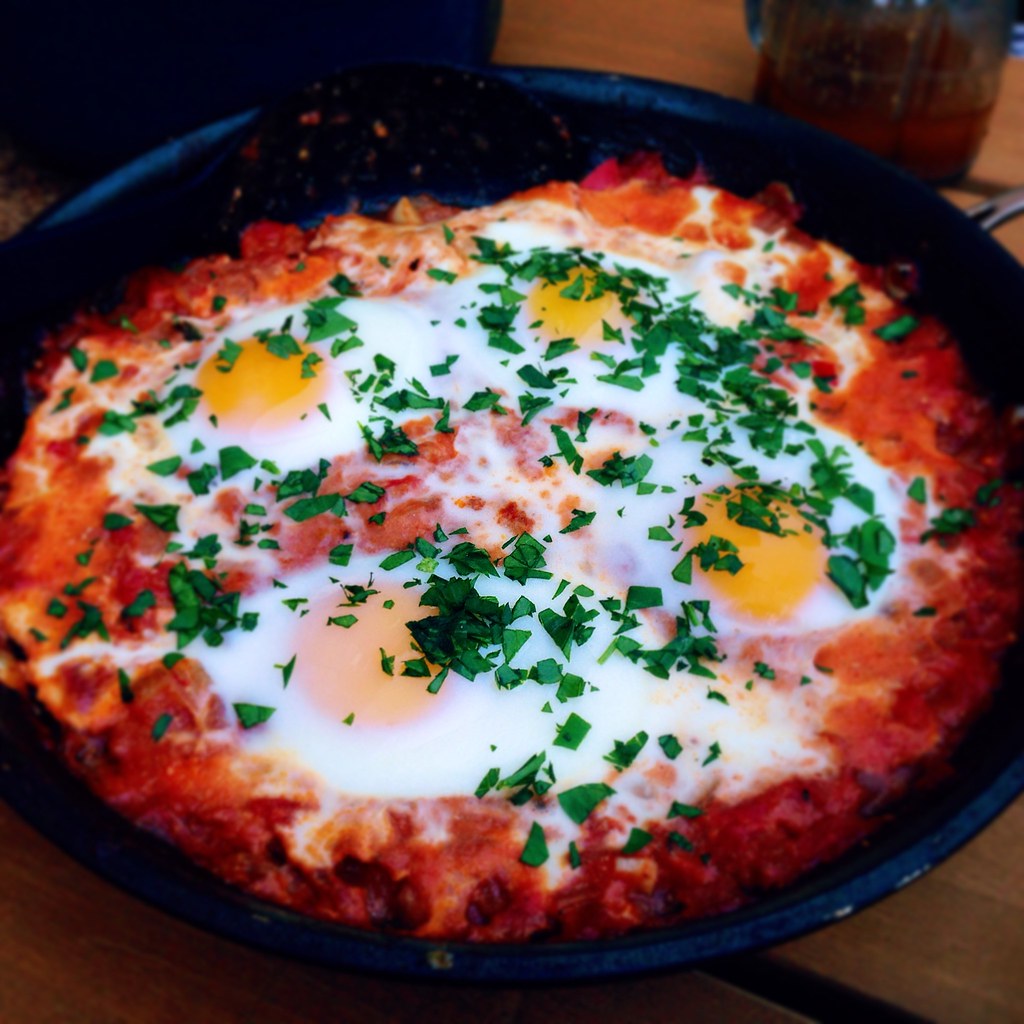
I had shakshuka for the first time in Israel, so when I decided to make dinner for some friends who had just returned from there, it was the first thing I thought of to make. It's basically eggs poached in a spicy tomato sauce, and I posted a pizza version of it before. Shakshuka is traditionally eaten with bread, but since one of my guests had a gluten sensitivity, so I decided to pair it with polenta instead. It's one of those pairings that really made me wonder why I didn't think of it before. The polenta is substantial enough to stand up to the flavorful tomato sauce, but creamy enough so that you can eat everything with a spoon. And the best part is, I was able to get the timing down so that you can start both roughly around the same time and have them done at about the same time.
I based my shakshuka recipe on the one from The New York Times and cooked the polenta using the "no stir" instructions from Marcella Hazan (she of the legendary butter tomato sauce fame). I found that a good way to "chop" the canned tomatoes is to take kitchen shears and cut the tomatoes up in the can. That way you don't have to worry about getting tomato juices dripping and squirting everywhere if you used a cutting board. I didn't have any cayenne pepper on hand, so I substituted some hot chili powder and red pepper flakes. I really liked the addition of the feta, but you can leave it out if you want a dairy free dish (just add a little more salt or adobo seasoning to make up for the loss in flavor).
Shakshuka with Polenta (adapted from The New York Times)
serves 4-6
6 cups water
3 tablespoons olive oil
1 large onion, chopped
1 large red bell pepper, seeded and chopped
1 1/2 cups polenta
3 garlic cloves, thinly sliced
1 teaspoon ground cumin
1 teaspoon sweet paprika
1/8 teaspoon cayenne pepper, hot chili powder, and/or red chili flakes, or to taste
One 28 oz. can whole plum tomatoes with juices, roughly chopped
2 teaspoons salt or adobo seasoning, more as needed
1/4 teaspoon black pepper, more as needed
5 oz. feta cheese, crumbled (optional)
6-8 large eggs
Chopped parsley or cilantro, for serving
Preheat oven to 375°F. Start boiling the water in a large pot.
Heat oil in a large skillet over medium-low heat. Add the chopped onions and bell pepper. Cook gently until very soft, about 20 minutes.
In the meantime, once the water is at a rolling boil, start whisking the water and pouring the polenta in in a steady stream. Turn the heat down to low and continue stirring until the polenta has thickened enough that it doesn't settle back to the bottom when you stop stirring, about 1-2 minutes. Cover and stir every 10 minutes for 30-40 minutes.
Add the garlic to the onions and peppers and cook until tender, about 1 to 2 minutes. Stir in the cumin, paprika, and cayenne, chili powder, or red chili flakes and cook another minute. Pour in the tomatoes and juices and season with salt and pepper. Simmer until the tomatoes have thickened, about 10 minutes. Taste and season with more salt, adobo seasoning, pepper, cayenne, chili powder, or red pepper flakes as needed. Stir in the feta, if using.
Gently crack the eggs into the skillet over the tomatoes. Transfer the skillet to the oven and bake until the eggs are just set, about 8-10 minutes. Sprinkle with parsley or cilantro.
Portion out the polenta into serving bowls. Spoon the tomato sauce with an egg or two onto the polenta. Serve warm with hot sauce, if desired.
As you can see, I actually didn't have enough room to fit all the eggs in my skillet. What I ended up doing was cooking four first, carefully transferring just the eggs to another dish, and then cracking another four eggs onto the sauce and sliding the skillet back into the oven. During service, after the four eggs were plated, I transferred the remaining eggs back onto the sauce.
Next: Papaya Milk and Papaya Milk Popsicles
Previously: Plum, Nectarine, and Peach Galette
Last Year: Ken Forkish's Same Day Straight Pizza Dough
Four Years Ago: Bruschetta
Monday, May 26, 2014
Corn and Black Bean Tortilla Soup
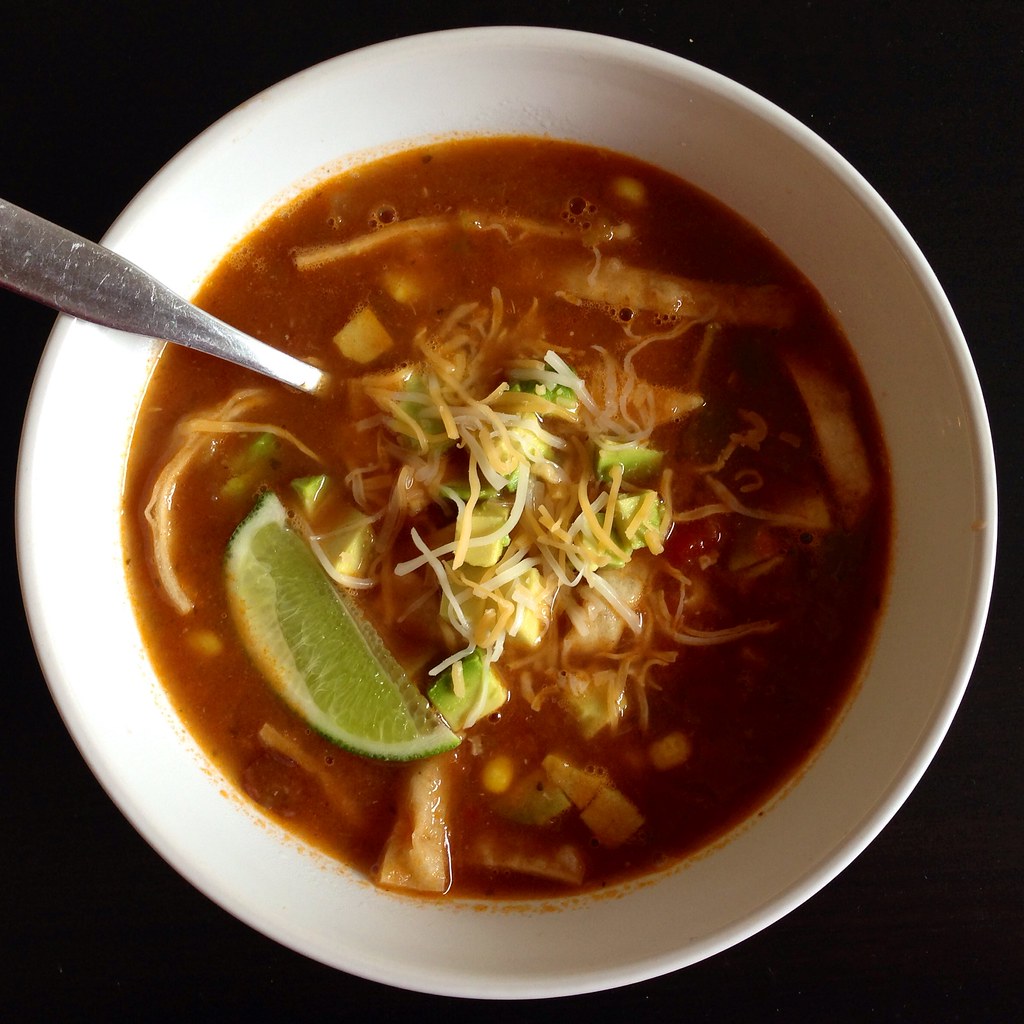
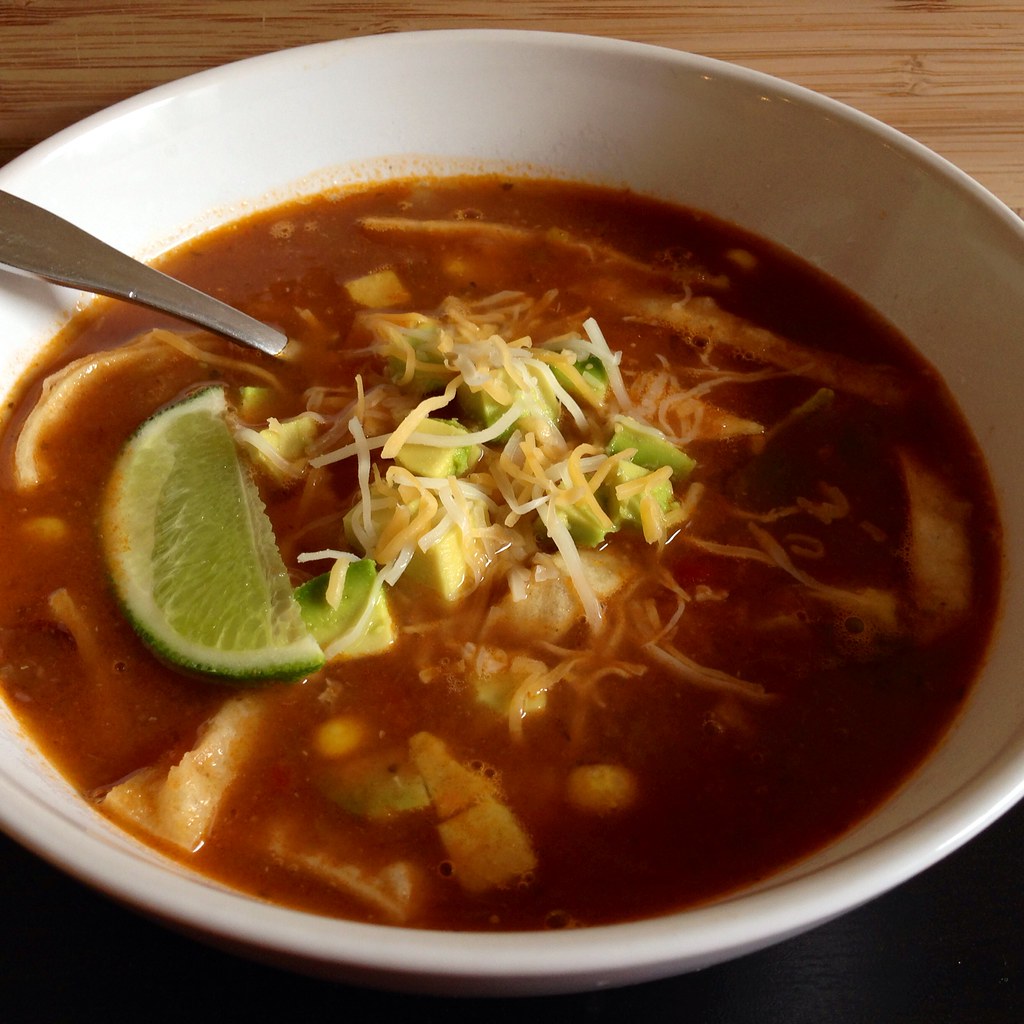
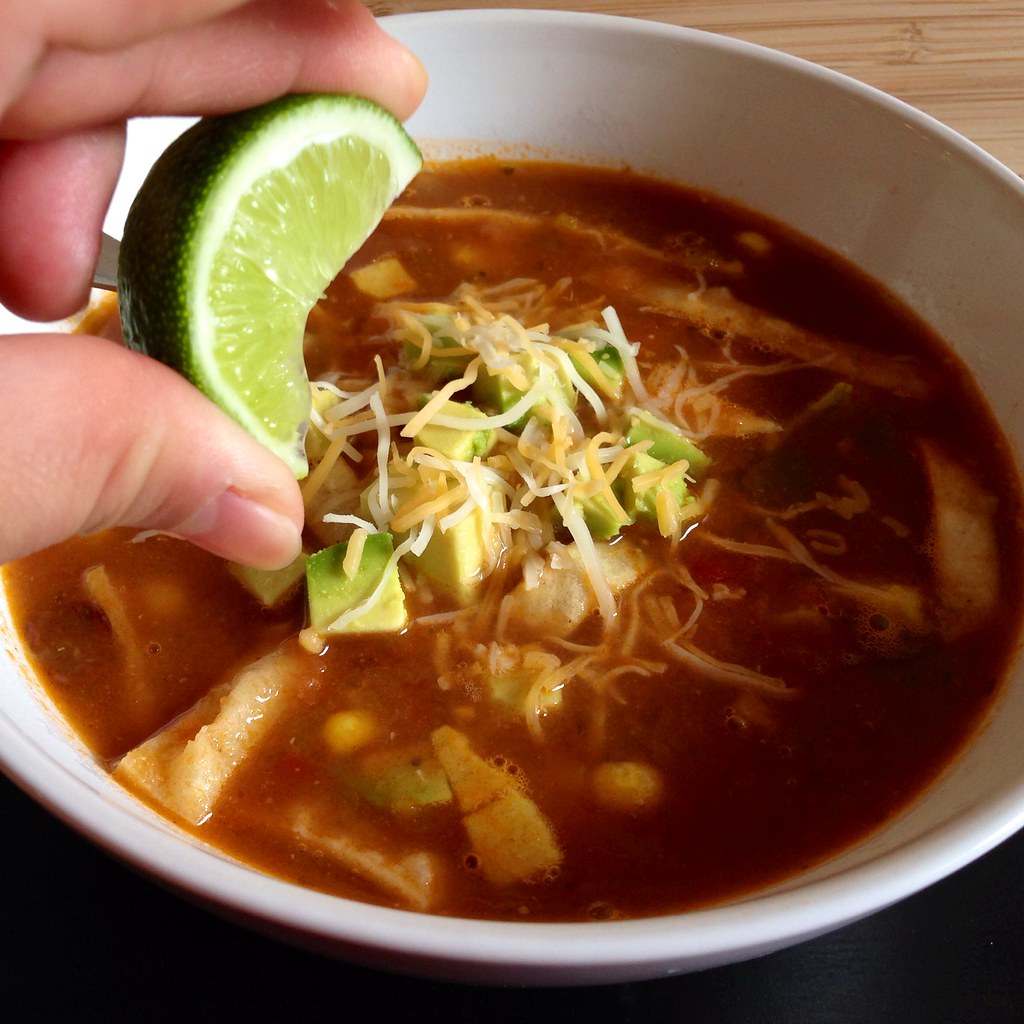
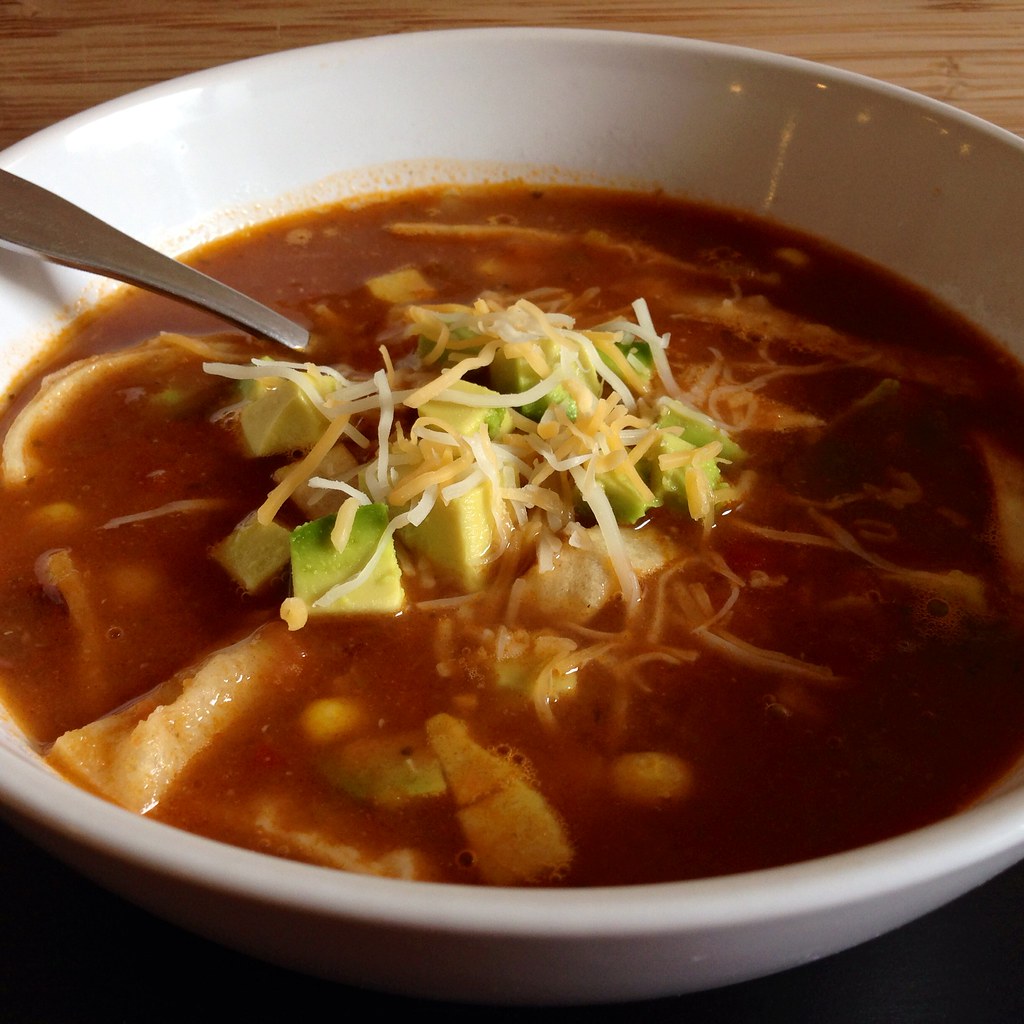
I think I first discovered tortilla soup at the Wolfgang Puck Café in Chicago O'Hare, and it soon became my go-to during layovers in Terminal 3. It's relatively light and refreshing after a long flight but still filling enough to be a full meal for me. Of course, I always ask for extra tortilla strips because I like to add them a little bit at a time as I eat the soup so that there are always be some crunchy ones even towards the end.
The only reason I haven't made this soup before is that I never had any corn tortillas on hand. But after making the chilaquiles, I had some left over, so it was time to finally try it out. I did some research on-line and cobbled together my own recipe with a lot of influence from The Pioneer Woman and Simply Recipes.
Corn and Black Bean Tortilla Soup
makes 4 servings
3-4 corn tortillas, preferably slightly stale and dry
1/4 cup vegetable oil
1 onion
1 green bell pepper
2 garlic cloves
1 teaspoon cumin
1 teaspoon adobo seasoning
4 cups vegetable or chicken broth
1 can (14.5 oz.) of diced tomatoes with jalepenos
1 cup corn kernels, fresh or frozen
1 can (15.5 oz.) can black beans, drained
1 tablespoon cornmeal
1 avocado
1/2 cup shredded Monterey Jack cheese
1 lime, quartered
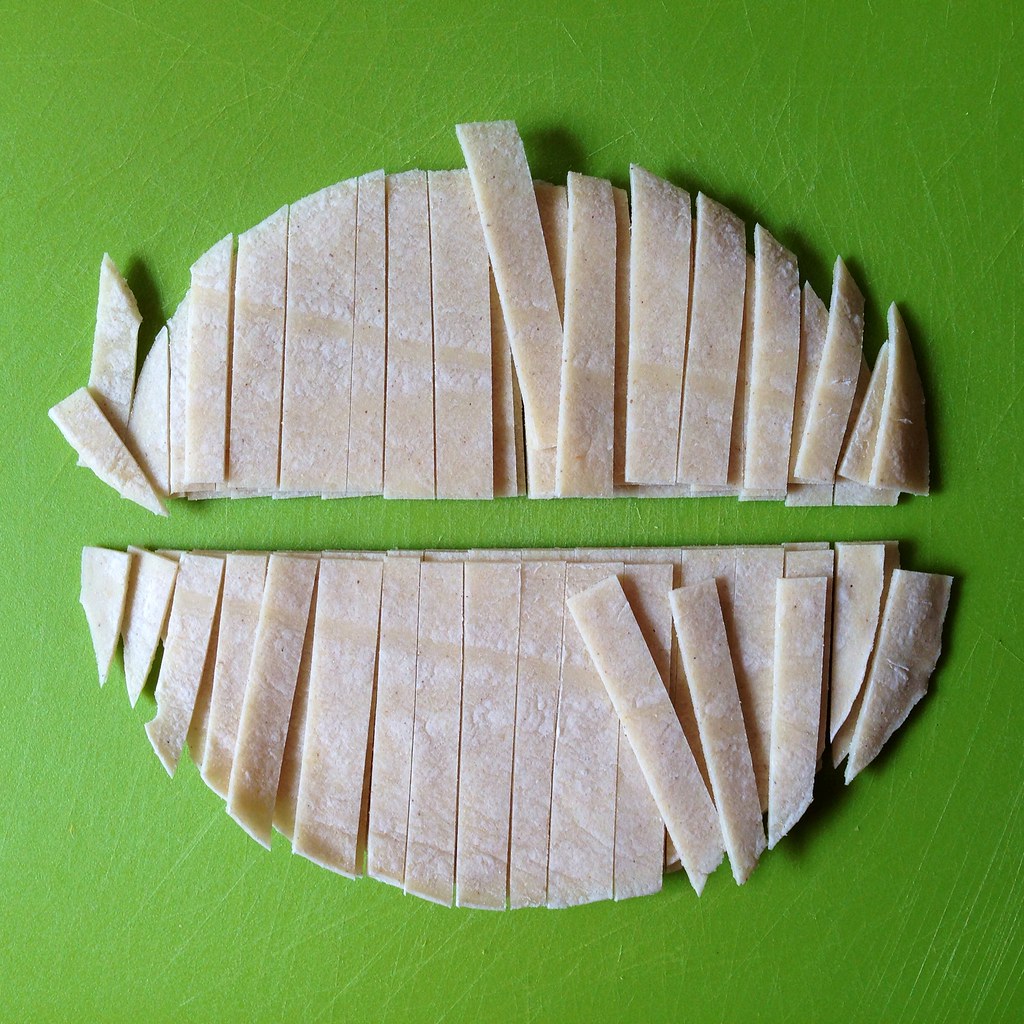
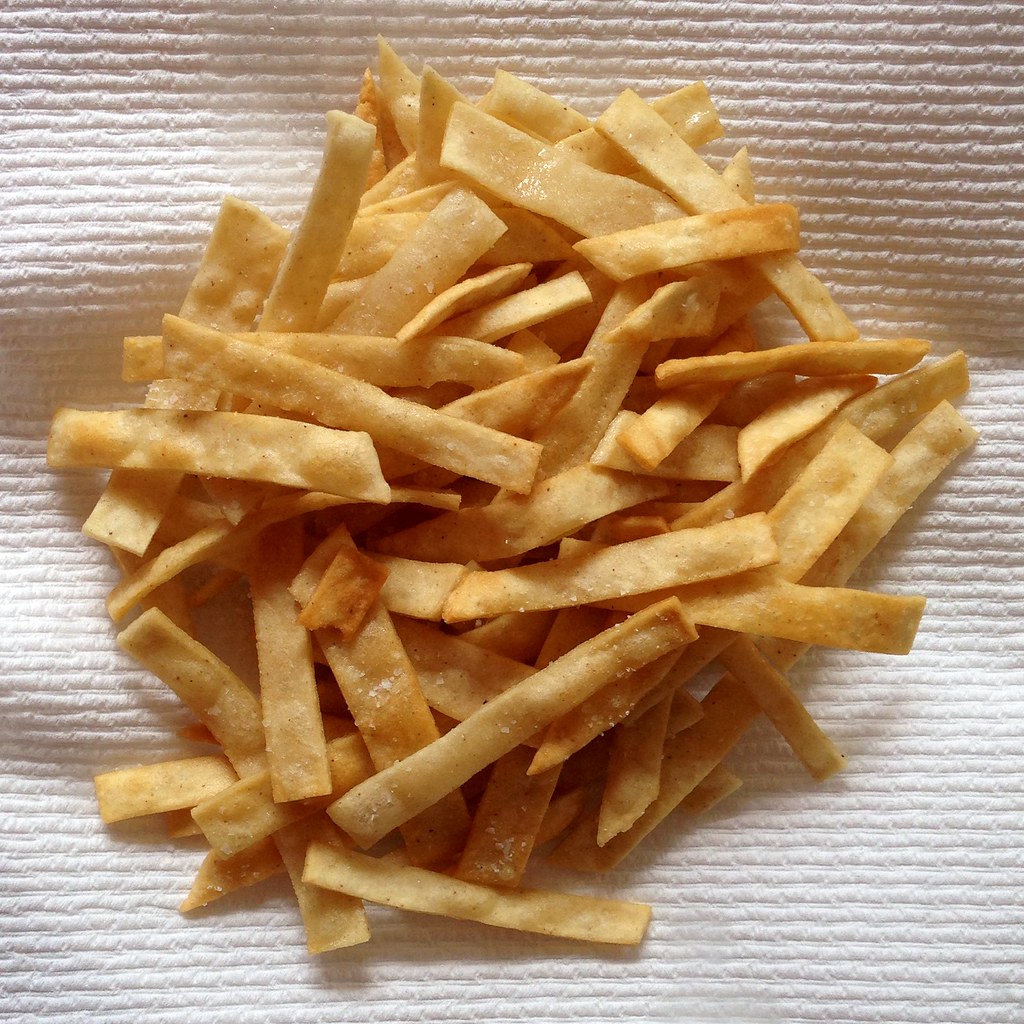
Cut the tortillas in half and then into thin strips. Heat oil in a large pot and fry the tortilla strips in batches until golden brown. Transfer to a paper towel-lined plate and lightly salt.
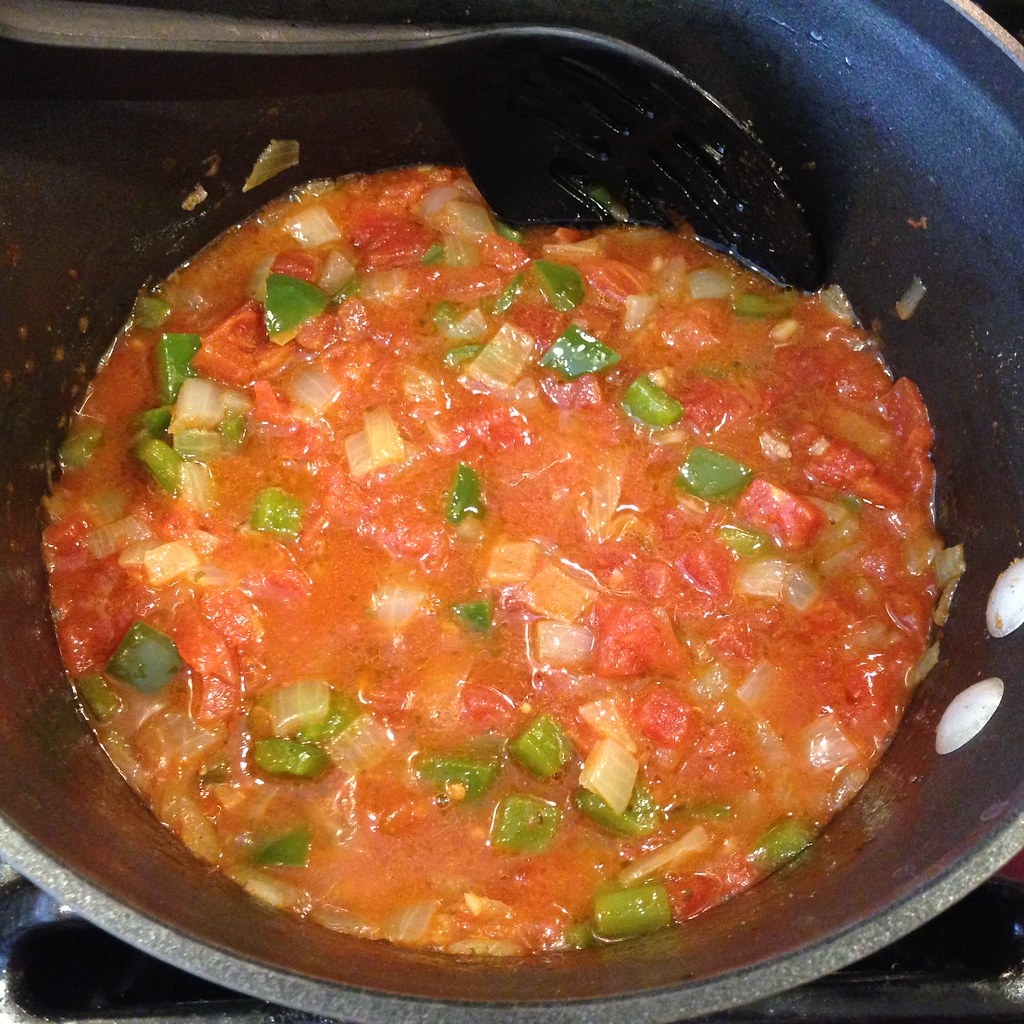
Dice the onion and add to the same pot, on medium-low heat, stirring occasionally. Dice the green pepper and add to the pot. Mince the garlic and add to the pot along with the cumin and adobo seasoning. Mix well and cook for another minute.
Add the tomatoes and broth. Bring to a boil and then reduce the heat. Simmer for 15 minutes. Use an immersion blender to puree the soup, leaving a few chunks if you like. Taste the soup at this point and season accordingly.
Add the corn and black beans. Mix the cornmeal with some water and add to the soup. Stir and simmer for another 15 minutes.
Dice the avocado and distribute half among four soup bowls. Add half the tortilla strips equally between the bowls. Ladle in the soup and top with the rest of the avocado, tortilla strips, and shredded cheese. Serve with a slice of lime.
You can also top the soup with sour cream, queso fresco, and cilantro.
Next: Blueberry Buttermilk Mini Pies
Previously: Serendipitous Chocolate Chip Cookies
Five Years Ago: Kalbi (Korean Barbecue Short Ribs)
Tuesday, October 29, 2013
Kaddo (Afghan Pumpkin with Yogurt and Tomato Sauces)
One of my favorite places to bring visitors to Boston is this Afghan restaurant in Cambridge called The Helmand. Usually, it's the first time any of them have had Afghan food, and I love introducing them to the signature appetizer there, the kaddo. It's a "pan-fried then baked baby pumpkin seasoned with sugar and served on yogurt garlic sauce, topped with ground beef sauce." It sounds like a pretty strange flavor combination and is unlike anything else I've ever tasted, but it's absolutely delicious.
I've had kaddo at another Afghan restaurant before, and it was definitely less sweet, so my guess is that the version served at The Helmand has been "Americanized". I found this recipe on Chowhound that gives a range for the amount of sugar to add and also suggests a vegetarian version. I didn't add the dried mint to the yogurt sauce because I didn't have any, and I reduced the amount of onions for the tomato sauce. Despite the changes, I was really impressed with how close this recipe is to what they serve at The Helmand.
Kaddo (Afghan Pumpkin with Yogurt and Tomato Sauces)
serves 4 as an appetizer
2 - 2 1/2 pound sugar pumpkin
2 tablespoons oil
1/2 -1 1/2 cups sugar (I used about 2/3 cup)
1/2 teaspoon ground cinnamon
1 cup plain yogurt
1 clove garlic, crushed
1/2 teaspoon dried mint (optional)
Salt and pepper to taste
2 tablespoons oil
1 medium onion, chopped
1 clove garlic, crushed
1 1/4 teaspoons ground coriander seed
1/2 teaspoon ground turmeric
1 teaspoon ground black pepper
Salt to taste
1 cup tomato sauce
1/4 cup water
Preheat the oven at 350°F.
Cut the pumpkin into quarters. Remove seeds and strings, peel the skin with a vegetable peeler, and cut down into about 2-inch chunks.
Heat 2 tablespoons oil in a dutch oven. Brown the pumpkin pieces, turning frequently, until golden brown.
Mix sugar and cinnamon and sprinkle over pumpkin. Cover and bake for 30 minutes, or until tender.
Mix together yogurt with the mint (if using) and crushed garlic in a bowl; season to taste with salt and pepper.
In a medium saucepan, heat 2 tablespoons of oil and cook the onions until lightly browned. Add the garlic, coriander, turmeric, salt, and pepper. Mix well and cook until the spices are toasted and fragrant. Add tomato sauce and water, mix thoroughly and bring to a simmer. Lower heat and cook about 20 minutes until it cooks down to a thick sauce.
Serve the pumpkin with the yogurt and tomato sauces.
Next: My Mom's Taiwanese Sticky Rice
Previously: Pão de Queijo (Brazilian Cheese Bread)
Last year: Miso Marinated Black Cod
I've had kaddo at another Afghan restaurant before, and it was definitely less sweet, so my guess is that the version served at The Helmand has been "Americanized". I found this recipe on Chowhound that gives a range for the amount of sugar to add and also suggests a vegetarian version. I didn't add the dried mint to the yogurt sauce because I didn't have any, and I reduced the amount of onions for the tomato sauce. Despite the changes, I was really impressed with how close this recipe is to what they serve at The Helmand.
Kaddo (Afghan Pumpkin with Yogurt and Tomato Sauces)
serves 4 as an appetizer
2 - 2 1/2 pound sugar pumpkin
2 tablespoons oil
1/2 -1 1/2 cups sugar (I used about 2/3 cup)
1/2 teaspoon ground cinnamon
1 cup plain yogurt
1 clove garlic, crushed
1/2 teaspoon dried mint (optional)
Salt and pepper to taste
2 tablespoons oil
1 medium onion, chopped
1 clove garlic, crushed
1 1/4 teaspoons ground coriander seed
1/2 teaspoon ground turmeric
1 teaspoon ground black pepper
Salt to taste
1 cup tomato sauce
1/4 cup water
Preheat the oven at 350°F.
Cut the pumpkin into quarters. Remove seeds and strings, peel the skin with a vegetable peeler, and cut down into about 2-inch chunks.
Heat 2 tablespoons oil in a dutch oven. Brown the pumpkin pieces, turning frequently, until golden brown.
Mix sugar and cinnamon and sprinkle over pumpkin. Cover and bake for 30 minutes, or until tender.
Mix together yogurt with the mint (if using) and crushed garlic in a bowl; season to taste with salt and pepper.
In a medium saucepan, heat 2 tablespoons of oil and cook the onions until lightly browned. Add the garlic, coriander, turmeric, salt, and pepper. Mix well and cook until the spices are toasted and fragrant. Add tomato sauce and water, mix thoroughly and bring to a simmer. Lower heat and cook about 20 minutes until it cooks down to a thick sauce.
Serve the pumpkin with the yogurt and tomato sauces.
Next: My Mom's Taiwanese Sticky Rice
Previously: Pão de Queijo (Brazilian Cheese Bread)
Last year: Miso Marinated Black Cod
Monday, October 14, 2013
Bahian Style Moqueca (Brazilian Fish Stew)
Continuing on to dinner, we passed by a Koni Store, and since I had read about this trendy new restaurant, we just had to stop and try a salmon hand roll. Then there was the churro cart around the corner...but we decided that we absolutely could not eat anything else before we got to dinner (and hoped that the churro cart would still be there on the way home).
Despite not being the last bit hungry due to all the pre-dinner snacking, I found myself absolutely loving the moqueca. We got ours Bahian style, which means it's cooked with coconut milk, palm oil, and cilantro and served with white rice, pirão (a gravy made from fish broth and cassava flour), and dendê farofa (cassava flour cooked in palm oil).
I haven't been able to find palm oil, but this recipe from The Perfect Pantry uses annatto seeds simmered in canola oil to make a similarly bright orange oil. If you can't find annatto seeds, you can just use sweet paprika instead. When a recipe calls for adding salt at the end to taste, I've started using adobo seasoning instead of just plain salt, especially for Latin-inspired dishes, for even more flavor. Other than that I pretty much followed this recipe from Simply Recipes to make the rice and stew. I've made the stew with haddock and cod and had a slight preference for the haddock version. I can only imagine how good it would taste with sea bass instead.
Bahian Style Moqueca (Brazilian Fish Stew)
serves 4
For the annatto oil:
1/2 teaspoon annatto seeds
1/4 cup canola oil
For the rice:
1 tablespoon olive oil
1/2 onion, chopped
1 clove garlic, minced
1 1/2 cups white rice
1 teaspoon kosher salt
For the stew:
1 1/2 - 2 lbs. of fillets of firm white fish such as haddock, cod, or sea bass, rinsed in cold water, pin bones removed, cut into large portions
3 cloves garlic, minced
4 tablespoons lime juice
Kosher salt
Freshly ground black pepper
Olive oil
1 medium yellow onion, sliced
1 yellow or red bell pepper, seeded, de-stemmed, and chopped (or sliced)
1 tablespoon paprika (optional)
Pinch red pepper flakes
2 cups sliced plum tomatoes
1/4 cup green onion greens, chopped
1 large bunch of cilantro, chopped with some set aside for garnish
14-ounce can coconut milk
Adobo seasoning, to taste (optional)
In a small saucepan, combine the annatto seeds and canola oil. Cook over medium heat for 10 minutes, until the oil turns orange. Remove from heat, strain out the seeds (and discard), and set the oil aside to cool. This can be done far in advance.
To make the rice, heat one tablespoon of olive oil in a medium saucepan on medium high heat. Add the chopped 1/2 onion and cook, stirring, until the onion is translucent. Add the garlic and cook for 30 seconds more, until the garlic is fragrant. Add the raw white rice and salt and stir to coat completely with the oil, onions, and garlic. Transfer to a rice cooker and add the recommended amount of water (mine uses 2 cups water for 1 1/2 cups of rice). Cook the rice in the rice cooker while you make the stew.
Place the fish in a bowl and add the minced garlic and lime juice so that the pieces are well coated. Sprinkle generously all over with salt and pepper. Keep chilled while preparing the rest of the soup.
In a large covered pan (such as a Dutch oven), coat the bottom with about 2 tablespoons of olive oil and heat on medium heat. Add the onion and cook a few minutes until softened. Add the bell pepper, paprika (if using), and red pepper flakes. Sprinkle generously with salt and pepper. Cook for a few minutes longer, until the bell pepper begins to soften. Stir in the tomatoes and green onion. Bring to a simmer and cook for 5 minutes, uncovered. Stir in the chopped cilantro.
Use a large spoon to remove about half of the vegetables (you'll put them right back in). Spread the remaining vegetables over the bottom of the pan to create a bed for the fish. Arrange the fish pieces on the vegetables. Sprinkle with salt and pepper. Then add back the previously removed vegetables, covering the fish. Pour the coconut milk and annatto oil over the fish and vegetables.
Bring soup to a simmer, reduce the heat, cover, and let simmer for 15 minutes. Taste and adjust seasonings. You may need to add more salt or adobo seasoning, lime juice, paprika, pepper, or chili flakes to get the soup to the desired seasoning for your taste. Garnish with cilantro and serve with the rice.
I was actually pretty surprised at how close to the real thing this tasted considering how exotic the flavors are to me. As with most stews, this tastes even better the next day and the day after that, when the flavors have had a chance to meld together more.
Next: Pão de Queijo (Brazilian Cheese Bread)
Previously: Pluot Lambic Sorbet
Last year: Crispy Kale Pizza
Thursday, August 15, 2013
Shakshuka Pizza
I had my first shakshuka when I was in Israel a few years ago at this restaurant I'll never be able to find again. I'd heard of the dish--eggs poached in a spicy tomato sauce--before and was very curious about how it'd taste. I found it to be warming and comforting without being heavy.
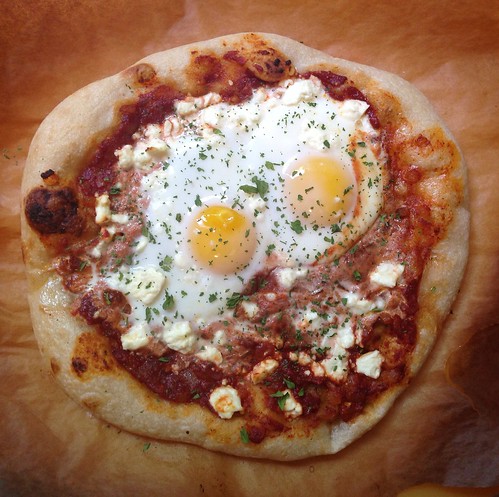
It's pretty easy to make at home, but the limiting factor for me is always not having any bread to eat along with it. But then one day I had an extra ball of pizza dough and thought, why don't I just cook the eggs and tomato sauce on top of it? And thus shakshuka pizza was born.
The first time I made it I wasn't sure if the 7 minutes in the oven would be enough to cook the eggs so I made sure the tomato sauce was still hot when I topped the pizza. I guessed wrong, though, and the yolks ended up setting by the time I took the pizza out of the oven. I prefer my yolks still runny while the whites are set so the next time I refrigerated the sauce first and they came out perfect.
I like to scoop up all the runny yolk and spread it all around the top of the pizza. It might not be pretty, but it sure is yummy!
Shakshuka Pizza
makes two 10" pizzas
2 8 oz. balls of pizza dough
3 tablespoons olive oil, divided
1 small onion, chopped
1 garlic clove, minced
1 teaspoon cumin
1 teaspoon chili powder
1 pinch red pepper flakes
1 cup tomato sauce
Salt, to taste
4 eggs
1/2 cup crumbled feta cheese
Parsley, chopped
Place a pizza stone on an oven rack set at the top 1/3 of the oven. Preheat the oven to 550°F.
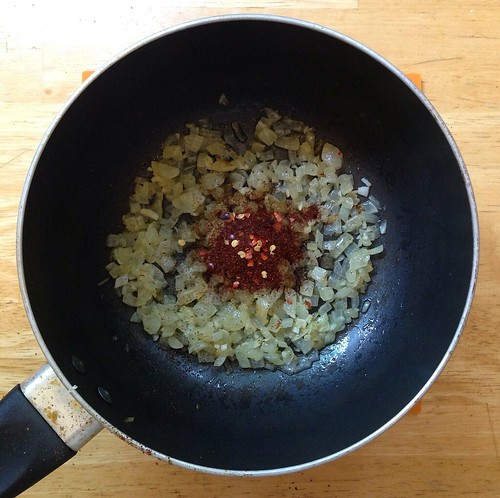
In a small saucepan, heat 2 tablespoons of olive oil on medium. Add the chopped onions and saute until starting to soften. Add the garlic and continue to cook for another minute or two until the garlic has lost its bite. Add the cumin, chili powder, and red pepper flakes and cook until the spices are toasty and fragrant.
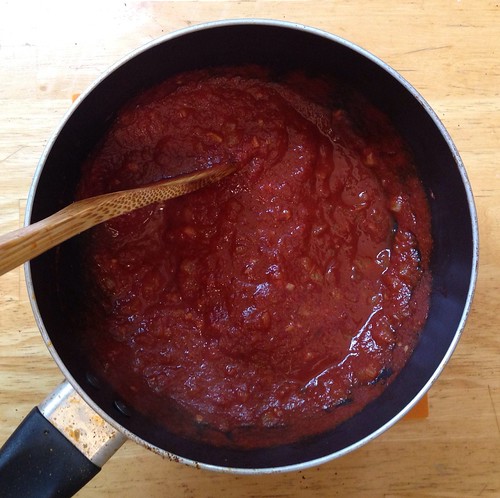
Add the tomato sauce and simmer for 15 minutes. Add salt to taste. If you want your egg yolks to be set, use the sauce while it's still hot. If you want your egg yolks to be runny, cool the sauce down and chill in the fridge before using.
Stretch the dough onto a parchment paper-lined flexible cutting board.
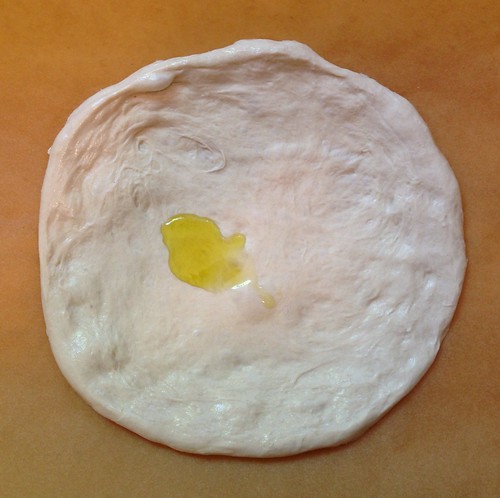
Spread half a tablespoon of olive oil on top of the dough. Top with half of the tomato sauce.
Crack two eggs onto the pizza. Top with half of the feta cheese.
Slide one of the pizzas and parchment paper onto the pizza stone and bake for 5 minutes.
After 5 minutes, turn the oven to broil and broil for 1-2 minutes. Bake until the eggs are set to your liking and the crust is golden with spots of brown and a few small spots of char.
Use tongs to slide the pizza with the parchment paper from the pizza stone onto a cutting board. Top the pizza with the chopped parsley. Slice and serve!
Next: Crimini Mushroom Risotto
Previously: Almond Pesto Pizza
It's pretty easy to make at home, but the limiting factor for me is always not having any bread to eat along with it. But then one day I had an extra ball of pizza dough and thought, why don't I just cook the eggs and tomato sauce on top of it? And thus shakshuka pizza was born.
The first time I made it I wasn't sure if the 7 minutes in the oven would be enough to cook the eggs so I made sure the tomato sauce was still hot when I topped the pizza. I guessed wrong, though, and the yolks ended up setting by the time I took the pizza out of the oven. I prefer my yolks still runny while the whites are set so the next time I refrigerated the sauce first and they came out perfect.
I like to scoop up all the runny yolk and spread it all around the top of the pizza. It might not be pretty, but it sure is yummy!
Shakshuka Pizza
makes two 10" pizzas
2 8 oz. balls of pizza dough
3 tablespoons olive oil, divided
1 small onion, chopped
1 garlic clove, minced
1 teaspoon cumin
1 teaspoon chili powder
1 pinch red pepper flakes
1 cup tomato sauce
Salt, to taste
4 eggs
1/2 cup crumbled feta cheese
Parsley, chopped
Place a pizza stone on an oven rack set at the top 1/3 of the oven. Preheat the oven to 550°F.
In a small saucepan, heat 2 tablespoons of olive oil on medium. Add the chopped onions and saute until starting to soften. Add the garlic and continue to cook for another minute or two until the garlic has lost its bite. Add the cumin, chili powder, and red pepper flakes and cook until the spices are toasty and fragrant.
Add the tomato sauce and simmer for 15 minutes. Add salt to taste. If you want your egg yolks to be set, use the sauce while it's still hot. If you want your egg yolks to be runny, cool the sauce down and chill in the fridge before using.
Stretch the dough onto a parchment paper-lined flexible cutting board.
Spread half a tablespoon of olive oil on top of the dough. Top with half of the tomato sauce.
Crack two eggs onto the pizza. Top with half of the feta cheese.
Slide one of the pizzas and parchment paper onto the pizza stone and bake for 5 minutes.
After 5 minutes, turn the oven to broil and broil for 1-2 minutes. Bake until the eggs are set to your liking and the crust is golden with spots of brown and a few small spots of char.
Use tongs to slide the pizza with the parchment paper from the pizza stone onto a cutting board. Top the pizza with the chopped parsley. Slice and serve!
Next: Crimini Mushroom Risotto
Previously: Almond Pesto Pizza
Subscribe to:
Posts (Atom)