Showing posts with label fish. Show all posts
Thursday, November 30, 2017
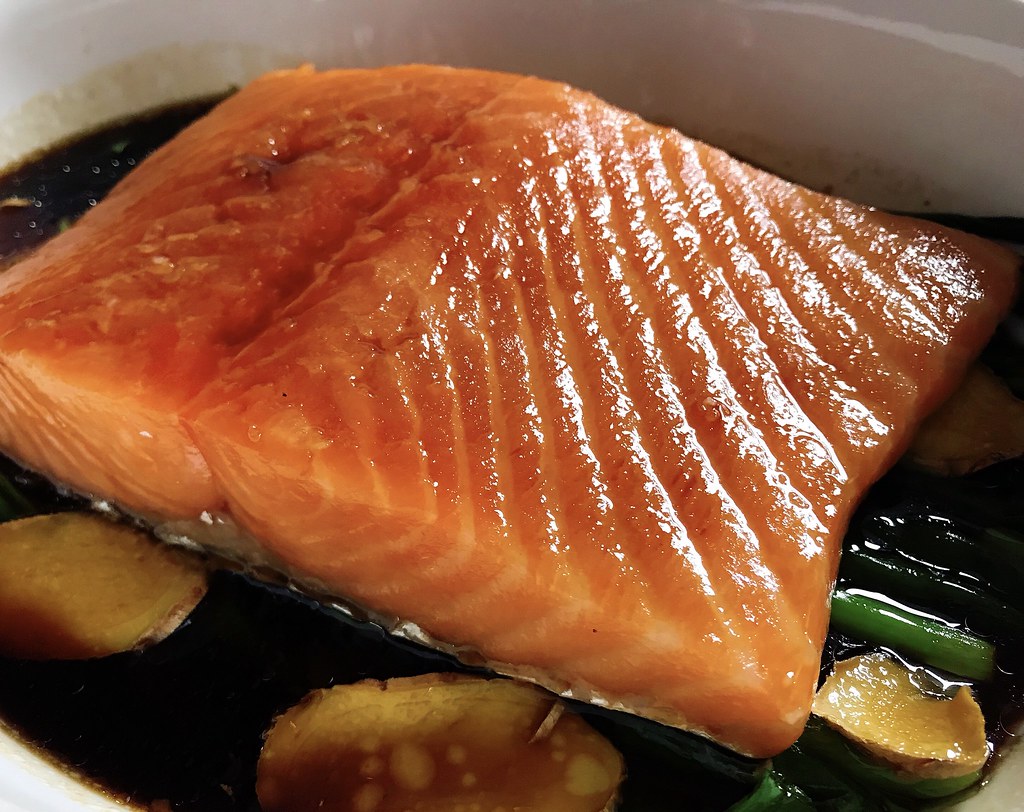
Slow-Roasted Ginger Scallion Salmon
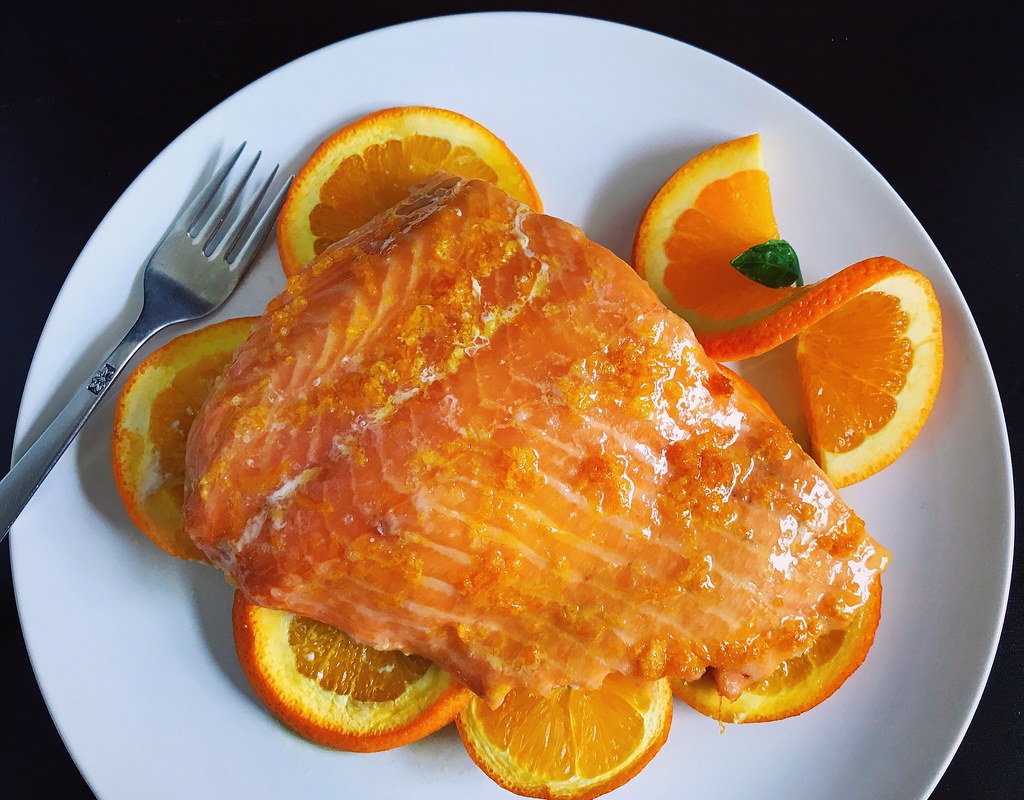
I was first introduced to slow-roasted salmon when the Food52 Cookbook Club was going through Samin Nosrat's Salt Fat Acid Heat back in September. I tried the citrus version with lemon vinaigrette first and was absolutely smitten. As incredible as the citrus and vinaigrette were, I think it was the salt and slow-roasting that made the dish truly exceptional. It made a regular farm-raised salmon filet taste like a wild-caught Copper River King salmon! The salmon was moist, rich, and buttery without being slimy or fishy. I also tried her soy-glazed version, and it turned out amazing as well, but having to baste the fillet every 15 minutes was kind of too fussy for me.
I decided I needed to combine the recipe for Grace's ginger scallion fish with this method of cooking salmon and found some friends who were interested in testing out the recipe. I also found some friends who had poor reading comprehension and thought I was offering them free food, haha.
We tested roasting the salmon with the skin side up, down, and skinless, and I found that skin side down worked the best. The skin shielded the fish from too much heat from below, and this version produced the least dry fillet. The skin never really gets crispy, though, so unless you enjoy rubbery skin, I wouldn't serve that part.
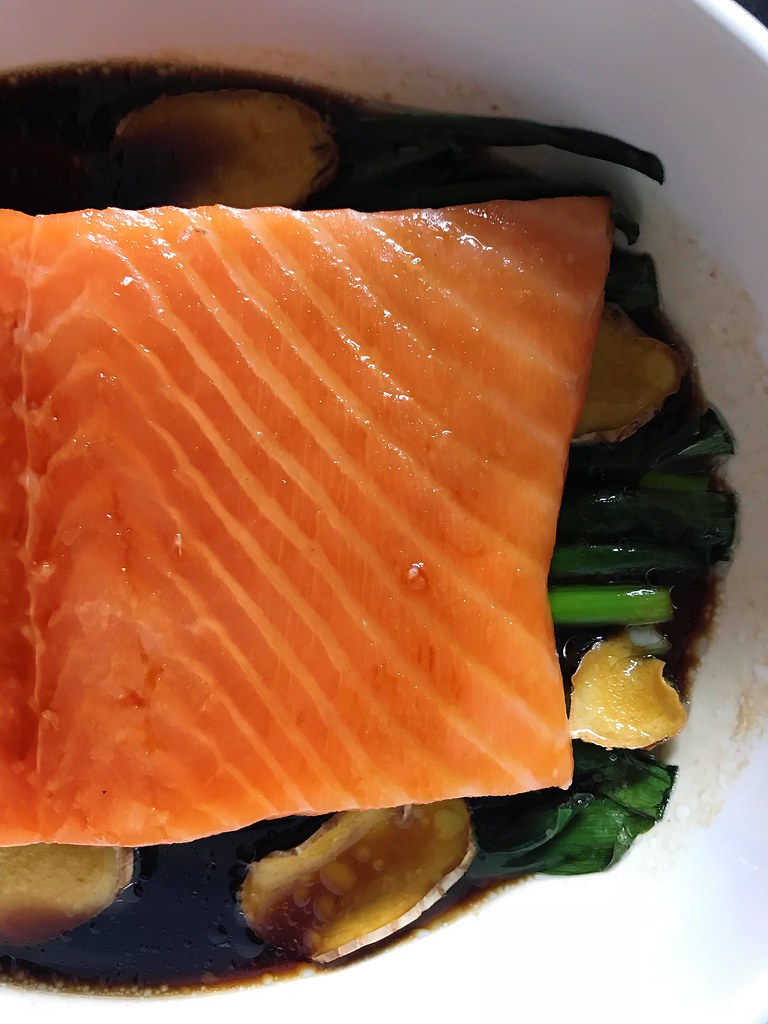
Also, the reason I wrote that the salmon should be straight from the fridge is because some people were using frozen salmon which they let thaw on their counter before using. Their salmon came out overdone in the time frame I gave so, if you are also making this with warmer-than-refrigerator salmon, reduce the time in the oven accordingly.
Slow-Roasted Ginger Scallion Salmon
1 lb. salmon fillet, straight from the fridge
2 tablespoons sugar
4 tablespoons soy sauce
2 tablespoons rice wine (if you don't have any, just use more water)
2 tablespoons water
1 bunch scallions (about 6 oz.), green parts only
1-2 inch knob of fresh ginger, thinly sliced
Kosher salt
Vegetable oil
Preheat the oven to 225°F.
Combine the sugar, soy sauce, rice wine, and water and heat for 1 minutes in the microwave. Stir to dissolve the sugar.
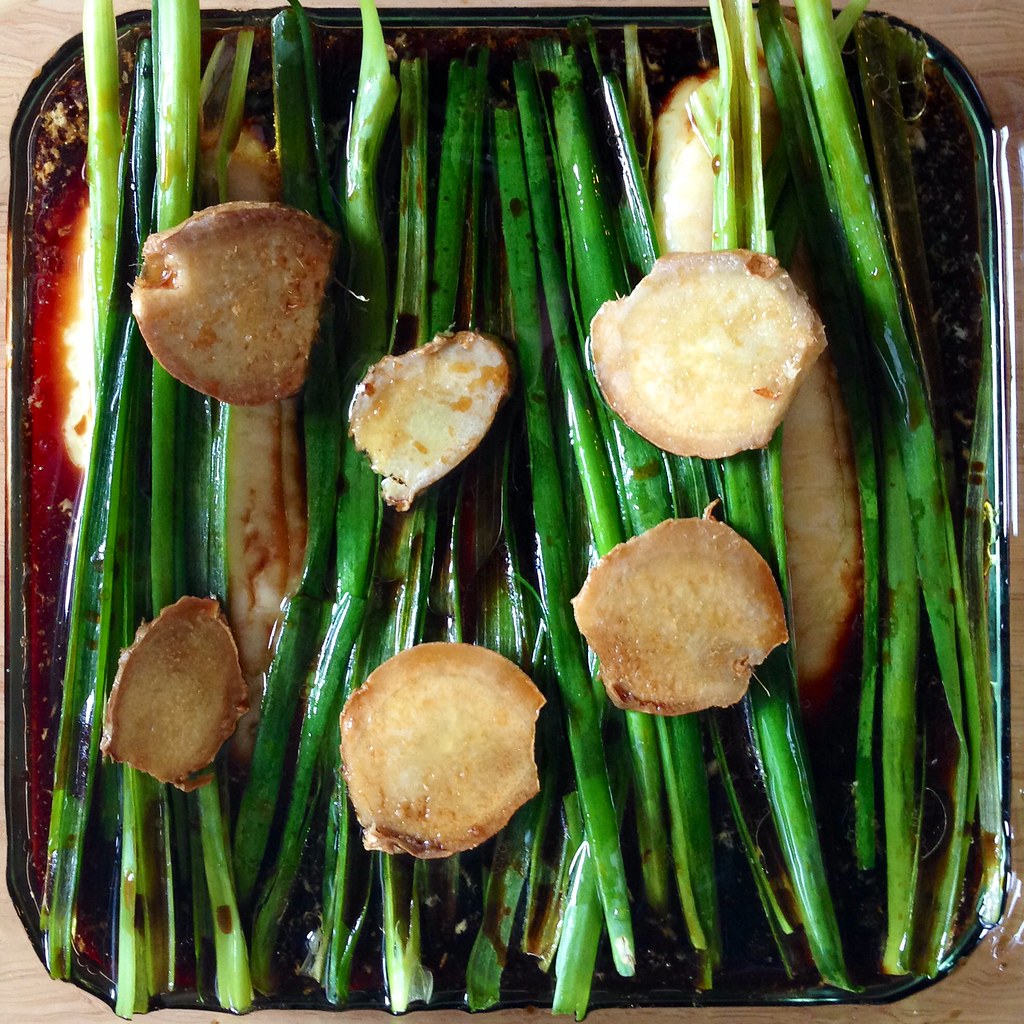
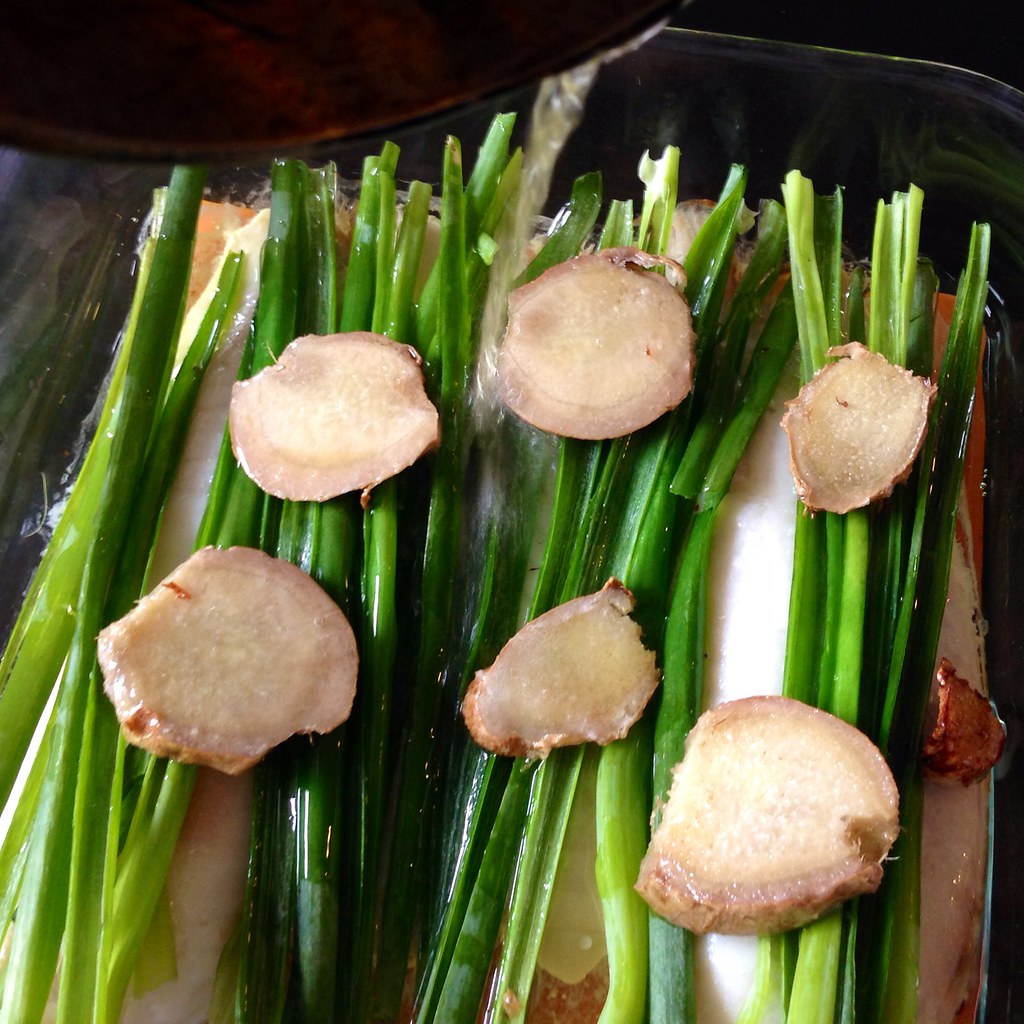
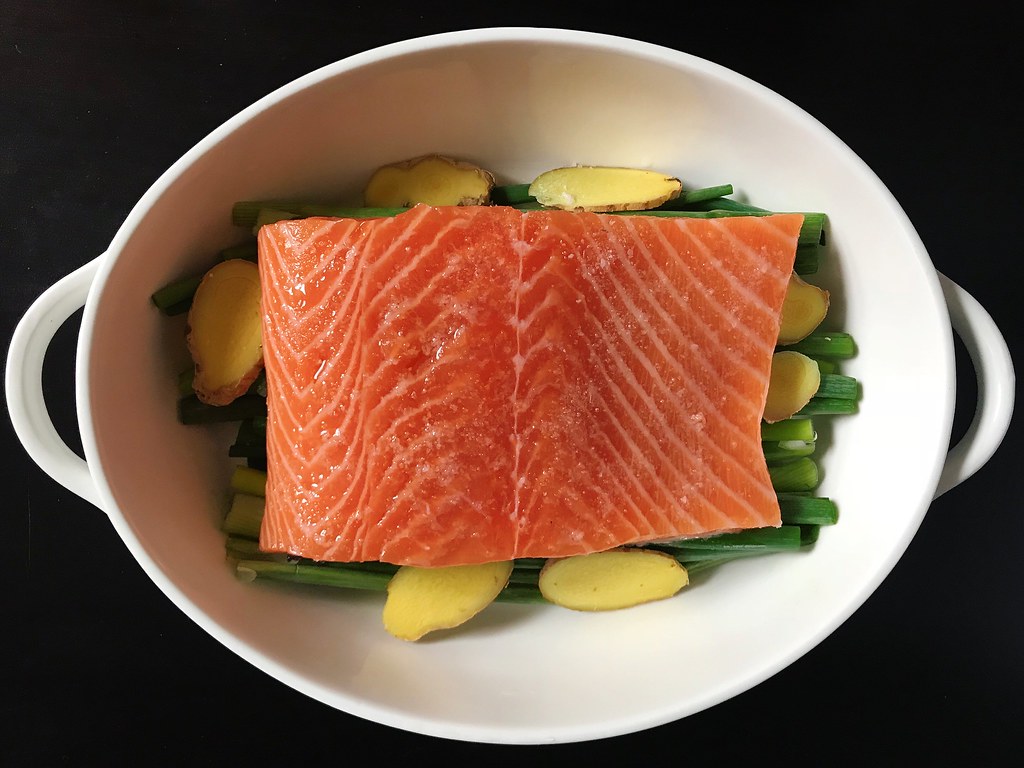
Line a small baking dish with the scallions and ginger and place salmon on top, skin side down. Season the salmon liberally with kosher salt and coat with oil. Pour the soy sauce mixture over the fish and roast the salmon for about 40-50 minutes, or until a thermometer stuck into the thickest part reads 110-120°F.
The fish should still look a lot like how it did when it went in (i.e. almost translucent), so if you don't have a thermometer, check for doneness by poking the thickest part; it will start to flake once it is ready.
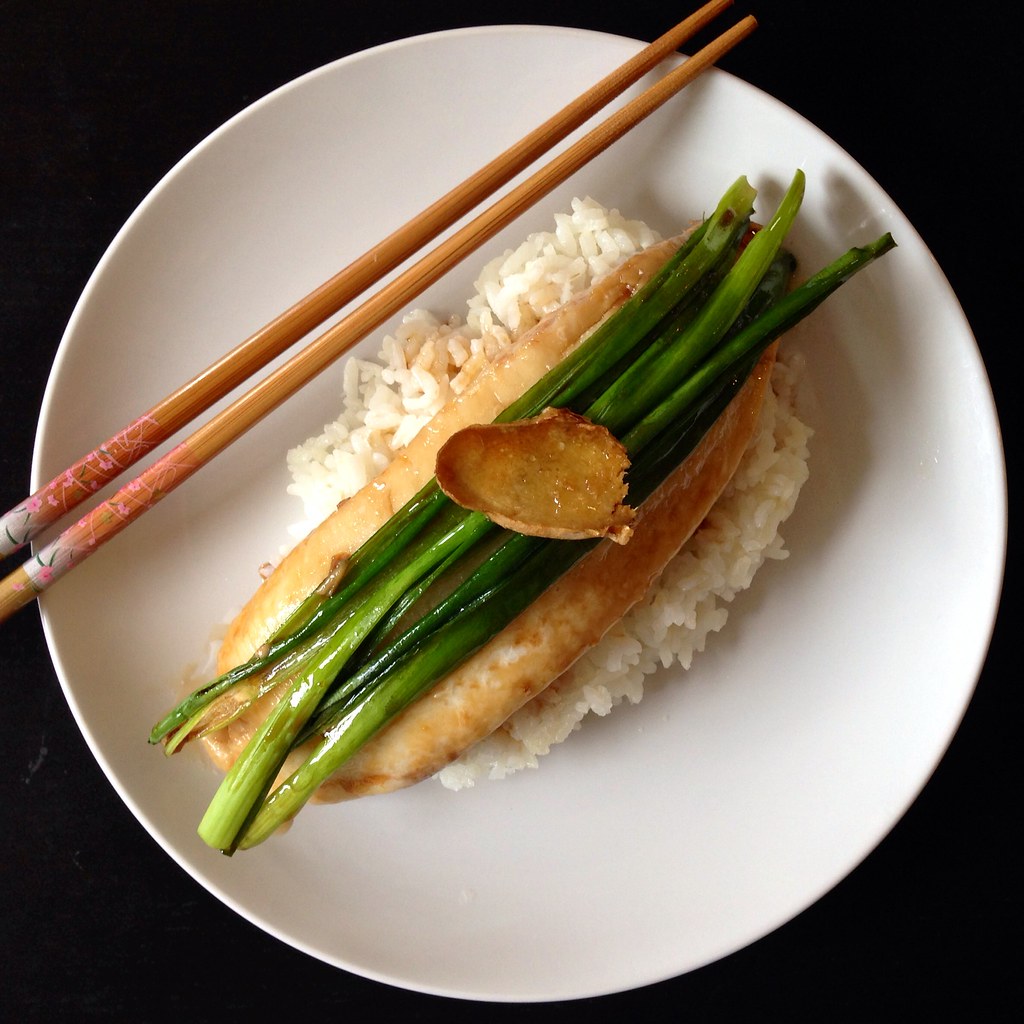
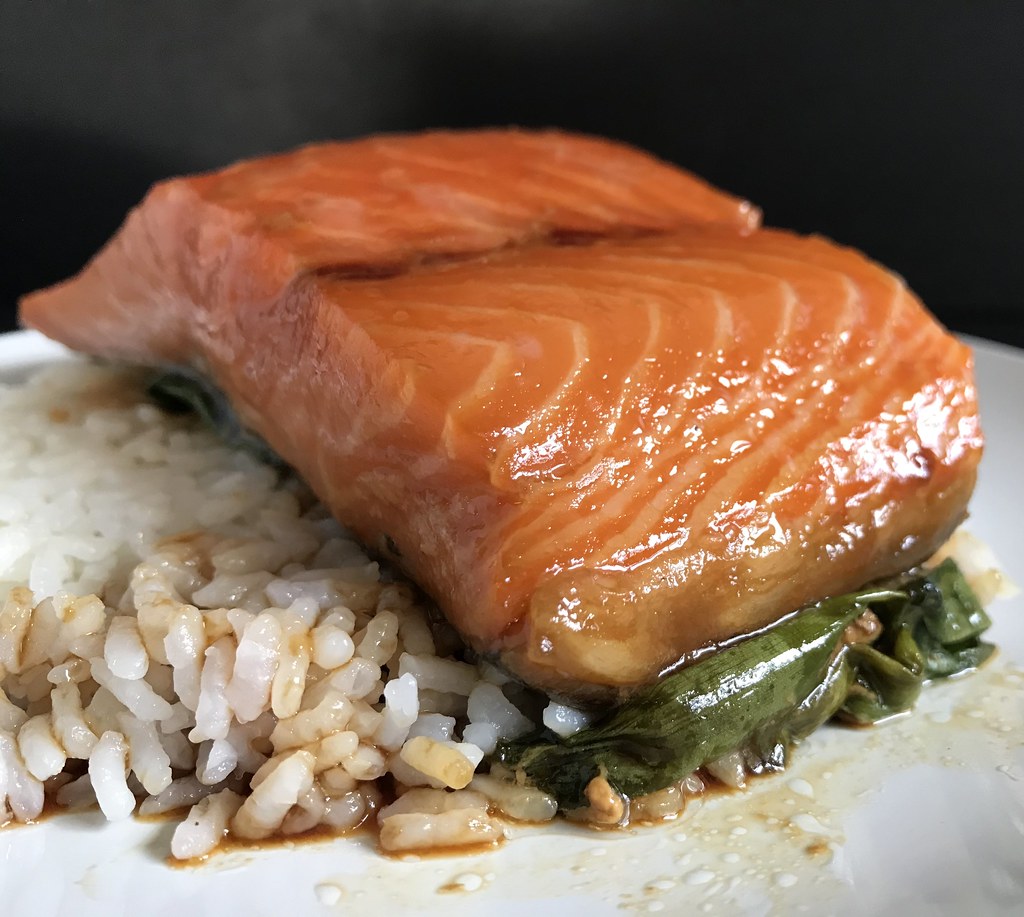
Serve with rice and spoon some of the sauce on top for extra saucy goodness.
Next: My Mom's Steamed Bao Buns
Previously: Deep Fried Apple Dumplings with Miso Caramel Dipping Sauce
Last Year: Pear Apple Cranberry Slab Pie
Two Years Ago: Pad Thai
Three Years Ago: Raindrop Cake
Four Years Ago: My Mom's Taiwanese Sticky Rice
Five Years Ago: Grapefruit Pie
Eight Years Ago: Nanaimo Bars
Nine Years Ago: Homemade Crystallized Ginger
Friday, July 24, 2015
Pasta con le Sarde
I had the pleasure of joining my cousin in Italy again, this time on a 9 day trip to Sicily. We started in Palermo and made our way in a counter-clockwise tour of the island. One of my favorite stops was the geological formation known as Scala dei Turchi just to the west of Agrigento.
It looks like a milky-white set of steps rising out of the Mediterranean Sea, and it's completely free to explore. While I'm really glad I was able to climb it, I do hope that one day soon the government will decide to protect the area since it will likely become quite damaged from all the human activity. For more pictures of the trip, check out my Instagram feed.
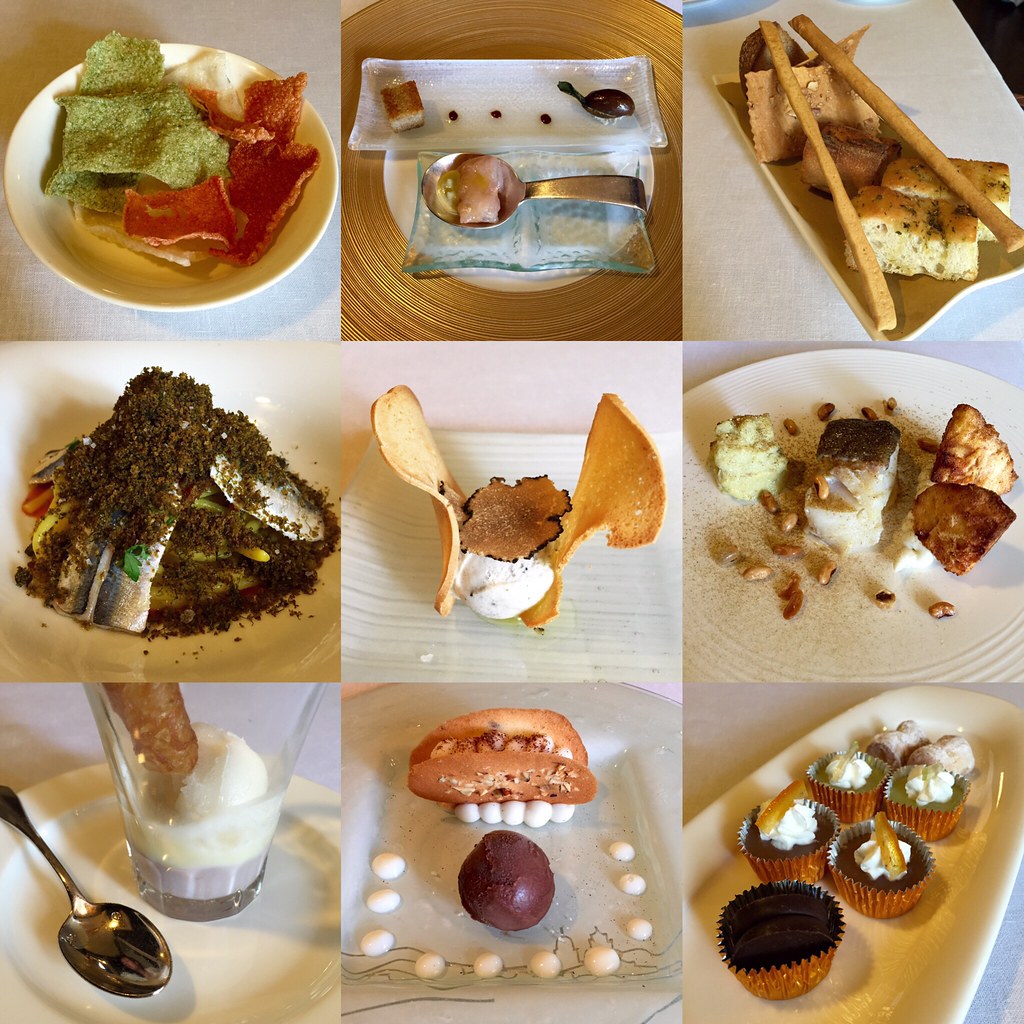
One of my other favorite stops was the UNESCO world heritage Baroque town of Ragusa. Not only is it absolutely lovely, it has some of the best restaurants on the island including the 2 Michelin-starred Ristorante Duomo. We were able to have a 7 course lunch there for only 45 euros (that's like $50 with the recent exchange rate)!
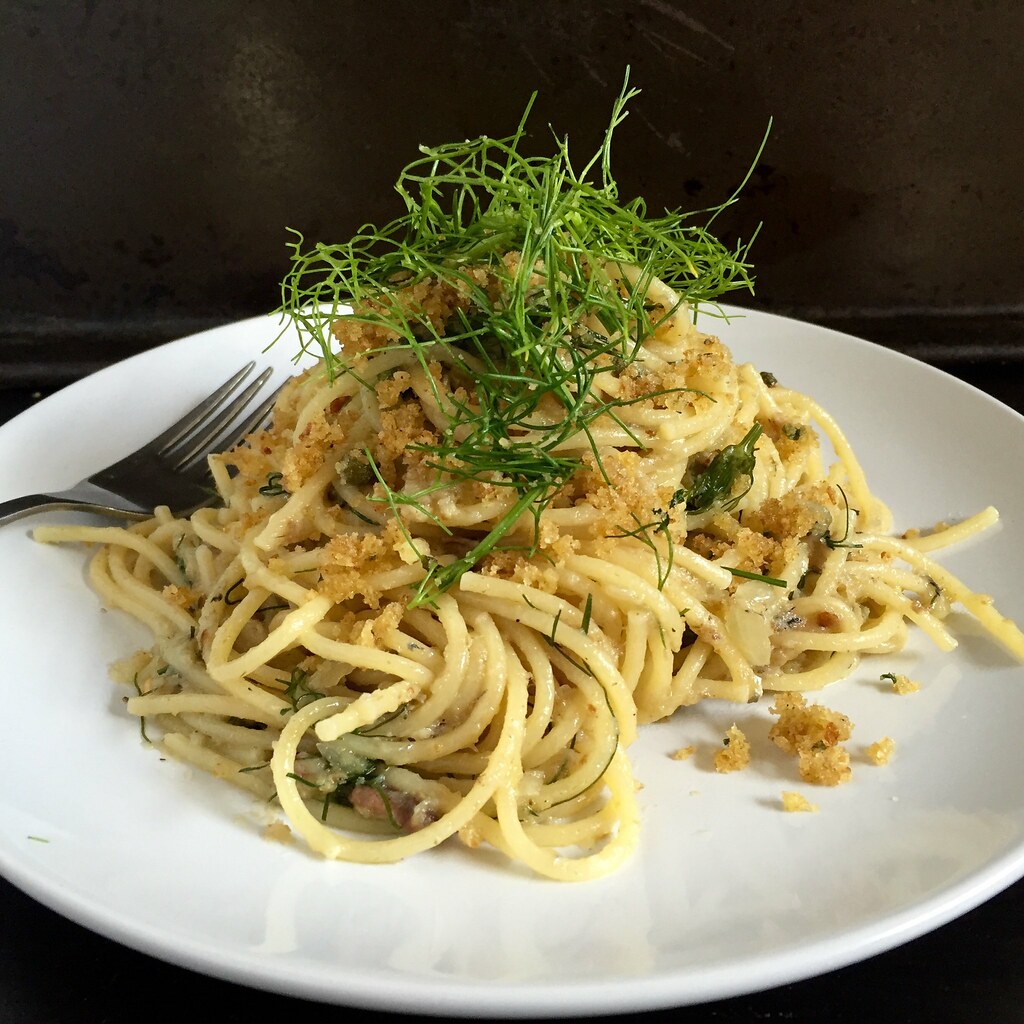
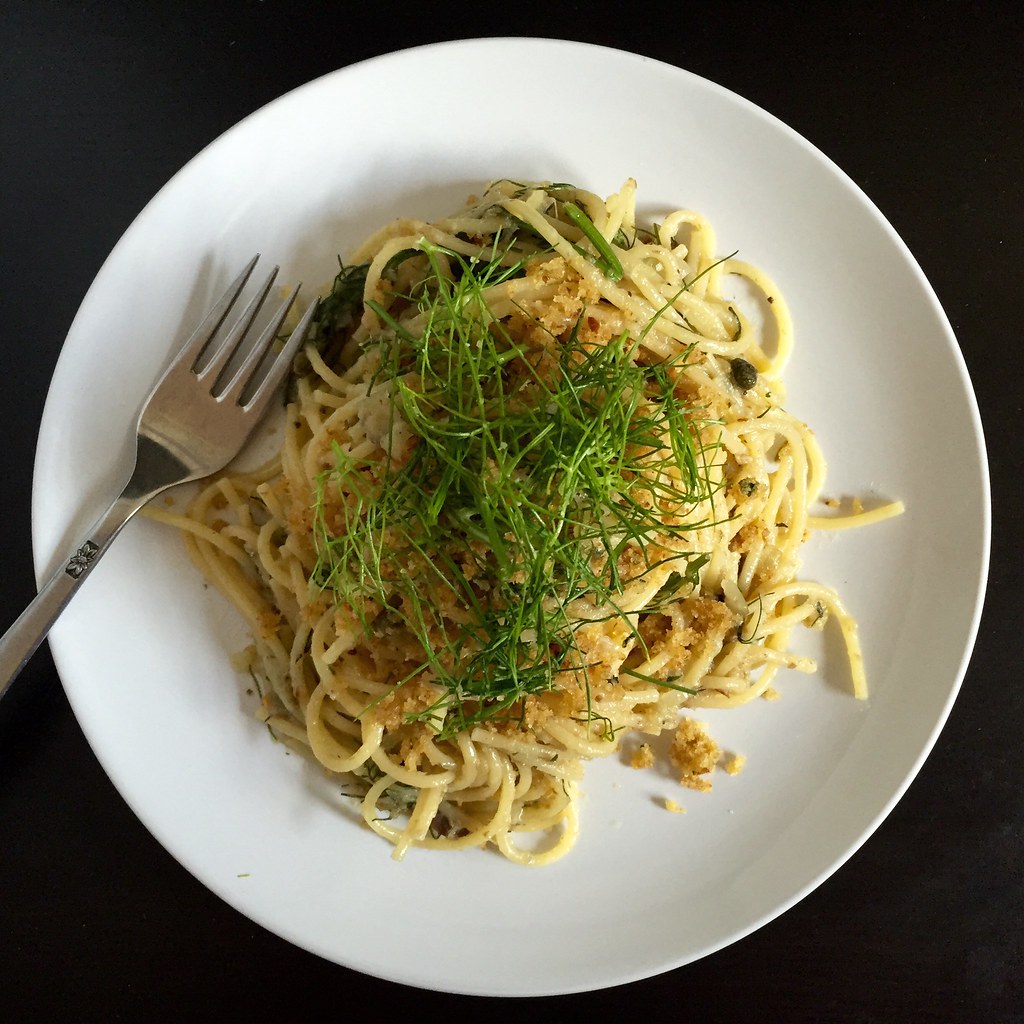
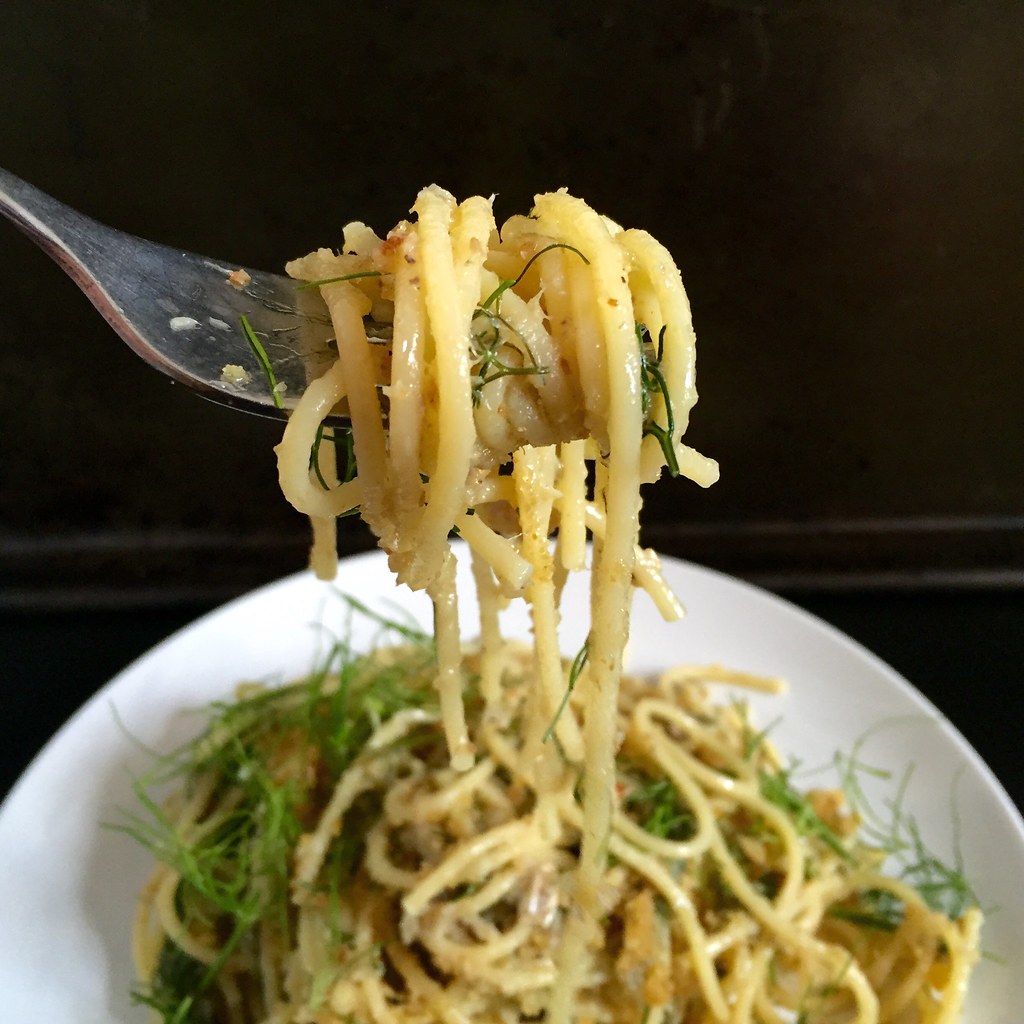
The pasta course was their take on a traditional Sicilian dish: pasta con le sarde. From what I remember the waiter saying, they used homemade saffron spaghetti with olive oil poached sardines and bread crumbs with wild fennel. The version I made uses dry spaghetti from a box and canned sardines, but it's still pretty good, especially if you like sardines.
Pasta con le Sarde (adapted from The New York Times Cooking)
serves 2
1/4 cup raisins
A pinch of red pepper flakes
1/3 cup dry white wine
1/4 cup olive oil plus 3 tablespoons
1 small fennel bulb, finely chopped, fronds chopped and reserved
1 small onion, finely chopped
1 garlic clove, minced
1 tablespoons butter
1/4 cup dry bread crumbs
2 cans sardines in oil
1/2 pound spaghetti or bucatini
1/4 cup pine nuts, toasted
2 tablespoons capers, rinsed
Kosher salt and freshly ground pepper, to taste
Combine the raisins, red pepper flakes, and wine in a small bowl and set aside.
In a heavy skillet, heat 1/4 cup of olive oil over medium-low heat. When hot, add the fennel bulb, onion, and garlic. Season with salt and cook, stirring occasionally, until the fennel is tender, about 25 minutes.
In the meantime, melt the butter in a small pan and add 1 tablespoon olive oil. Add the bread crumbs and cook until golden brown. Set aside.
Bring a large pot of salted water to a boil.
When the fennel mixture is ready, add the wine mixture and sardines, breaking them into pieces. Bring to a boil and gently simmer for 10 minutes.
Add the pasta to the boiling water and cook according to the instructions on the box until al dente. Strain and return the pasta to the pot set over low heat. Fold in the fennel-sardine mixture. Toss in the remaining 2 tablespoons of olive oil. Add 3/4 of the fennel fronts, the pine nuts, capers, and 1/4 of the bread crumbs. Season to taste with salt and pepper.
Divide the pasta among two plates and sprinkle the remaining bread crumbs and fennel fronds over each. Serve immediately.
Next: Mini Homemade Pretzel Dogs
Previously: Garlic Naan
Last Year: Cleveland Cassata Cake (Bonus: In a Jar!)
Two Years Ago: Backyard Mint Ice Cream with Dark Chocolate Freckles
Five Years Ago: Coconut Lime Sorbet
Six Years Ago: Curried Carrot Soup
Tuesday, February 17, 2015
First Night in Florence Spaghetti
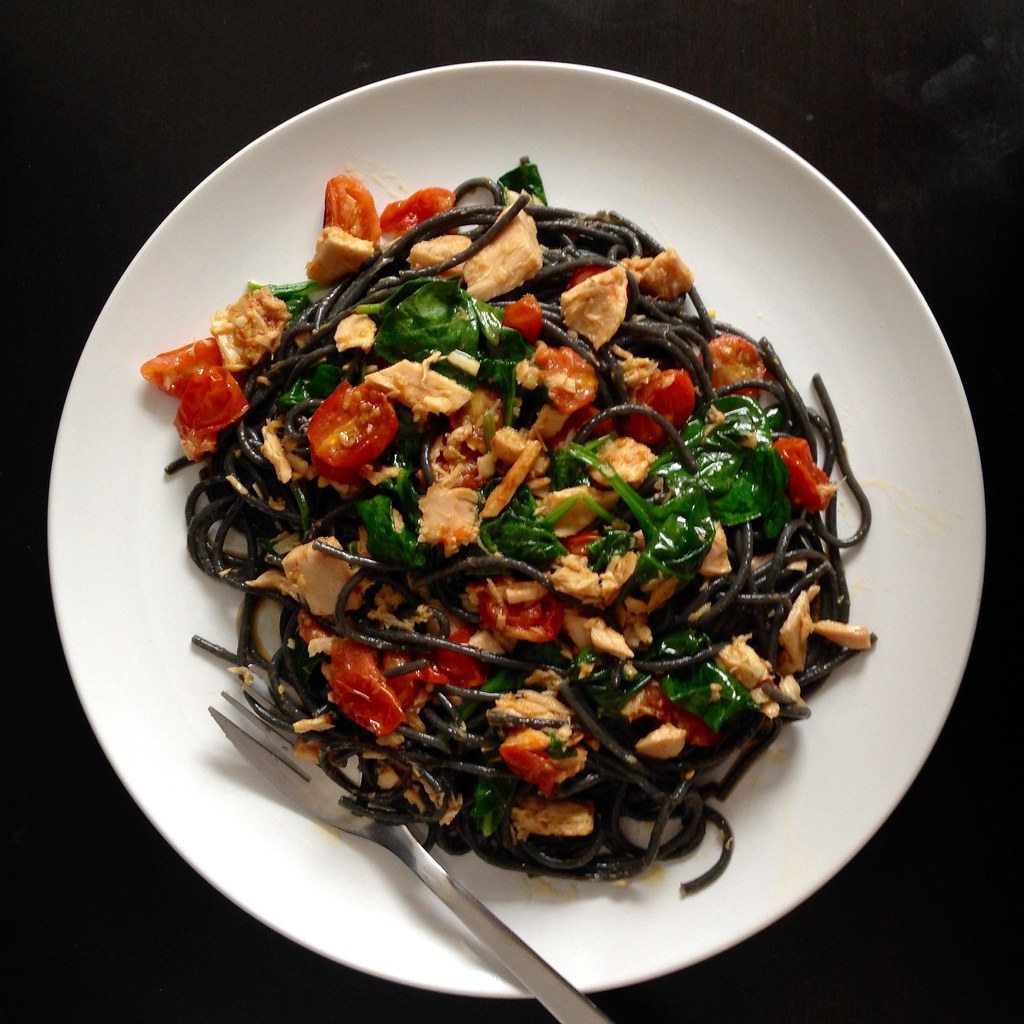
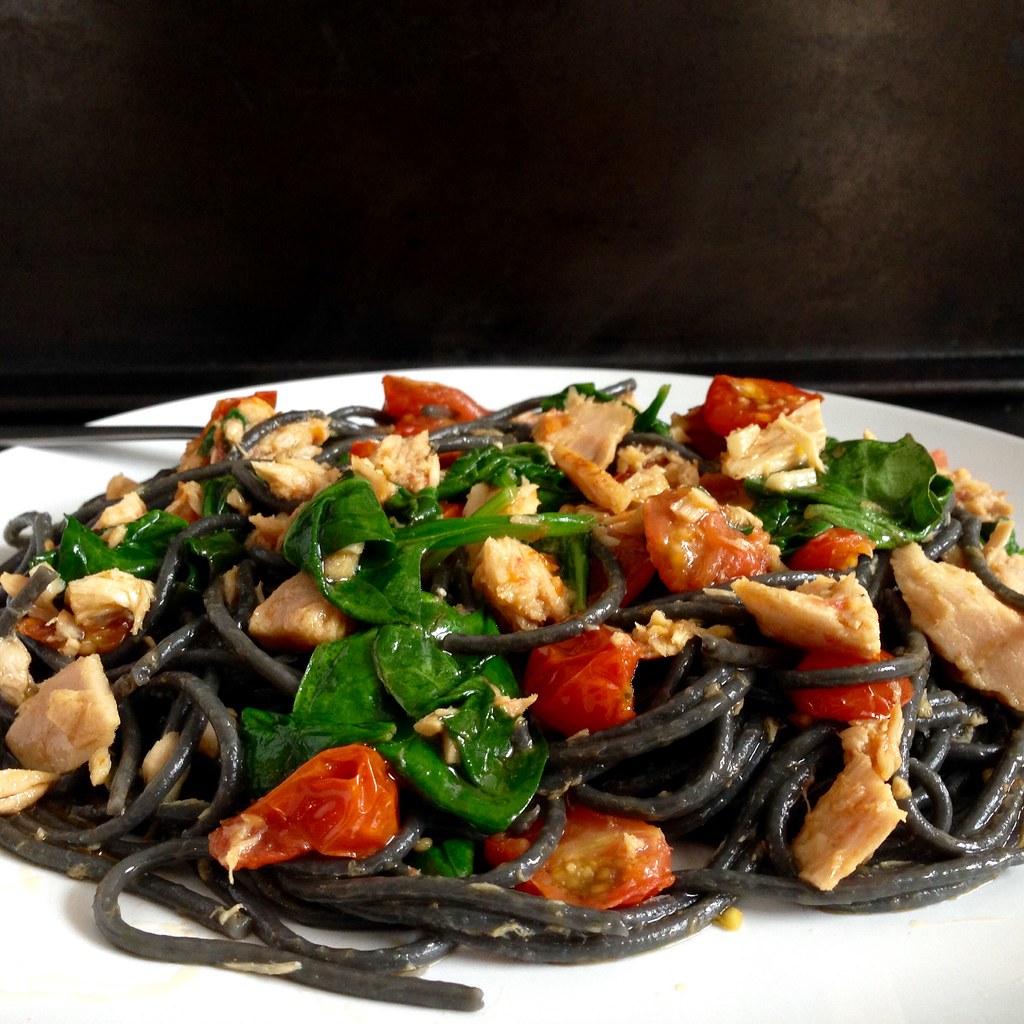
I have made this dish four times in as many days since I first discovered it. Maybe it's because I'm feeling nostalgic for Italy and wanting to get out of this crazy New England snow. Maybe it's the way the olive oil, tomatoes, and lemon juice come together like magic to make this unbelievably fresh tasting sauce. Or maybe it's the way the tuna and garlic linger on the tongue and then in my dreams. Whatever it is, you need to make this pasta stat.
This dish comes together quickly; while the pasta is cooking, you'll be starting the sauce so that by the time the pasta is almost al dente, you toss it into the pan that the sauce is in to finish cooking it. So I usually start cutting up the tomatoes and mincing the garlic while I wait for the water to boil.
For this recipe, make sure you use the tuna that's packed in olive oil, not water. And don't pour out the oil; add it to the sauce. Speaking of olive oil, you'll want to use a good one, and lots of it. I used the last of the olive oil I got from Tuscany for this, and it was worth it. I also used the last of the squid ink pasta I got from Venice since I figured the brininess would go well with the tuna (and because it's photogenic). All this just means I'll have to go back to Italy soon to stock up again!
First Night in Florence Spaghetti (adapted from The Solitary Cook by way of Food52)
serves 2
1/2 package of spaghetti
Kosher salt and freshly ground pepper, to taste
Good olive oil, and lots of it
1 pint grape tomatoes, quartered
3 cloves garlic, minced
1 tin of tuna packed in olive oil
A few handfuls of spinach or Swiss chard leaves
Juice of 1/2 a lemon
Get a large pot of salted water boiling. Add the pasta and start a timer to cook for 3 minutes less than what the package calls for (i.e. if the package says to cook the spaghetti for 10 minutes, cook it for 7).
In a pan large enough to hold all the pasta, add 5-6 generous glugs of olive oil heat on medium-high (it should be at least twice what you think you'll need). Once the oil starts to shimmer, add the tomatoes and a generous pinch of salt. While the tomatoes soften, you may want to (carefully!) smoosh them to help release their juices. When there are 2 minutes left on the pasta, add the minced garlic. When there is 1 minute left on the pasta, add the tuna plus the oil it's packed in, breaking up any large chunks of fish.
When the timer is up on the pasta, use tongs or a pasta spoon to add the spaghetti to the pan. Add some of the pasta cooking water to the pan too (the original recipe calls for a few ladlefuls, but I like a little less than that). Add the greens and lemon juice and toss everything around, cooking until the leaves is just wilted. Taste the sauce and season with salt and pepper as needed.
Next: Hugo & Victor's Pink Grapefruit Tart
Previously: Odile's Fresh Orange Cake
Last Year: Okonomiyaki
Six Years Ago: New England Clam Chowda with Homemade Oyster Crackers
Tuesday, August 26, 2014
Crispy Skinned Salmon Teriyaki
The other best meal I've had in my life (besides lunch at L'Arpège) was at Eric Ripert's Blue at the Ritz Carlton on Grand Cayman. I ordered the tasting menu, and course after course of the best seafood I'd ever had were brought out to me starting with his signature Tuna Foie Gras.
I'm usually not a fan of foie gras not only because of the animal cruelty behind it, but also because I just don't really think it lives up to the hype. But I'll admit, that dish was the first time I liked foie gras.
Sadly, I've never been to Ripert's outpost in New York, La Bernardin, but I will gladly try his genius recipe for making crispy-skinned fish. The technique is surprisingly simple and uses a secret ingredient: Wondra flour. If you can't find this in your supermarket, you can substitute with all-purpose flour or fine cornmeal.
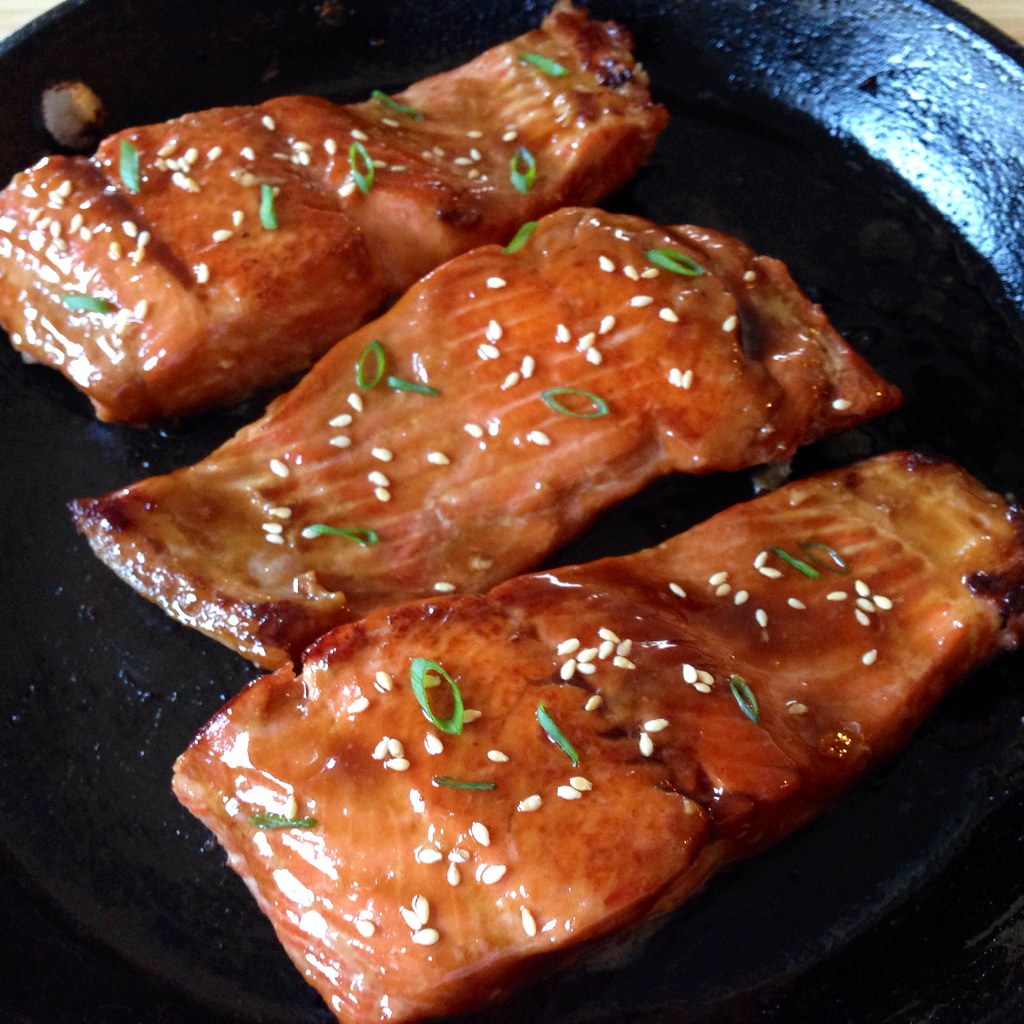
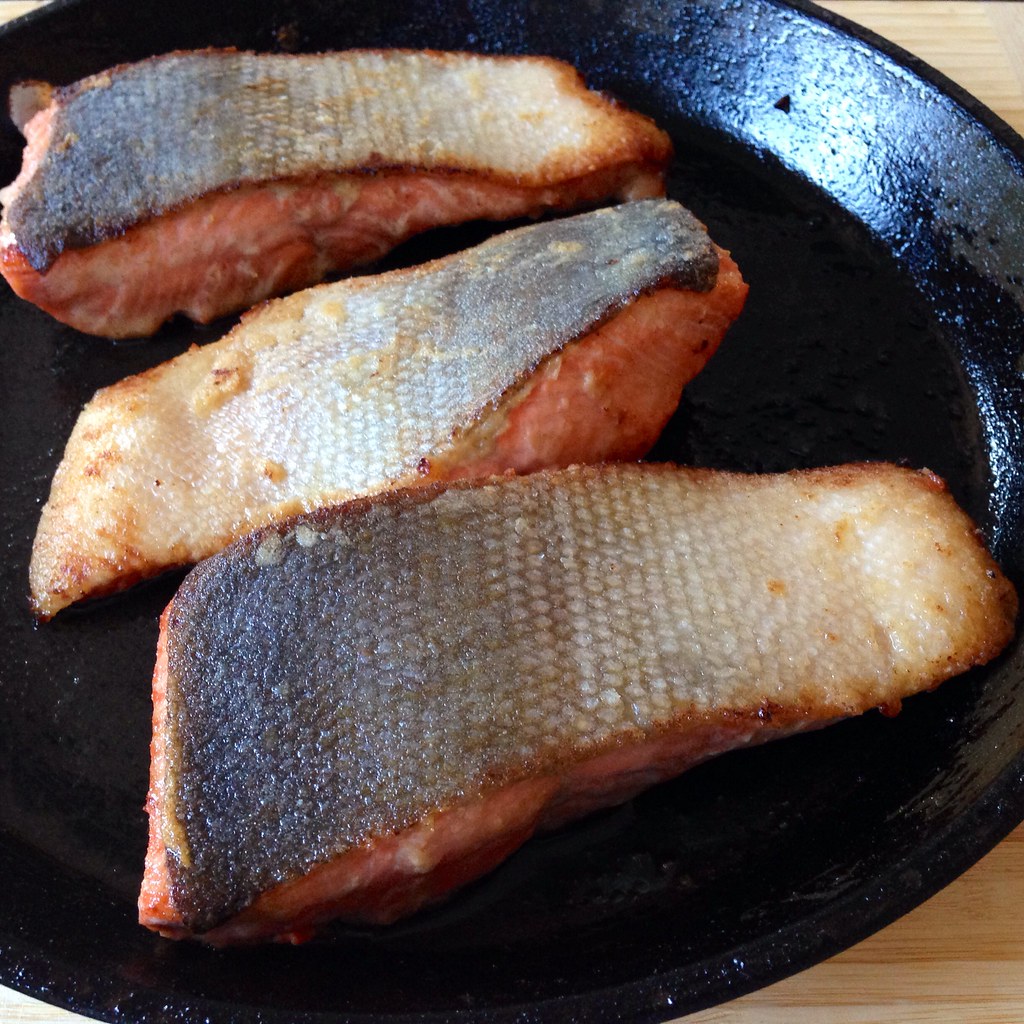
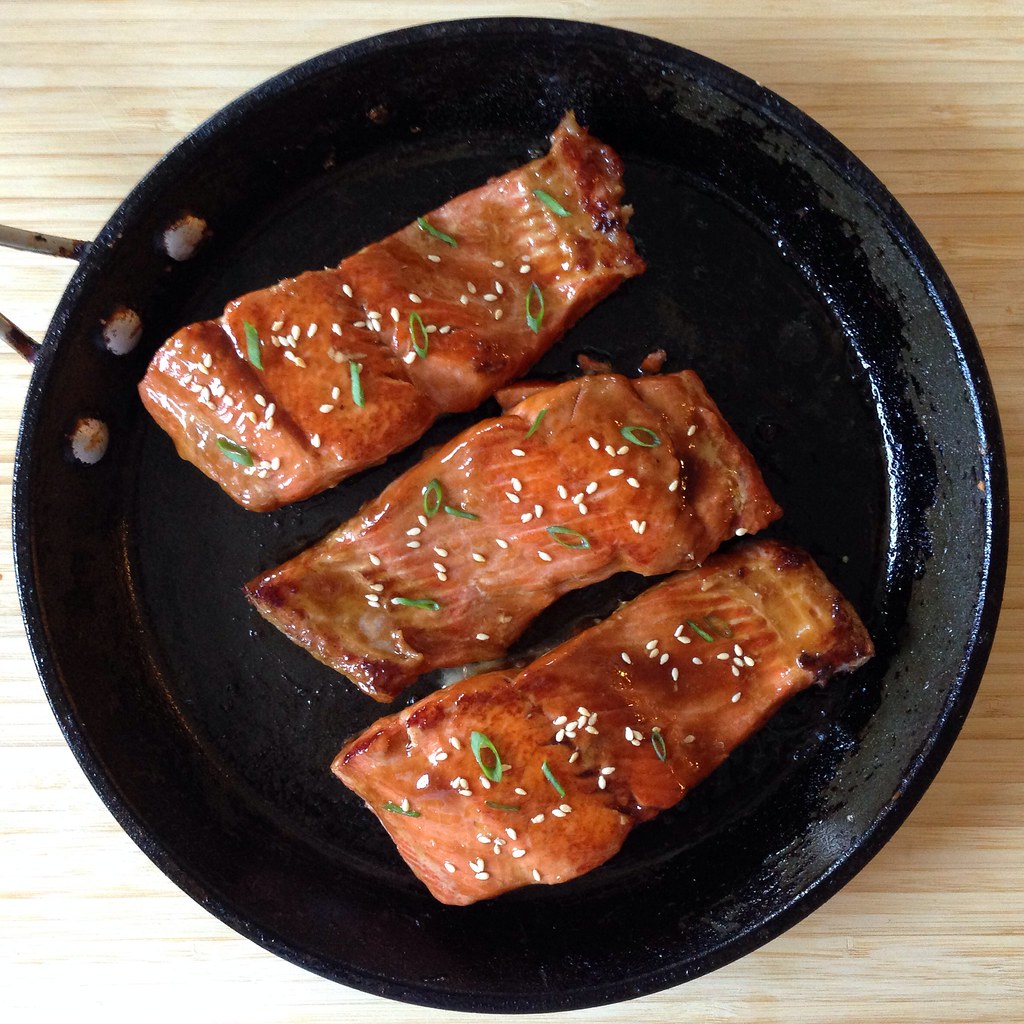
I decided to take the recipe a step further and marinate the salmon first and then slather it with some homemade teriyaki sauce at the end. I liked this technique because instead of a dry slab of salmon meat topped with a corn syrup sweetened soy sauce, you get a moist, flavorful fillet of salmon with a crispy skin.
Crispy Skinned Salmon Teriyaki (adapted from Food52)
serves 4
4 six oz. skin-on salmon fillets
1/4 cup soy sauce
1/4 cup mirin
1/4 cup sake or rice wine
1 tablespoon sugar
1 teaspoon cornstarch mixed in 1 tablespoon water
1 tablespoon canola oil
Wondra flour for dusting
Chopped scallions and sesame seed for garnishing
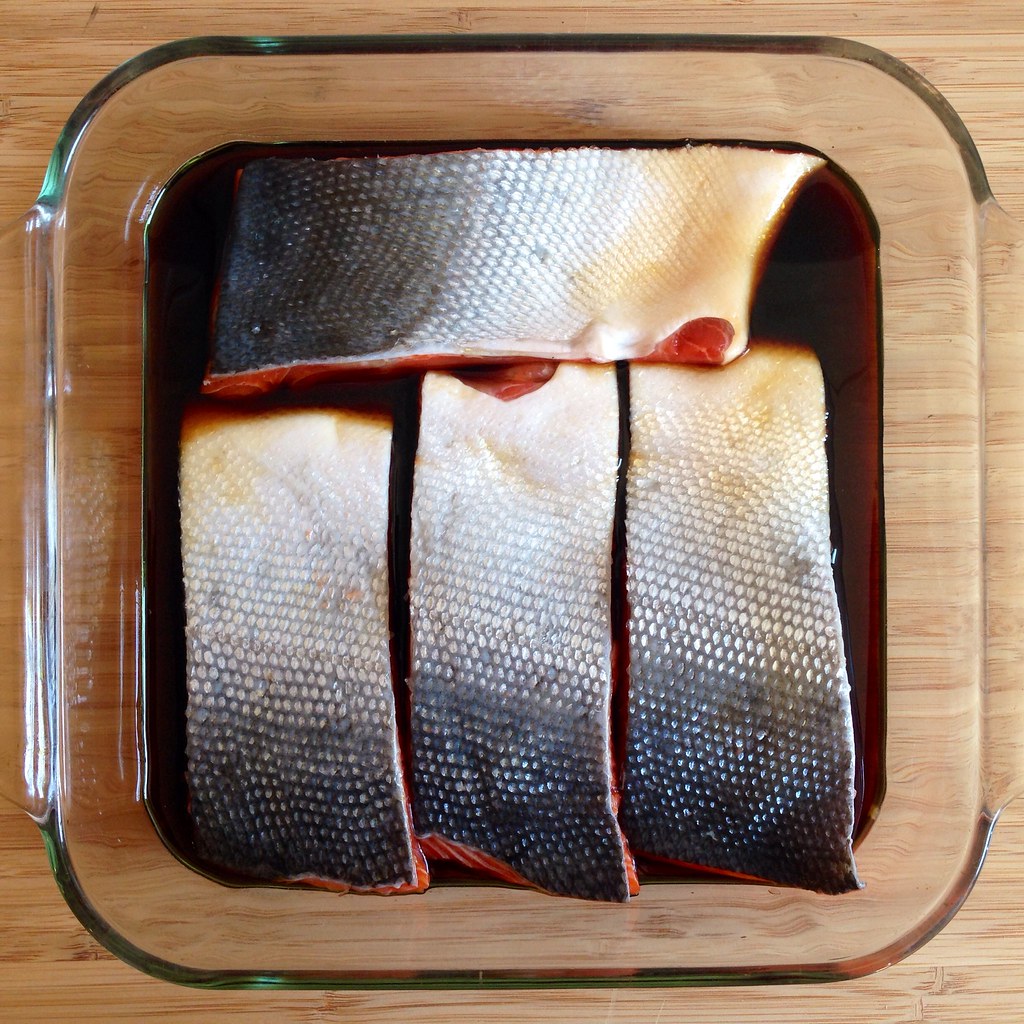
Mix together the soy sauce, mirin, sake, and sugar and heat in the microwave on high for a minute. Stir until the sugar has completely dissolved. Transfer to a small baking dish and add the salmon fillets, skin side up. Cover and marinate in the refrigerator for 30 minutes to overnight.
Preheat the oven to 400°F.
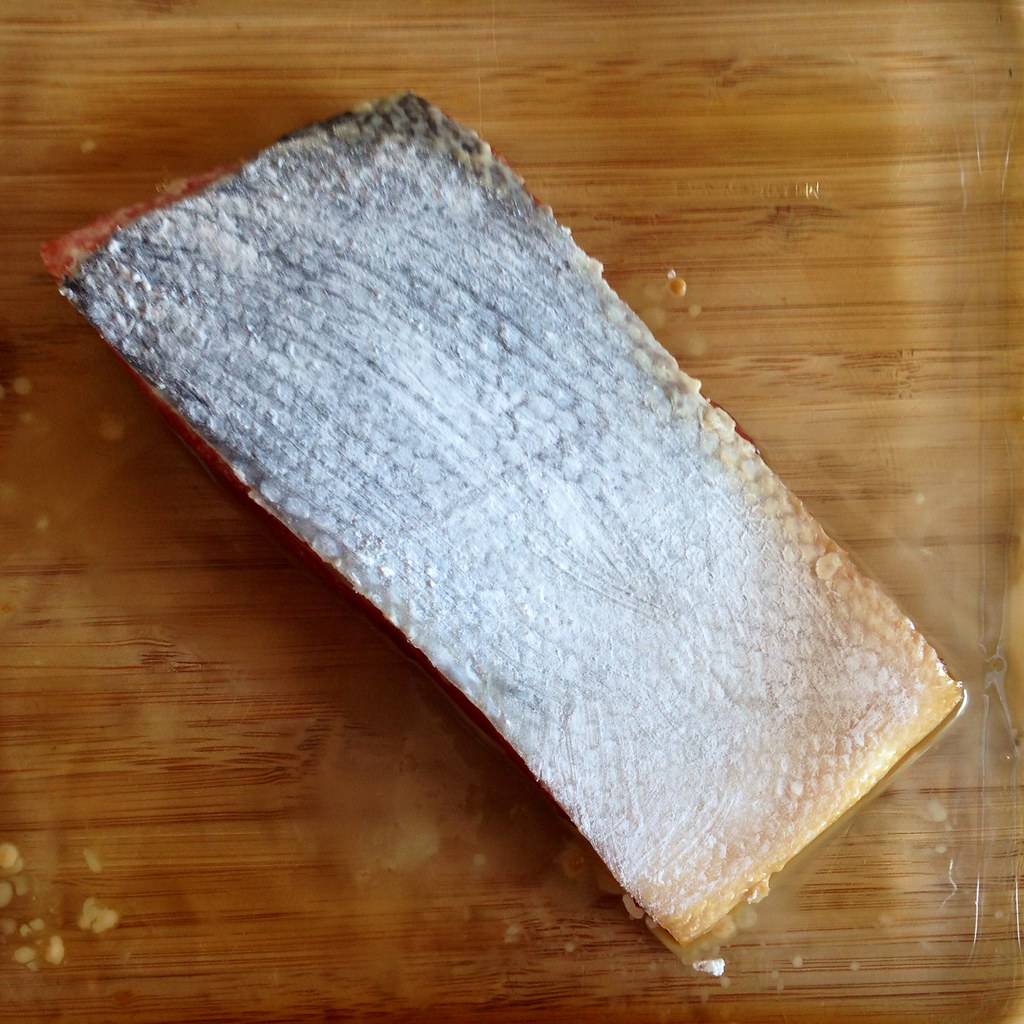
Remove the salmon from the baking dish and reserve the marinade. Dry the skin with a paper towel and dust with Wondra flour, blowing off the excess.
Pour the marinade into a small saucepan and heat on medium until it starts to simmer. Add the cornstarch slurry and stir until the teriyaki sauce thickens. Remove from heat and set aside.
Heat the oil in a large, oven- and flame-proof sauté pan on the stovetop until the oil is very hot, but not smoking. Put the fish in the pan, skin side down, and press down on the fish with a spatula. Sear on the stovetop over medium heat until golden brown on the bottom, about 3 minutes.
Turn the fish over, put the pan in the oven, and cook another 2 to 3 minutes, until a metal skewer can be easily inserted into the center of the fillet and, if left for 5 seconds, feels just warm when touched to your lip.
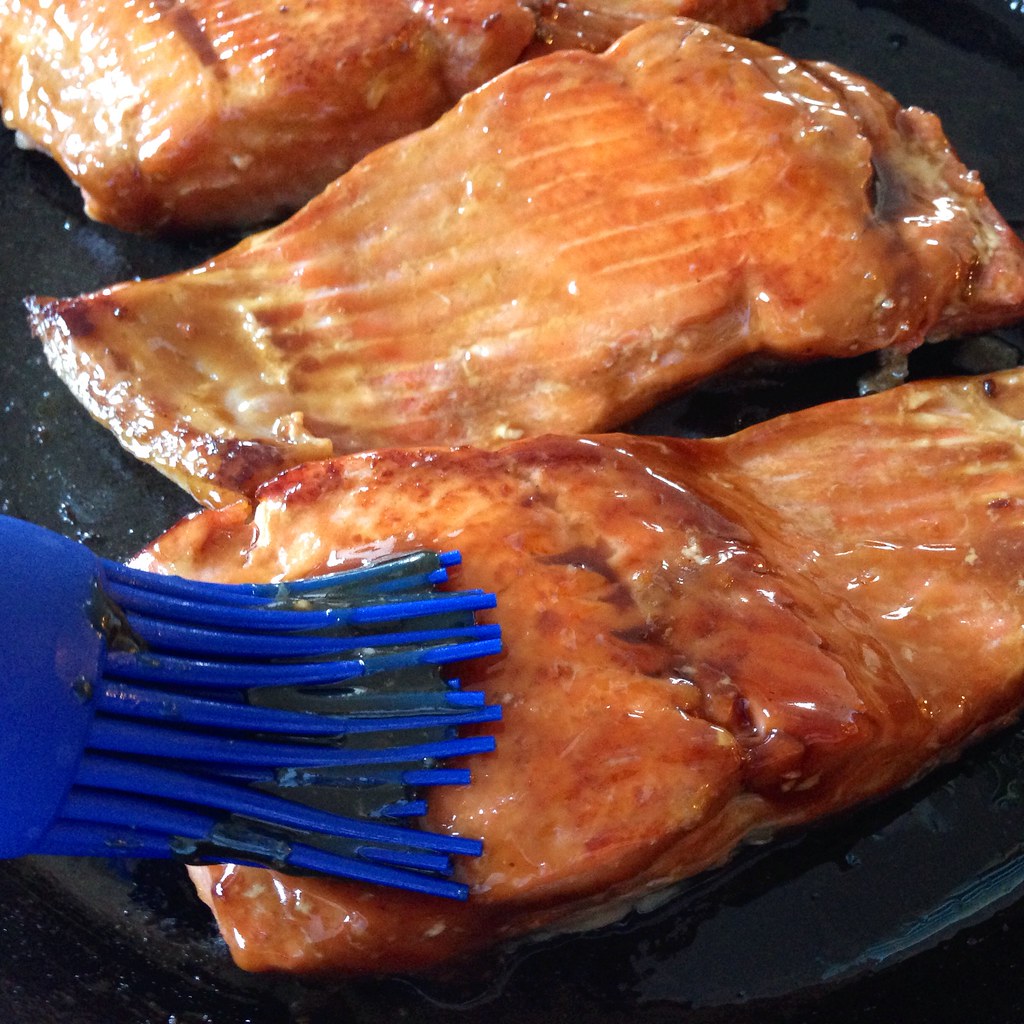
Remove from the oven, turn the fillets over again, and brush with the teriyaki sauce. Garnish with chopped scallions and sesame seeds and serve immediately.
Next: Salt and Pepper Tofu
Previously: Bill Smith's Atlantic Beach Pie
Last Year: Mozzarella Stuffed Arancini (Risotto Balls)
I'm usually not a fan of foie gras not only because of the animal cruelty behind it, but also because I just don't really think it lives up to the hype. But I'll admit, that dish was the first time I liked foie gras.
Sadly, I've never been to Ripert's outpost in New York, La Bernardin, but I will gladly try his genius recipe for making crispy-skinned fish. The technique is surprisingly simple and uses a secret ingredient: Wondra flour. If you can't find this in your supermarket, you can substitute with all-purpose flour or fine cornmeal.
I decided to take the recipe a step further and marinate the salmon first and then slather it with some homemade teriyaki sauce at the end. I liked this technique because instead of a dry slab of salmon meat topped with a corn syrup sweetened soy sauce, you get a moist, flavorful fillet of salmon with a crispy skin.
Crispy Skinned Salmon Teriyaki (adapted from Food52)
serves 4
4 six oz. skin-on salmon fillets
1/4 cup soy sauce
1/4 cup mirin
1/4 cup sake or rice wine
1 tablespoon sugar
1 teaspoon cornstarch mixed in 1 tablespoon water
1 tablespoon canola oil
Wondra flour for dusting
Chopped scallions and sesame seed for garnishing
Mix together the soy sauce, mirin, sake, and sugar and heat in the microwave on high for a minute. Stir until the sugar has completely dissolved. Transfer to a small baking dish and add the salmon fillets, skin side up. Cover and marinate in the refrigerator for 30 minutes to overnight.
Preheat the oven to 400°F.
Remove the salmon from the baking dish and reserve the marinade. Dry the skin with a paper towel and dust with Wondra flour, blowing off the excess.
Pour the marinade into a small saucepan and heat on medium until it starts to simmer. Add the cornstarch slurry and stir until the teriyaki sauce thickens. Remove from heat and set aside.
Heat the oil in a large, oven- and flame-proof sauté pan on the stovetop until the oil is very hot, but not smoking. Put the fish in the pan, skin side down, and press down on the fish with a spatula. Sear on the stovetop over medium heat until golden brown on the bottom, about 3 minutes.
Turn the fish over, put the pan in the oven, and cook another 2 to 3 minutes, until a metal skewer can be easily inserted into the center of the fillet and, if left for 5 seconds, feels just warm when touched to your lip.
Remove from the oven, turn the fillets over again, and brush with the teriyaki sauce. Garnish with chopped scallions and sesame seeds and serve immediately.
Next: Salt and Pepper Tofu
Previously: Bill Smith's Atlantic Beach Pie
Last Year: Mozzarella Stuffed Arancini (Risotto Balls)
Thursday, August 14, 2014
Citrus Cured Salmon
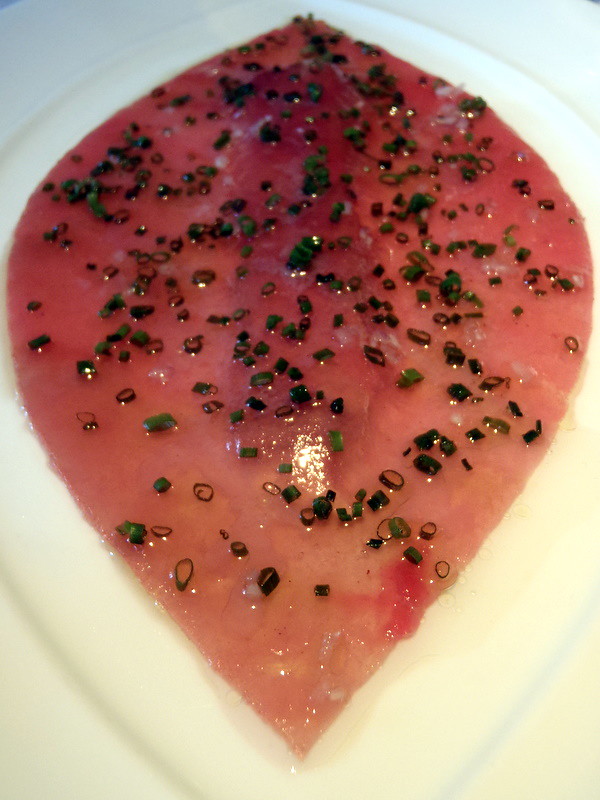
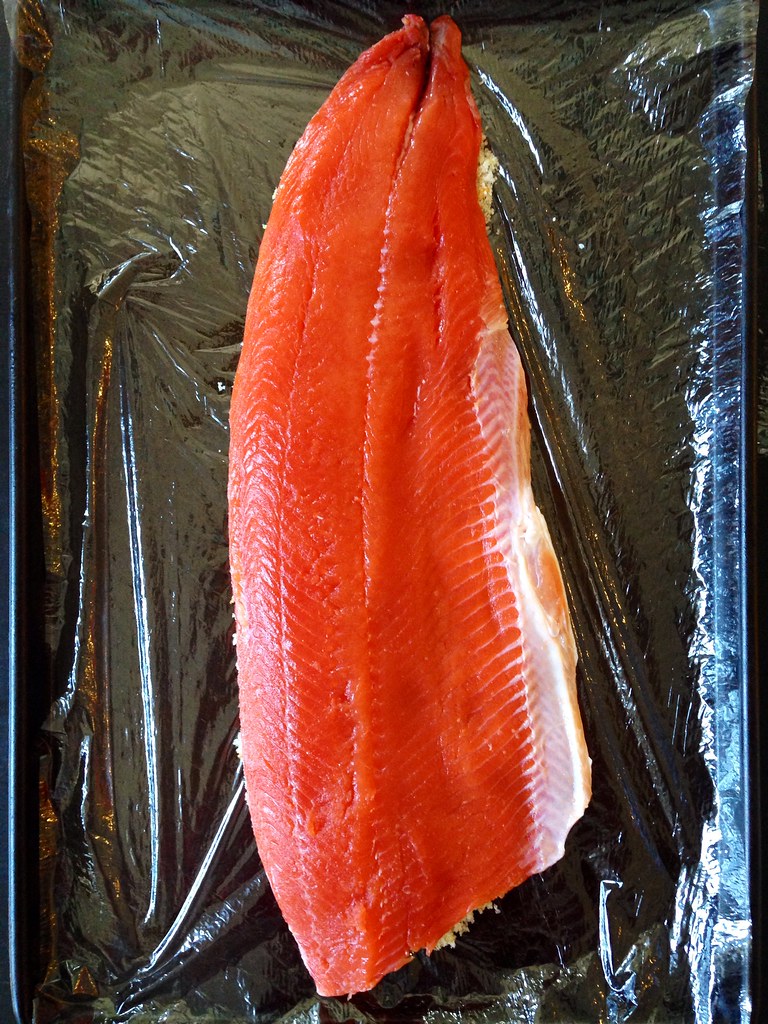
Ever since I saw Jen's post for Thomas Keller's citrus marinated salmon, I've wanted to try it out. I love cold-smoked salmon, and the thought that I could make something similar at home was really intriguing to me. I was in Seattle again recently, and went to Pike Place Market specifically to get another Copper River sockeye salmon just for this purpose. Since the salmon is never actually cooked, you'll want to get the freshest sushi-grade salmon available and treat it as you would if preparing sushi by keeping it chilled as much as possible.
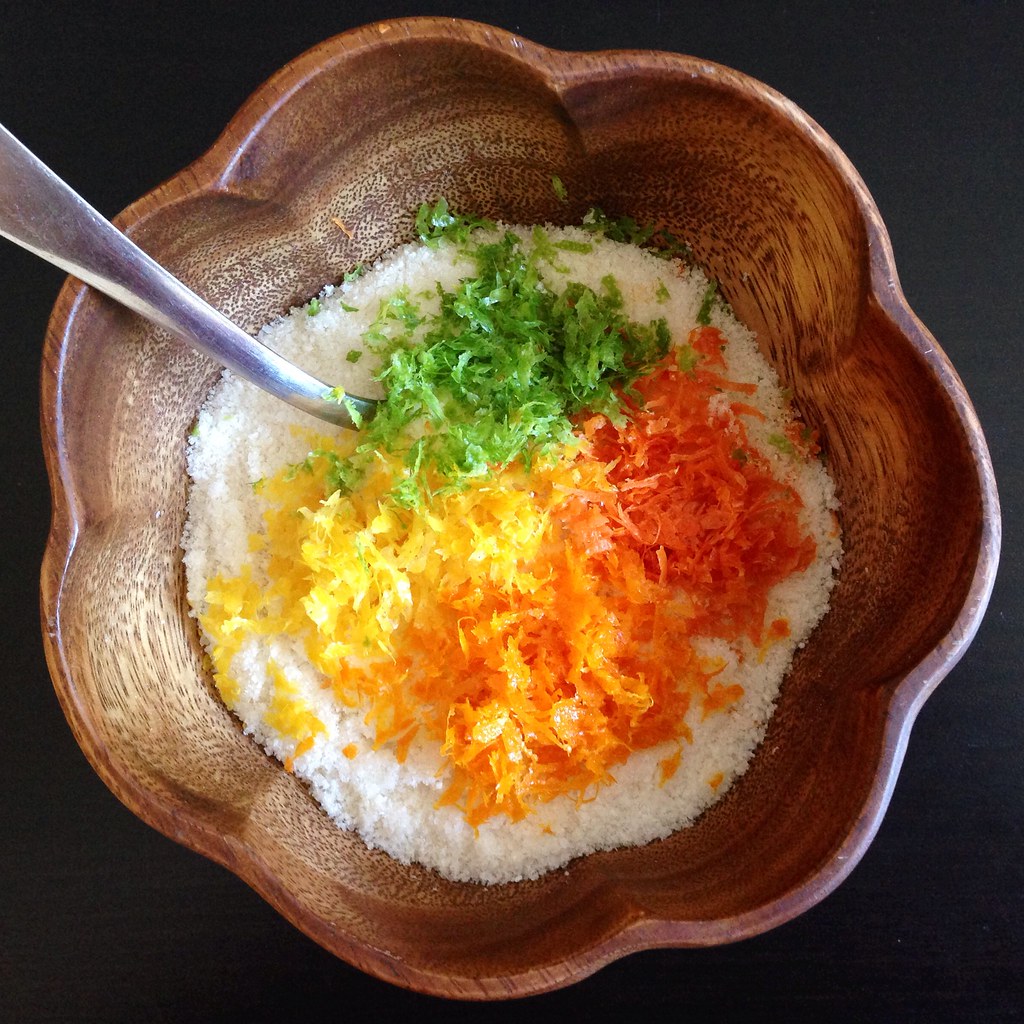
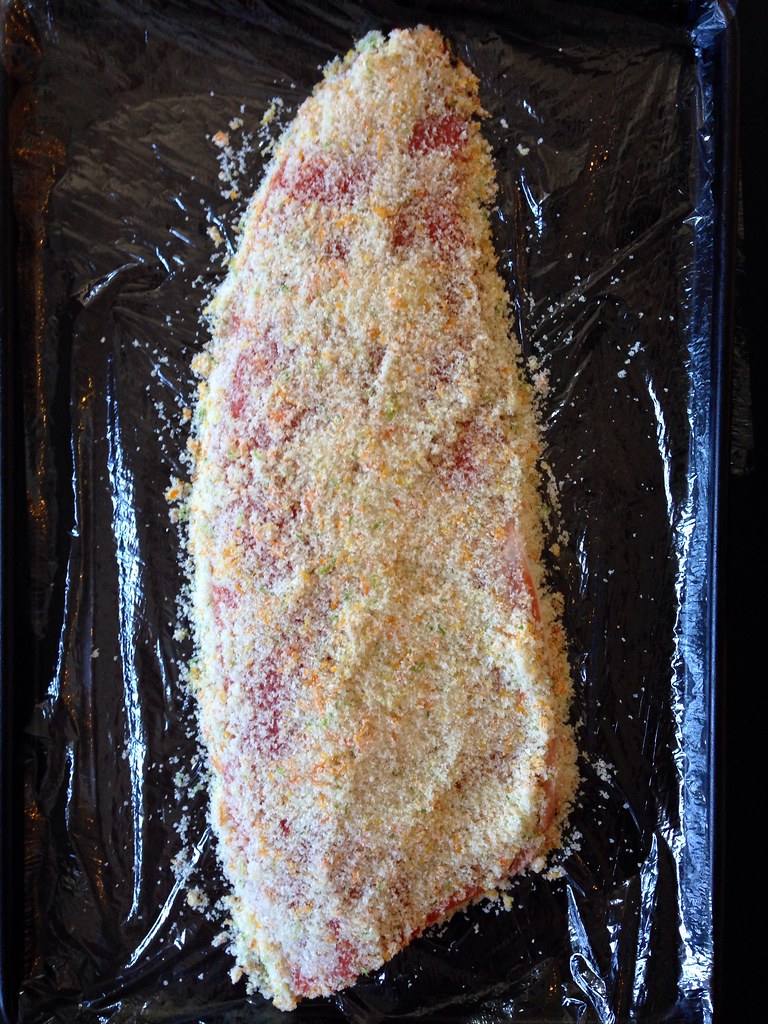
Jen's recipe calls for a teaspoon and a half each of lime zest, lemon zest, orange zest, and grapefruit zest, but it's okay if you don't have all four citrus fruits; you just need about 2 tablespoons total of citrus zest for this recipe. Since I had the time to cure my salmon for a full 24 hours, I chose not to press the salmon while curing it, trusting that time and salt would perform the necessary osmosis.
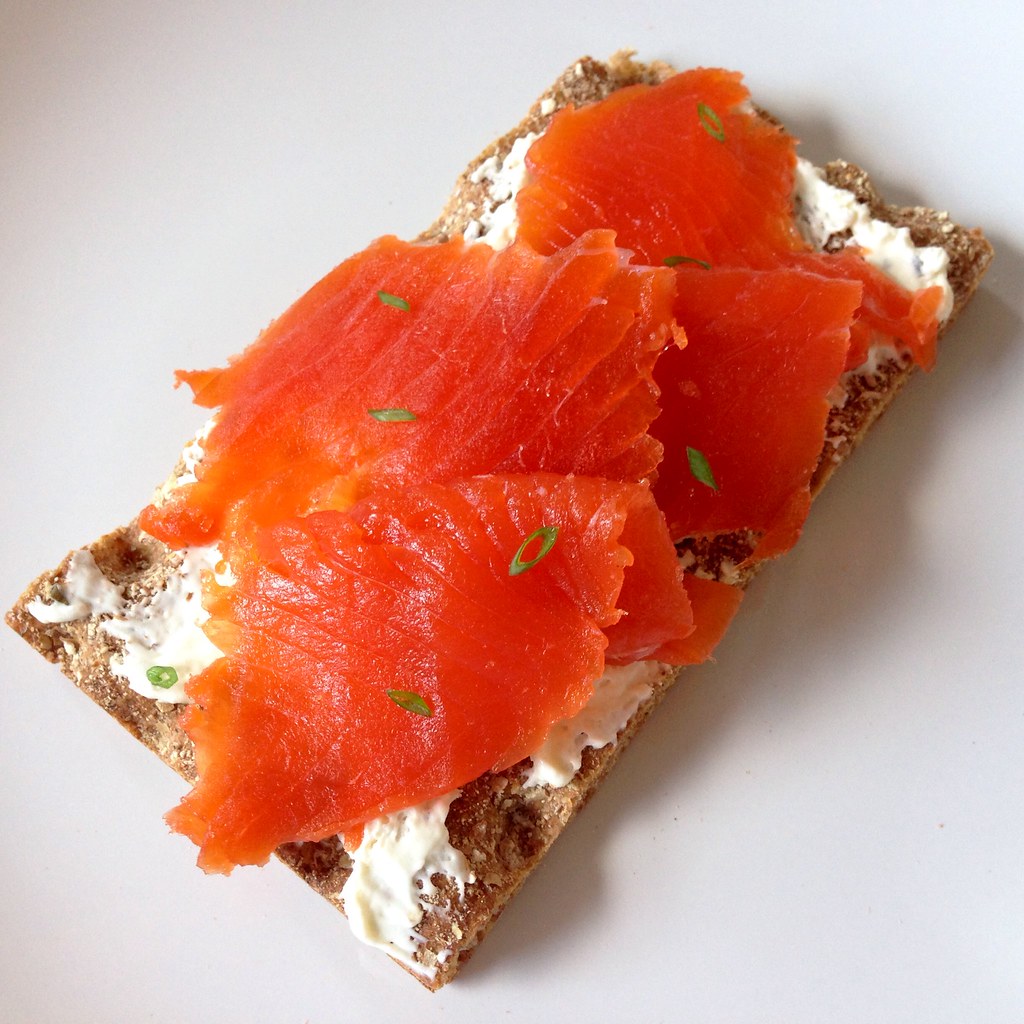
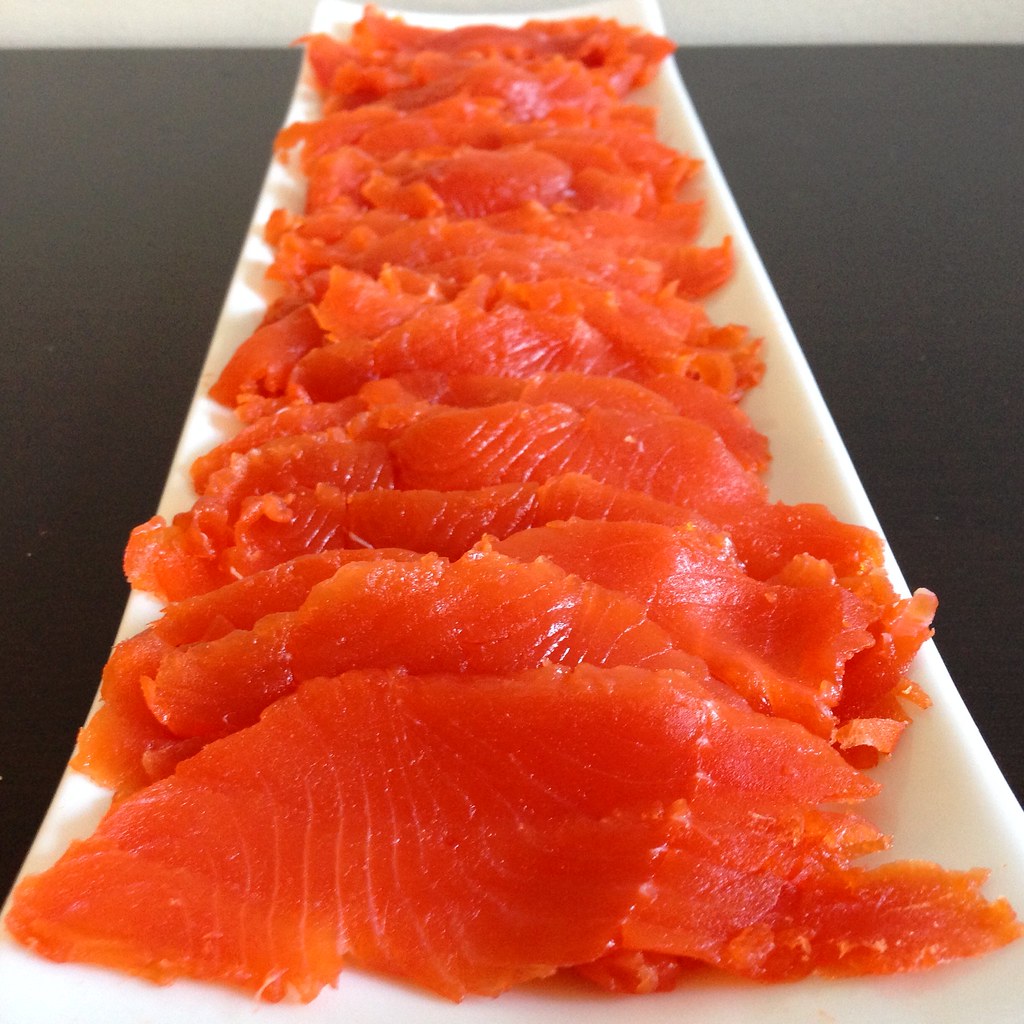
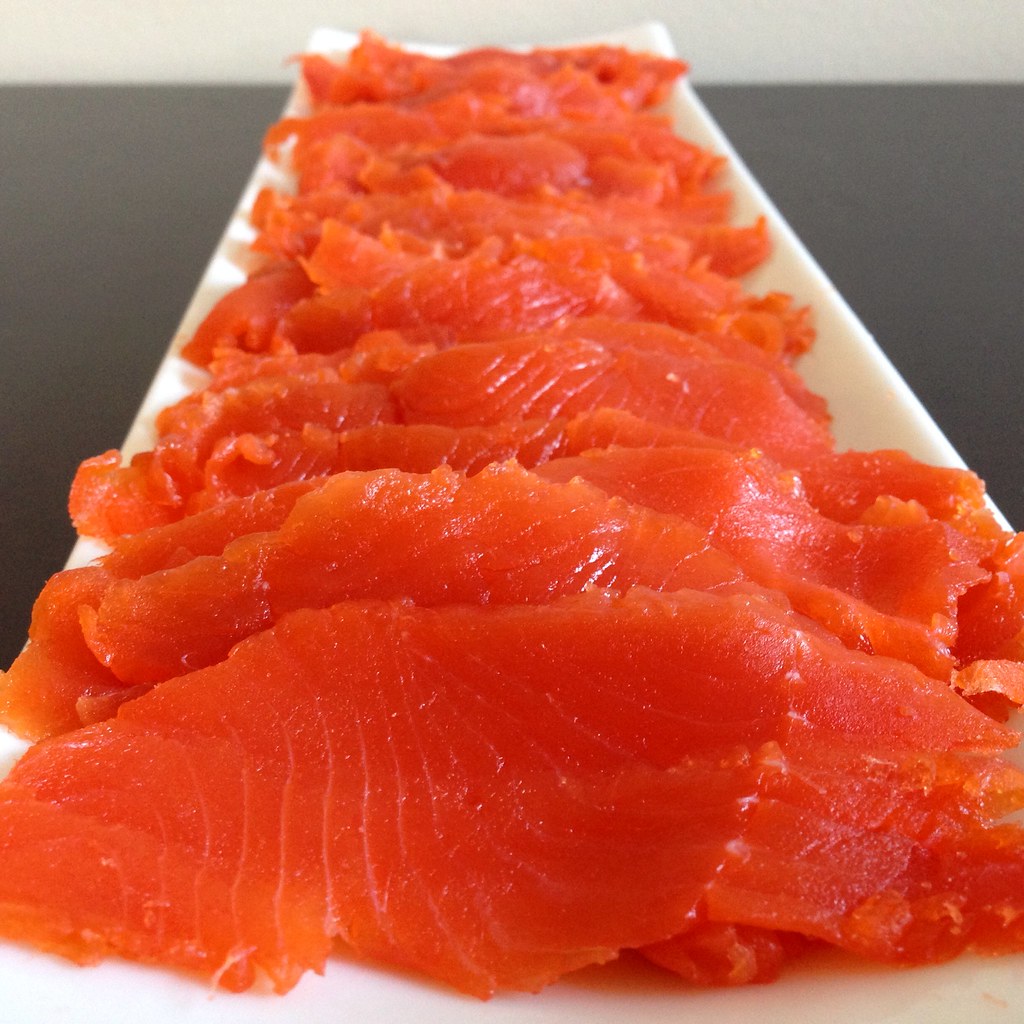
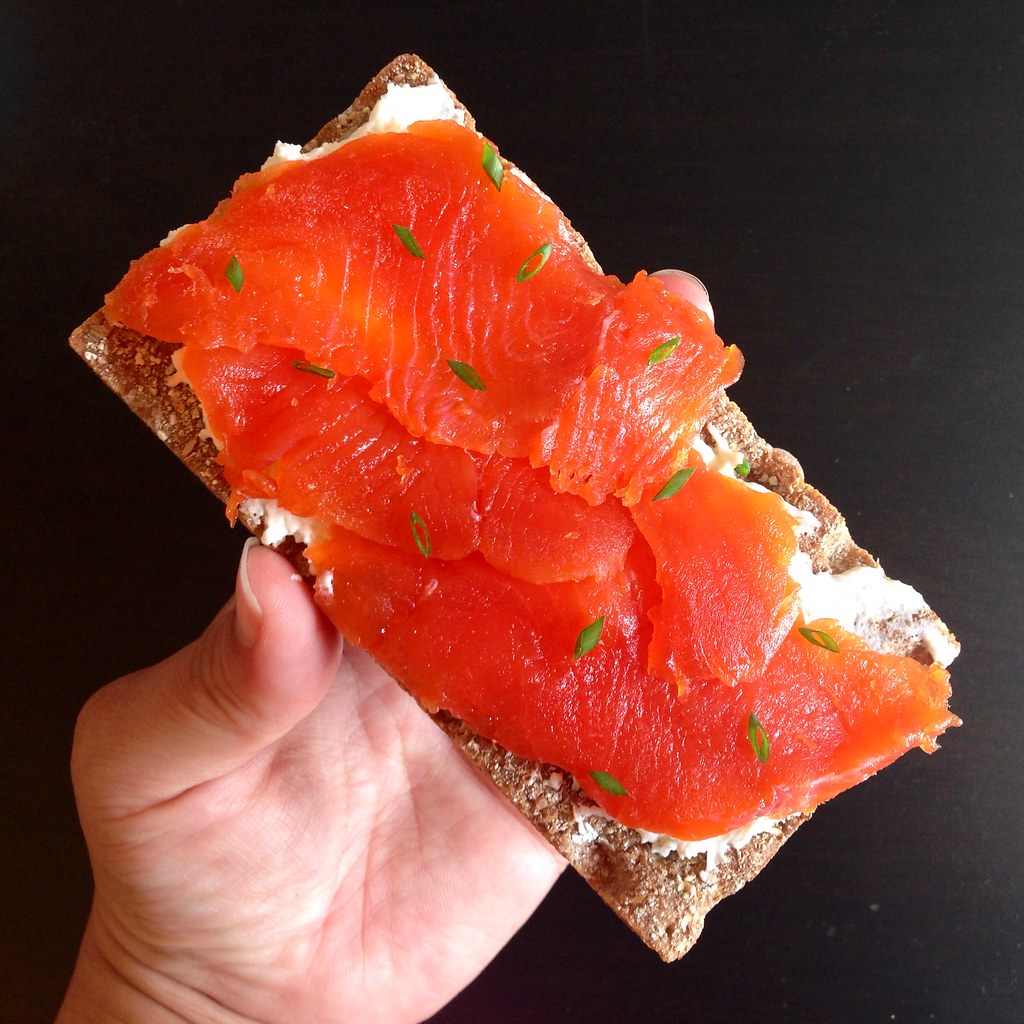
The change in texture of the cured salmon is pretty spectacular. It's a lot more dense and almost gummy like pâte de fruit. By itself, the cured salmon can be pretty salty, but served with some crème fraîche or sour cream and crackers, it makes for a wonderfully impressive appetizer!
Citrus Cured Salmon (adapted from Tiny Urban Kitchen)
serves 6-8
Zest from 1 pink grapefruit
Zest from 1 orange
Zest from 1 lemon
Zest from 1 lime
1/2 cup kosher salt
1/2 cup sugar
1 salmon filet, skin removed (about 2 lbs.)
Mix the zests, salt, and sugar together.
Feel along the salmon and if there are any pin bones, remove them with tweezers or pliers.
Line a large tray with enough plastic wrap to completely wrap the filet. Spoon half of the salt mixture onto the tray in the shape of the filet. Place the filet on top, and spoon the rest of the salt mixture on top of the salmon. Spread the salt mixture evenly over the fish.
Wrap well with the plastic wrap, and transfer the tray to the refrigerator. Let cure for 24 hours.
Unwrap the salmon and rinse under cold water. Pat dry and transfer to a cutting board. With a sharp knife, cut thin slices at an angle against the grain.
Serve with crème fraîche, sour cream, or cream cheese and crackers or bread. I served mine with chive cream cheese and hearty crispbread.
After you've zested the fruits, you'll want to use them right away for something else or else they'll dry up really quickly. I recommend juicing them; I used the juice to make an Atlantic Beach Pie!
Next: Bill Smith's Atlantic Beach Pie
Previously: Coconut Ice Cream with Mango Passion Caramel Swirl
Last Year: Shakshuka Pizza
Friday, August 1, 2014
Grace's Ginger Scallion Fish
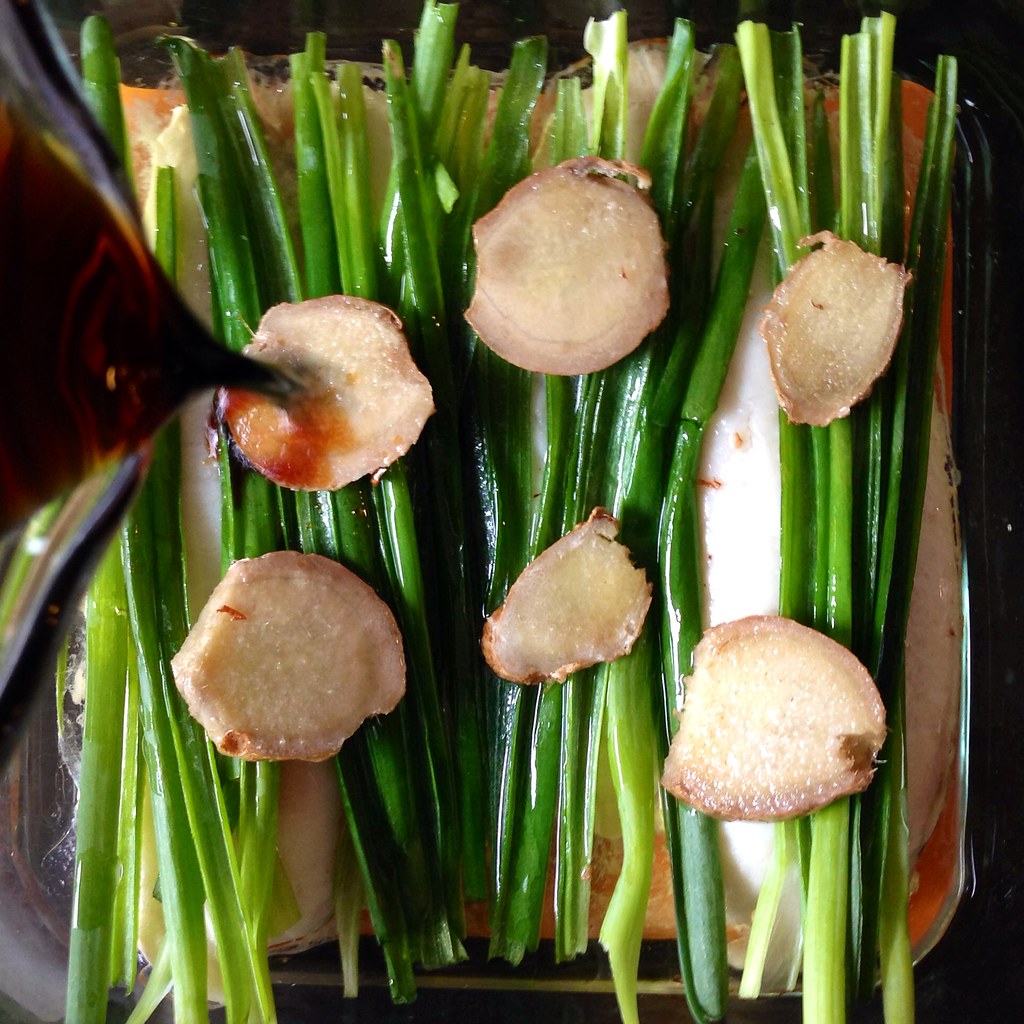
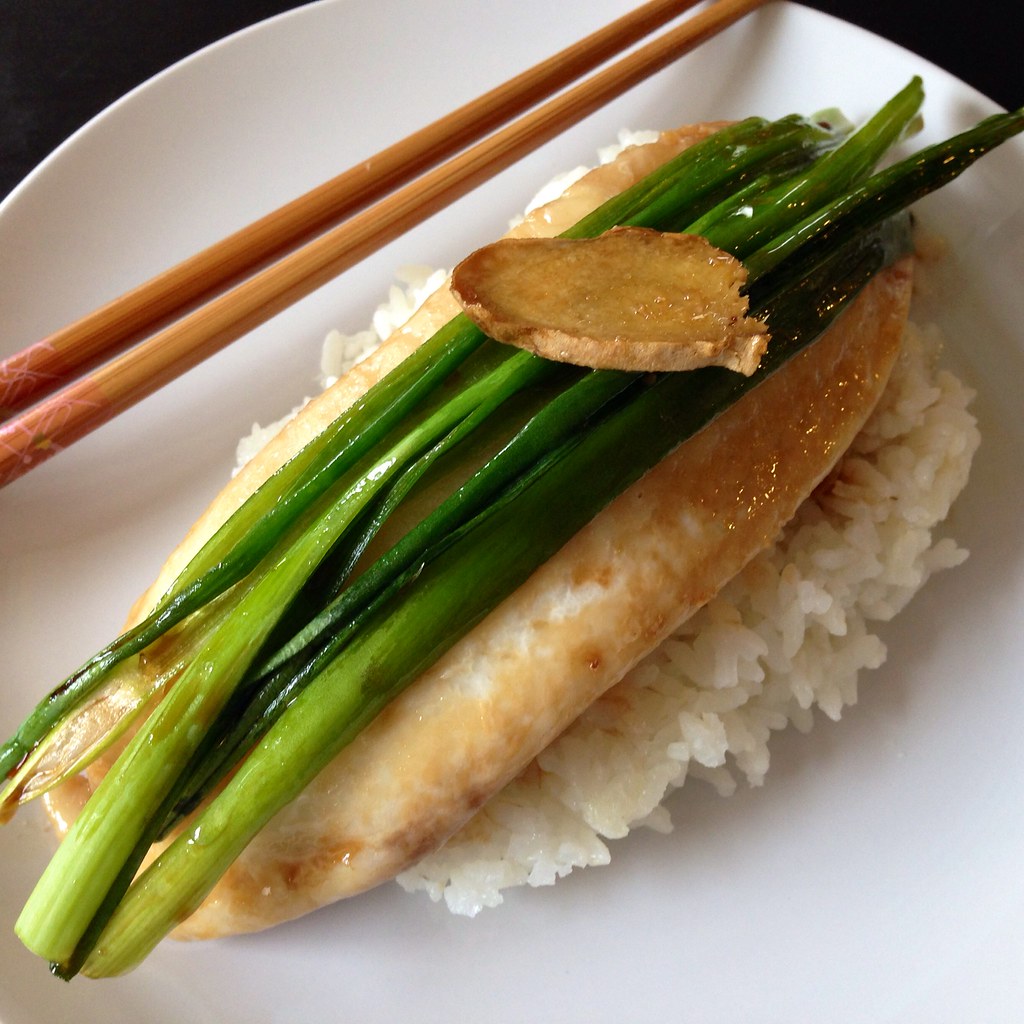
One of my friends posted a picture of some steamed fish she made on Facebook, and it looked so good I had to ask for the recipe. Turns out the fish isn't so much steamed as baked in the oven, but it's so moist and tender, it might as well have been steamed!
First you bake the fish with some rice wine and ginger slices just until the fish is barely done. The ginger slices are then added to some oil being heated on the stove, and the fish is topped with scallions. Then comes my favorite part: you pour the ginger-infused hot oil over the scallions and fish to seal in moisture and flavor. Finally a sweet soy based sauce is poured over everything. This is great served over steamed rice, and in my opinion, is even better the next day when the fish has absorbed some of the sauce!
Grace's Ginger Scallion Fish
serves 2-4
1-2 lbs. white fish filets (I've used cod and tilapia, but I bet sole, flounder, and orange roughy would work well, too)
5 tablespoons rice wine, divided
2 inch ginger root, thinly sliced
1/4 cup vegetable oil
1 bunch scallions, green parts only
6 tablespoons soy sauce
4 tablespoons sugar
5 tablespoons water
Preheat the oven to 400°F.
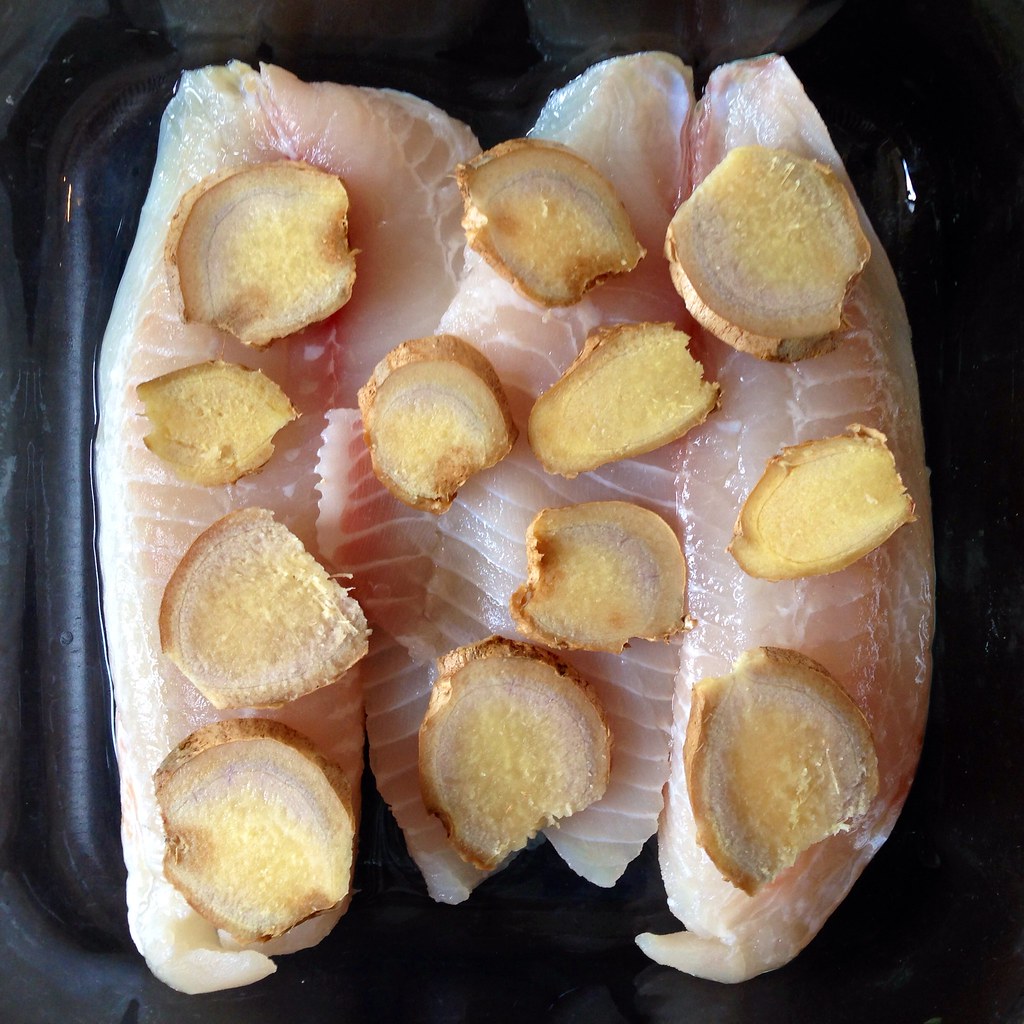
Place the fish filets in a small baking pan. Sprinkle 2 tablespoons of rice wine over the fish and then arrange the ginger slices on top. Bake for 12 minutes or until the fish is just cooked through (do not overcook).
Meanwhile, heat up the oil in a small saucepan over medium low. Mix the remaining 3 tablespoons of rice wine with the soy sauce, sugar, and water and heat for 1 minute in the microwave. Stir to dissolve the sugar.
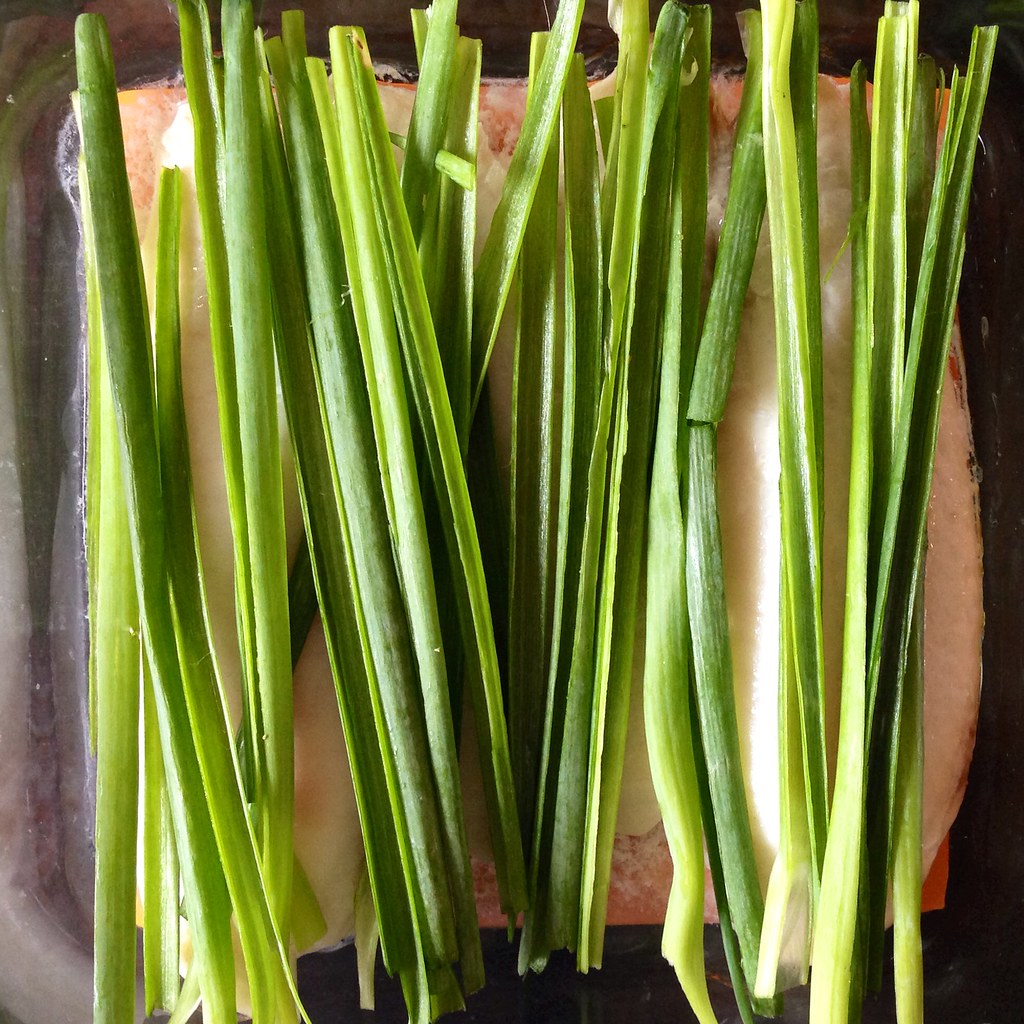
Slice the scallions in half lengthwise or julienne, if you can be bothered.
When the fish is done, remove the ginger slices and transfer to the hot oil. Arrange the scallion on top of the fish.
Bring the heat up on the oil to medium high and cook until the ginger just starts to brown. Immediately pour the hot oil onto the fish. (It's okay with the ginger falls out.)

Pour the soy sauce mixture over the fish and serve warm with rice.
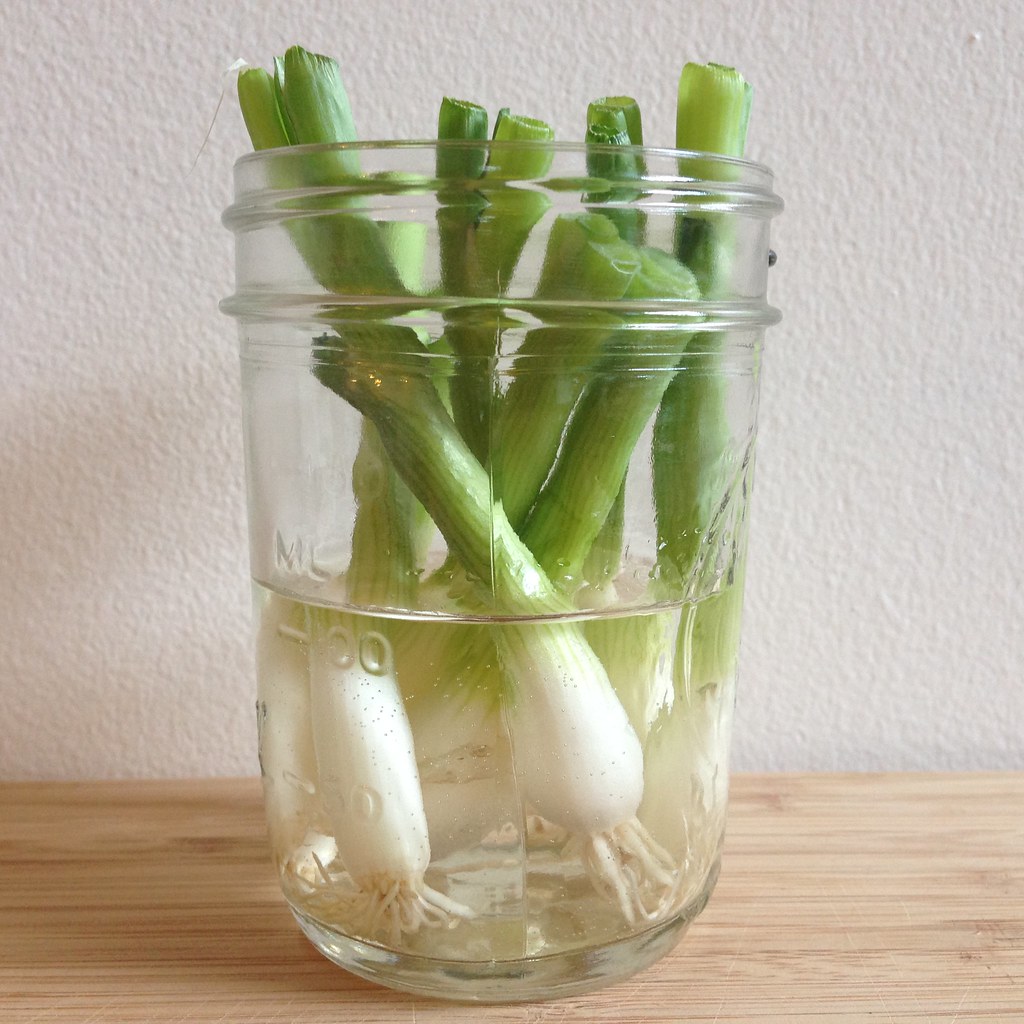
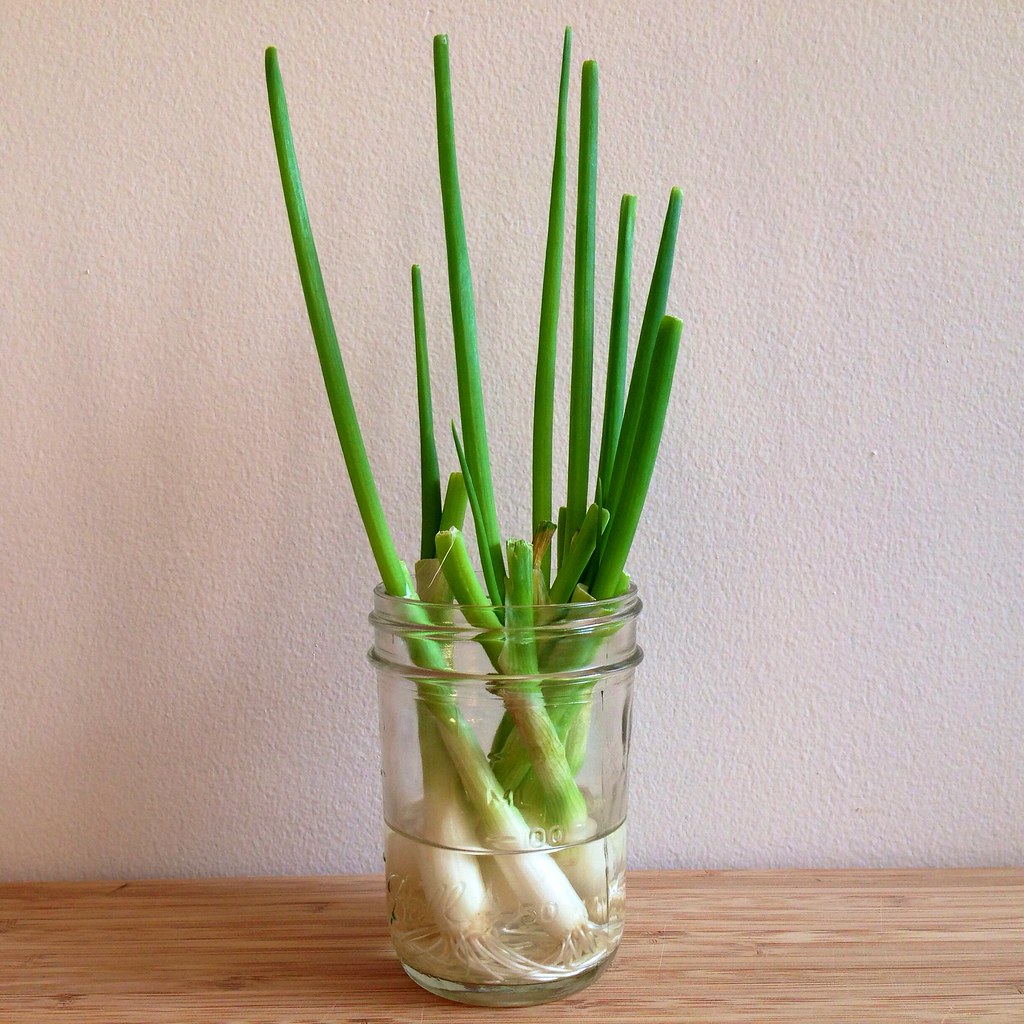
Pro-tip: Don't throw out the scallion roots after you've chopped off the green part! Put them in some water and leave them in a sunny place.
They'll start regrowing, and you can get a lot more mileage out of them. The picture below shows how much they grew in only 5 days! That's enough to make some tomato and eggs over rice. =)
Next: Jacques Genin's Mango Passion Caramels
Previously: Strawberry Pop Tart Slab Pie
Last Year: Cold Soba Noodle Salad with Bake Tofu and Edamame, S'mores Brownie Ice Cream Sandwiches
Monday, June 16, 2014
Orange and Fennel Salt-Baked Salmon
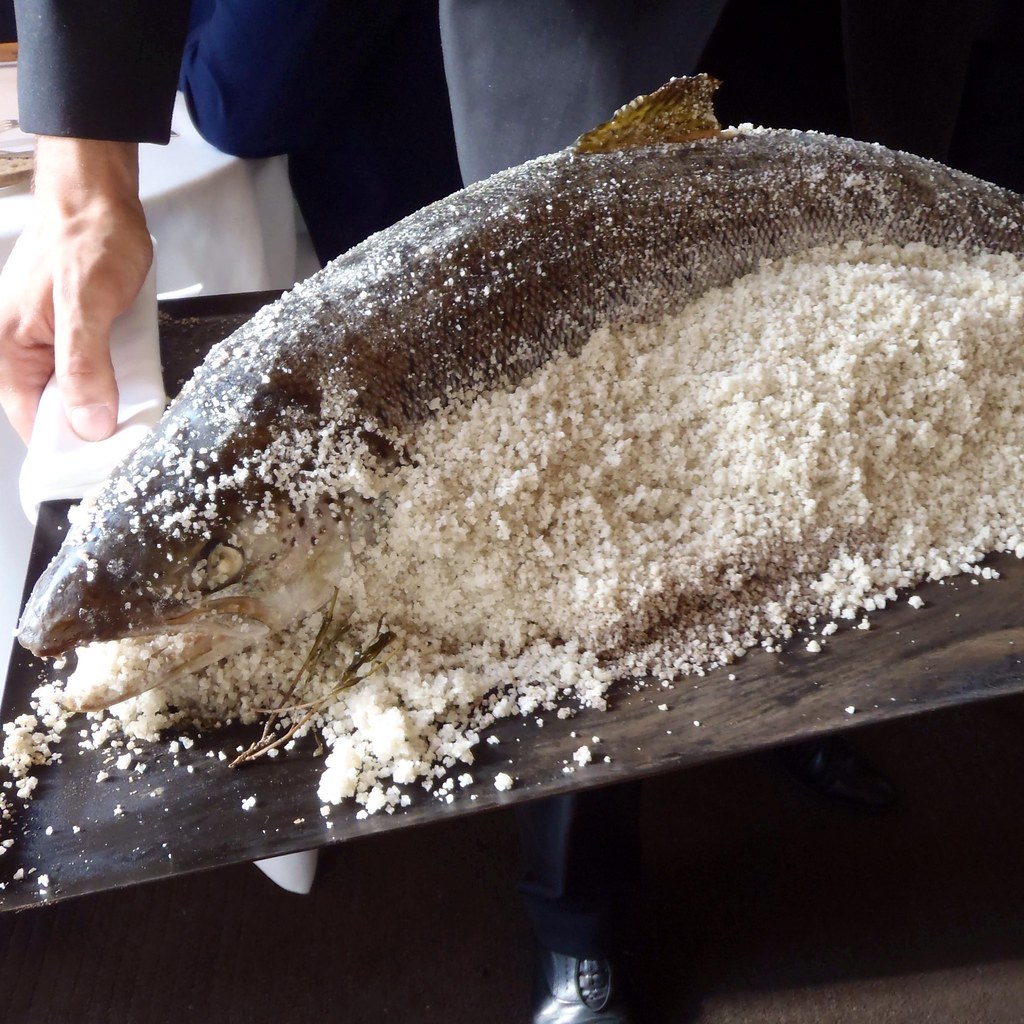
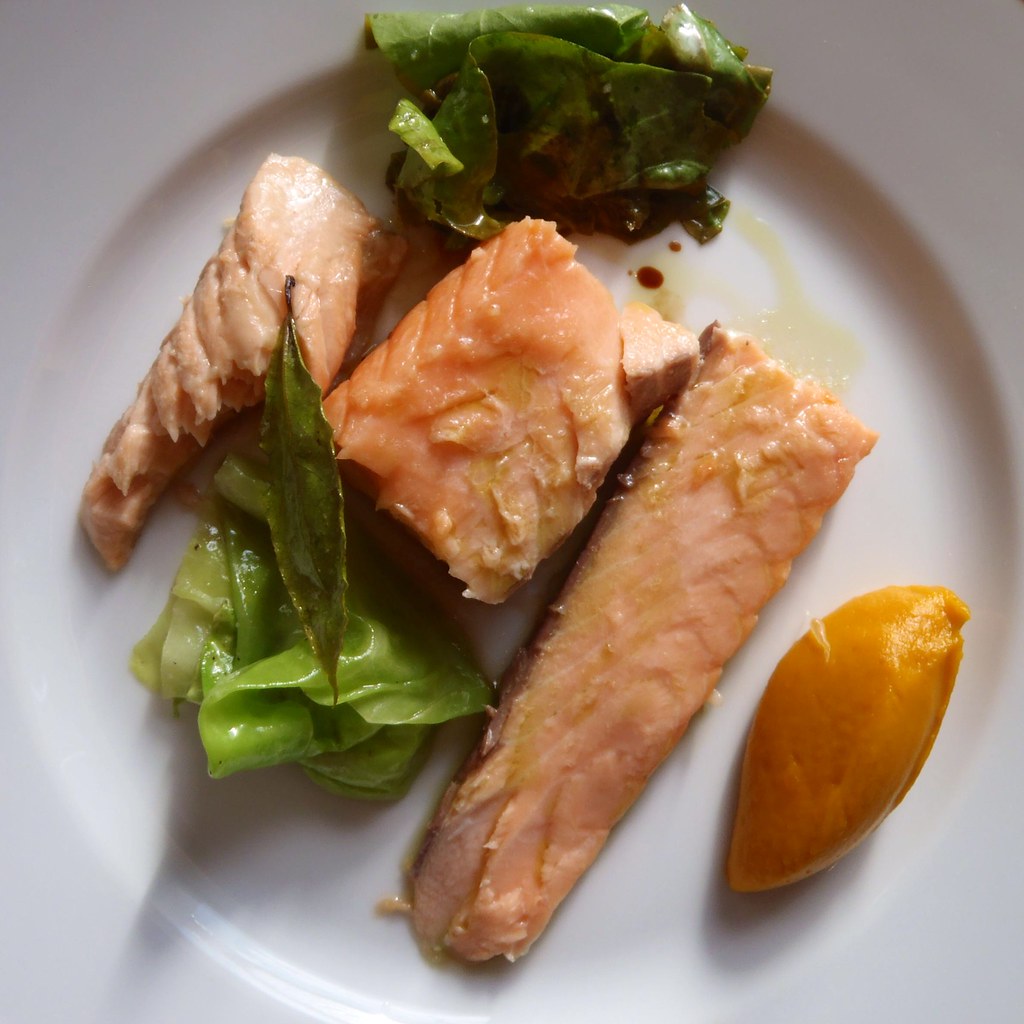
One of the best meals I've ever had was at Alain Passard's L'Arpège in Paris. My friend Ellen and I were lucky enough to score reservations for lunch there and chose to go with the tasting menu. After what seemed like a dozen divine courses, the main entree was brought out for us to see:
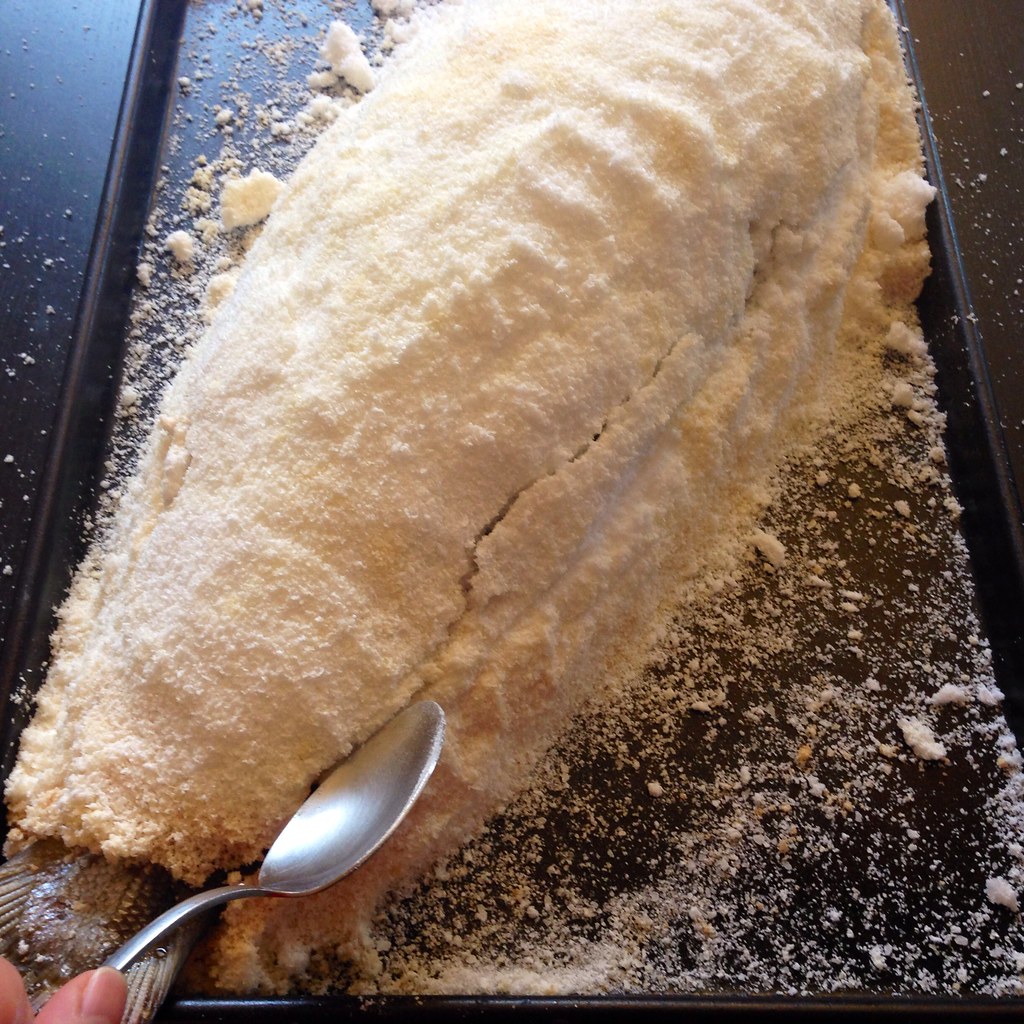
An entire salmon, roasted in a salt crust! After they showed it to us, it was brought back to the kitchen and filleted and plated.
The technique of baking in a salt crust seals in the moisture and essentially allows the fish to steam in its own juices. Because you remove as much salt as you can before plating the fish, it doesn't get overly salty and is just seasoned perfectly. Best of all, it makes for a really impressive main course at your next dinner party.
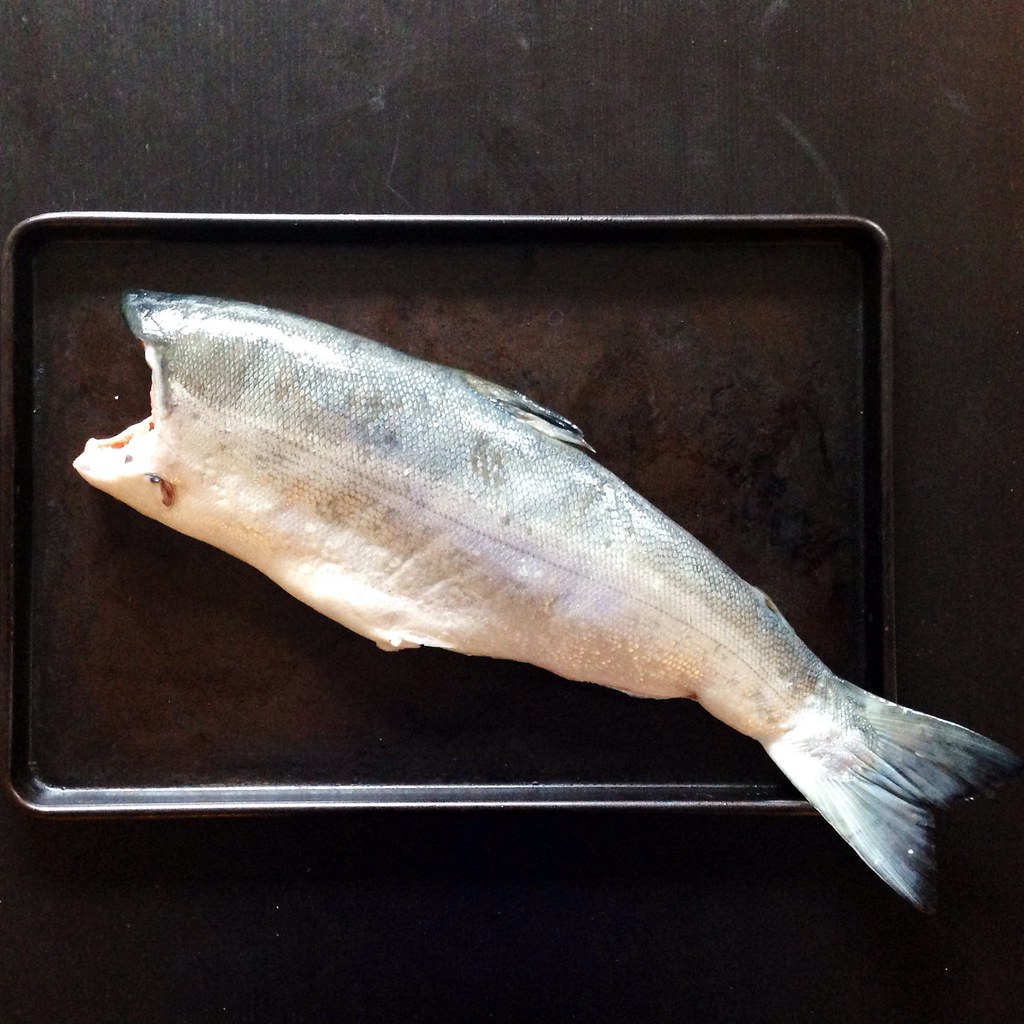
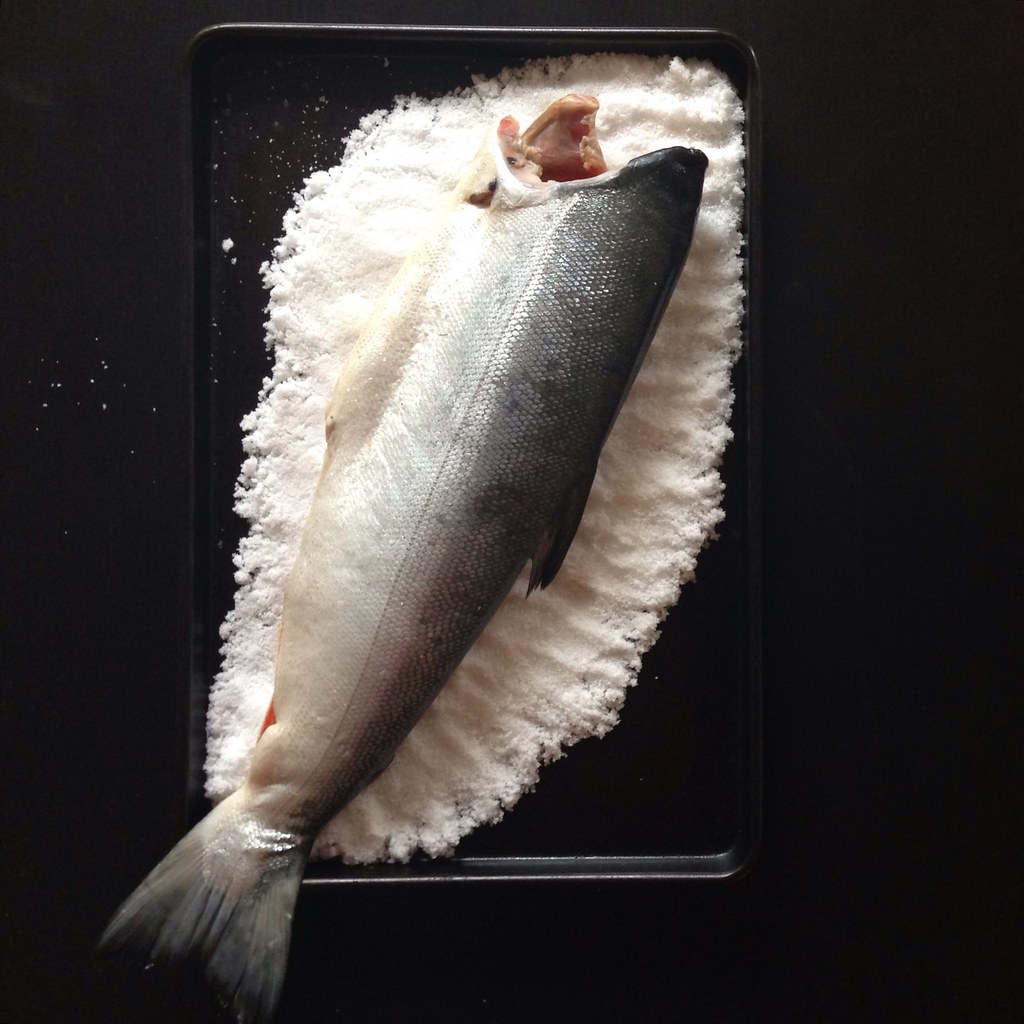
So when I was in Seattle a couple of weeks ago and found out that Copper River salmon was back in season, I knew I had to get one and try salt-baking at home. I bought a whole fish from Pike Place Fish Co., had it packed in a 48 hour box, and hauled it all the way back home with me.
I was a little disappointed that the fish came headless, but in the long run, it was probably better for me since I was squeamish enough having to deal with the fins and all. Thankfully it was already gutted and cleaned for me.
Regardless of whether you get a whole or headless fish, you definitely want to make sure the skin is left on so that there's a barrier between the meat and the salt crust.
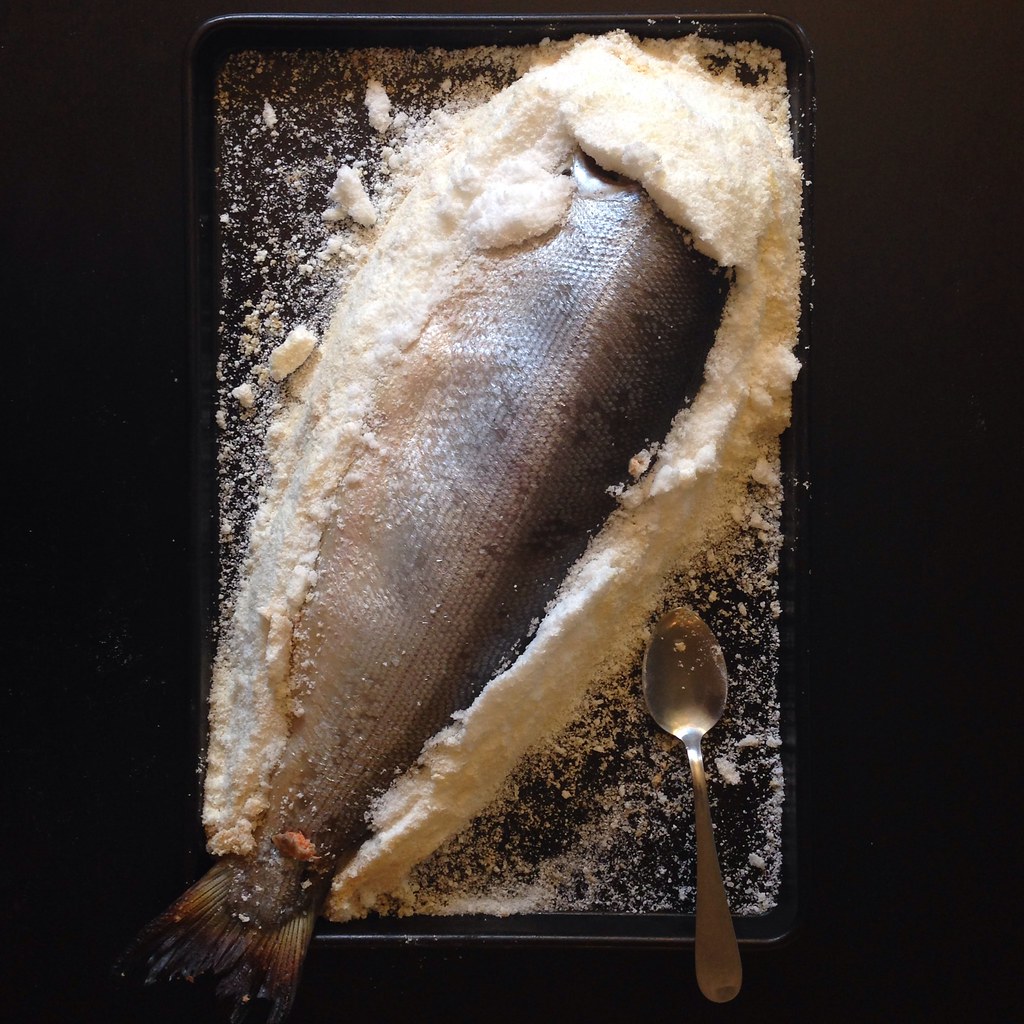
When the fish is done, the crust should be really hard; don't be afraid to give it a couple of good whacks to break it open. If you're lucky like I was, the top of the crust will come off in one big piece. I recommend doing this in front of your dinner guests, receiving yours oohs and ahs, and then bringing the fish back to the kitchen to plate.
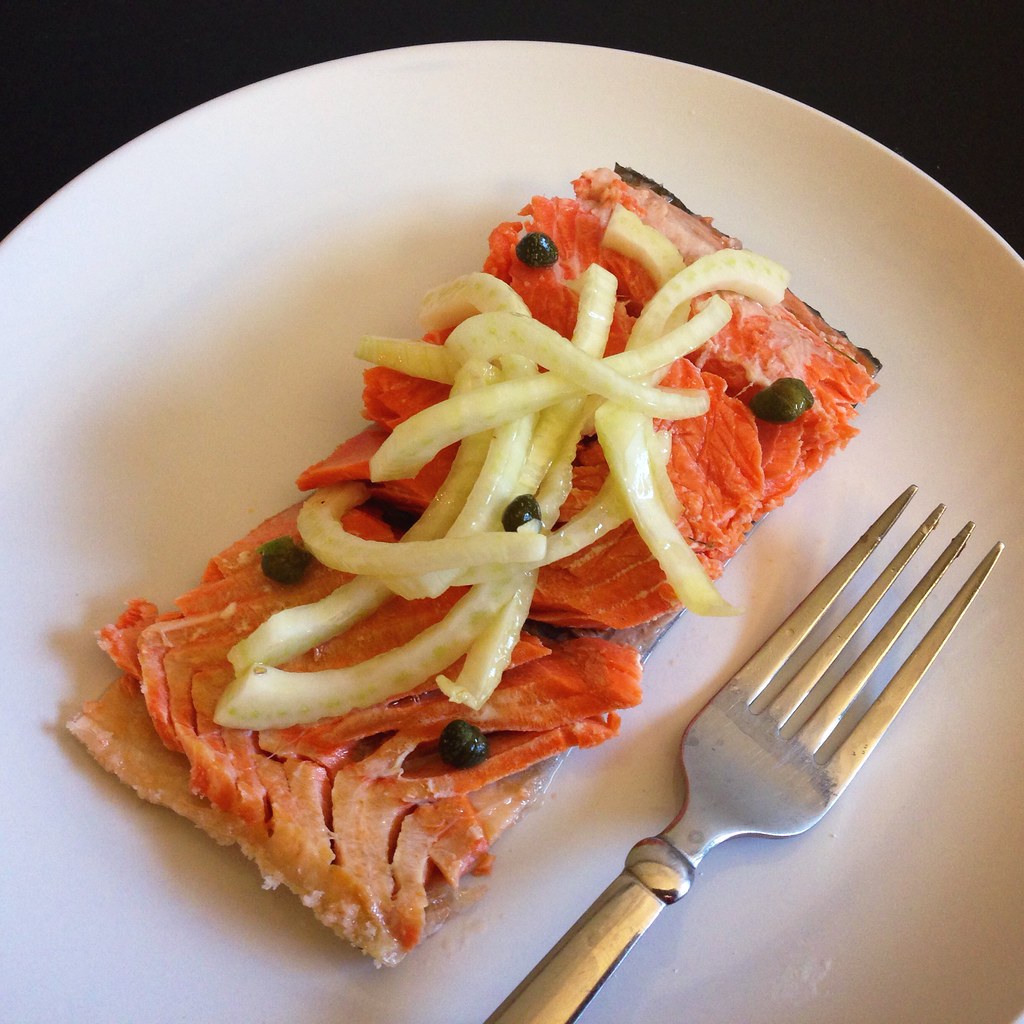
I chose to pair the fish with an orange fennel salad so that the crunch and acidity would complement the rich, tender salmon.
Orange and Fennel Salt-Baked Salmon (adapted from Food and Wine)
serves 5-6
One 3-lb. salmon, gutted and cleaned, with skin on
2 large oranges
1 large fennel bulb
48 oz. (3 lbs.) kosher salt, plus more for seasoning
2 egg whites
1/2 cup water
1 tablespoon fresh lemon juice
2 tablespoons olive oil
1 tablespoon capers, rinsed
Preheat the oven to 450°F.
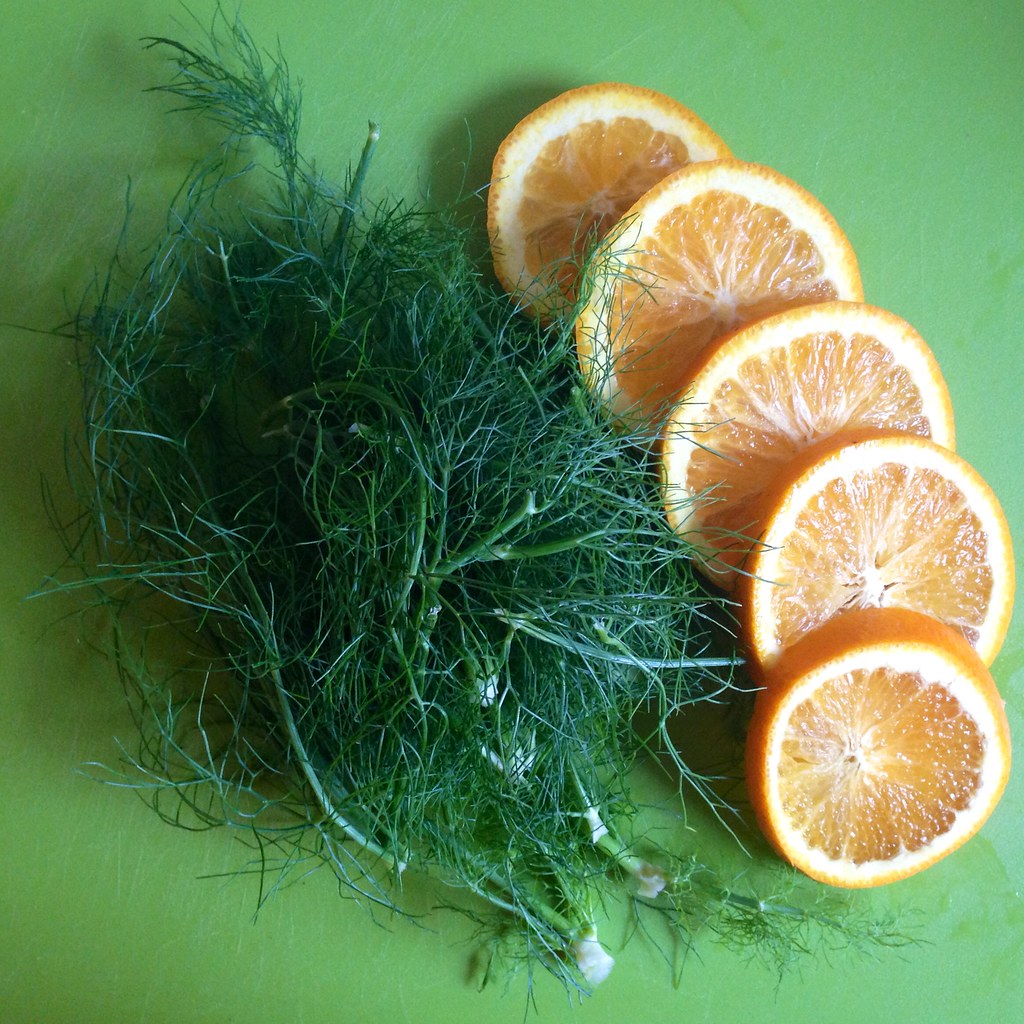
Slice one of the oranges and juice the other one. Cut the feathery tops off of the fennel bulb and save.
In a large bowl, mix the salt, egg whites, and a 1/4 cup of water. It should feel like wet sand. Add more water if needed, to get a consistency where you can pack the salt together. Spread about half of the salt on a large sheet pan in the approximate shape of the fish.
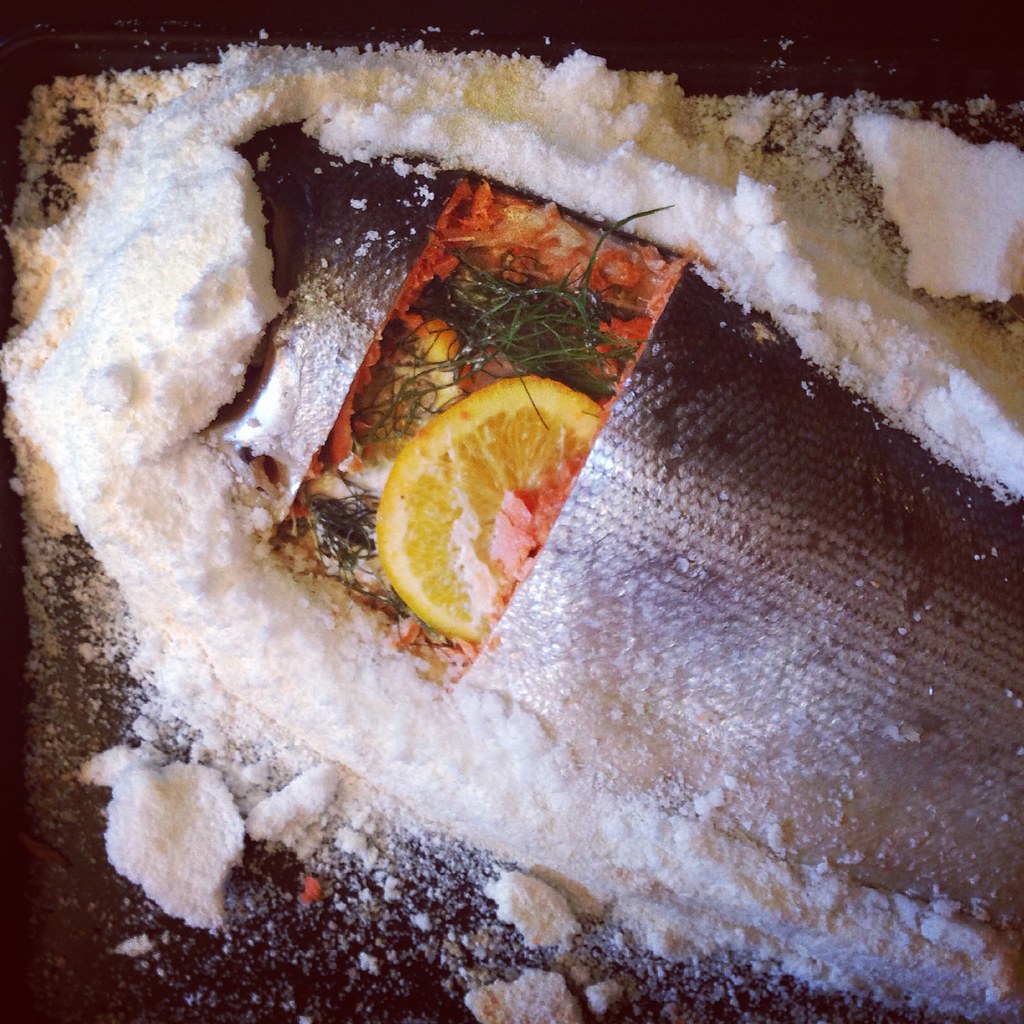
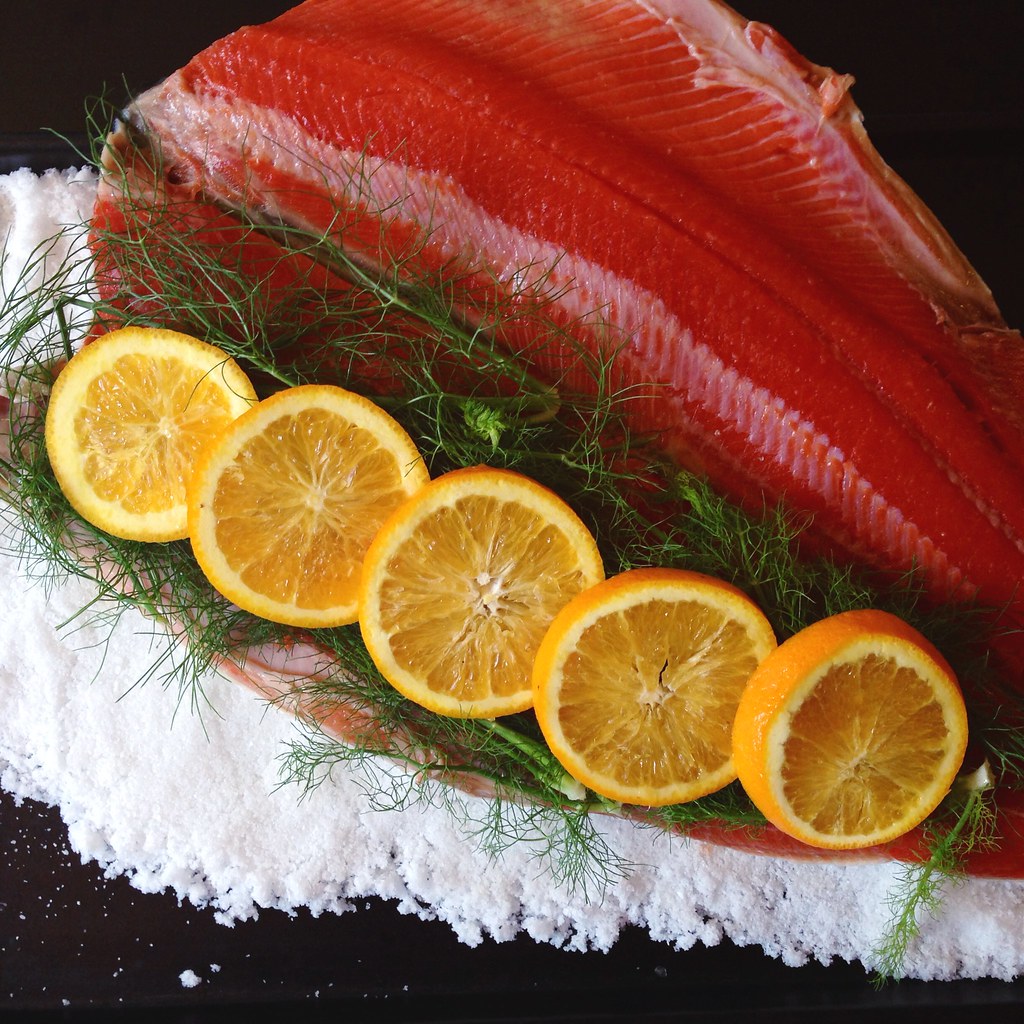
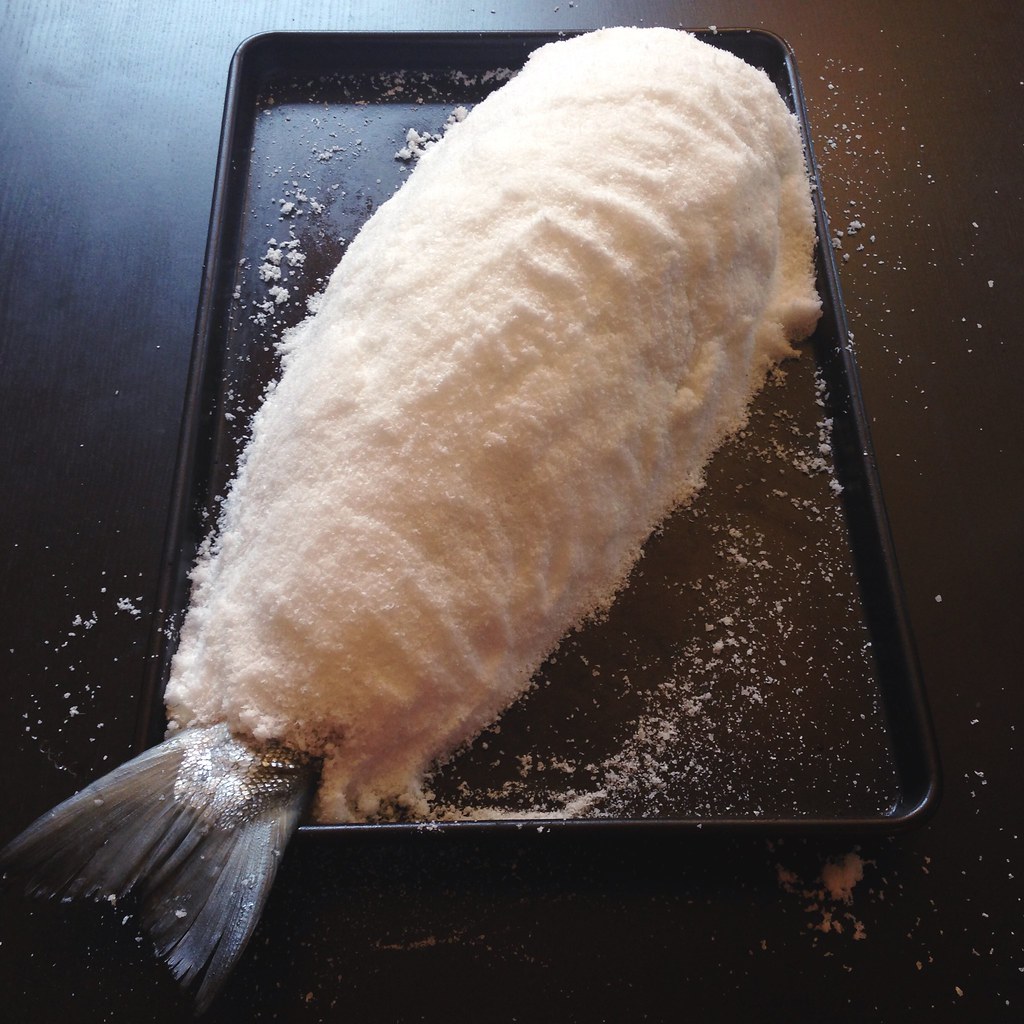
Remove the fins from the salmon and pat dry. Stuff the fish with the orange slices and fennel tops. Place on top of the salt. Use the rest of the salt to cover the body of the fish entirely; you may leave the head and tail uncovered. Pack the salt tightly to seal. Bake in the oven for 25 minutes.
In the meantime, slice the fennel bulb in half, remove the core, and slice the rest thinly. Toss with the orange juice, lemon juice, olive oil, and capers. Salt and pepper to taste.
When the fish is done, allow to rest in the salt for 10 minutes. Using a knife or spoon, tap the salt crust sharply to crack.
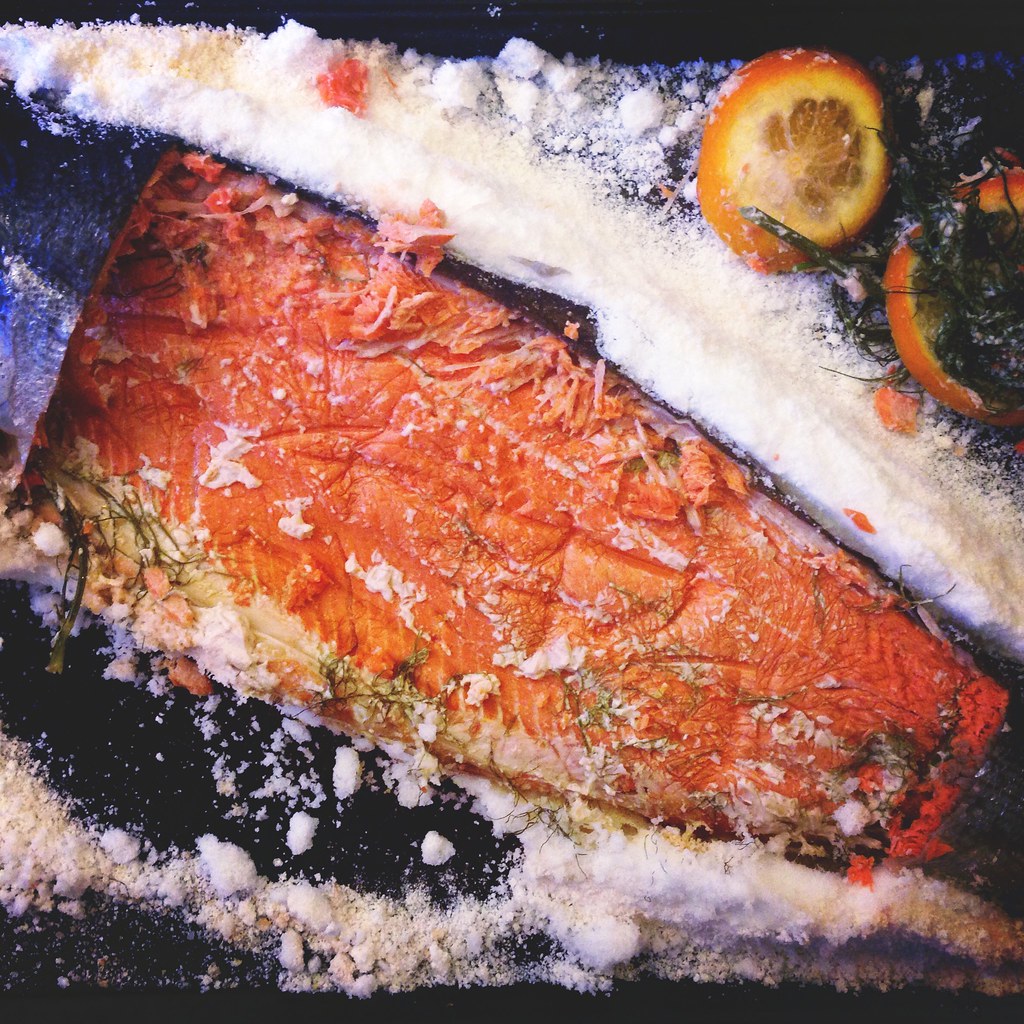
Remove the crust and brush off any remaining salt. Portion out the top half of the fish. Remove the bones, orange slices, and fennel tops, and portion out the bottom half.
Serve the fillets with orange fennel salad on top.
Honestly, this is such a fool-proof way of cooking fish that I could've probably used regular farm-raised salmon and gotten similar results. But just look at how red that Copper River salmon is! I think the next time I get my hands on one, I want to try citrus curing it.
Next: Speculoos (Cookie Butter) Ice Cream and Mini Stroopwafel Ice Cream Sandwiches
Previously: Sesame-Crusted Tofu
Last Year: Homemade Cronuts
Four Years Ago: Elote (Mexican Grilled Corn)
An entire salmon, roasted in a salt crust! After they showed it to us, it was brought back to the kitchen and filleted and plated.
The technique of baking in a salt crust seals in the moisture and essentially allows the fish to steam in its own juices. Because you remove as much salt as you can before plating the fish, it doesn't get overly salty and is just seasoned perfectly. Best of all, it makes for a really impressive main course at your next dinner party.
So when I was in Seattle a couple of weeks ago and found out that Copper River salmon was back in season, I knew I had to get one and try salt-baking at home. I bought a whole fish from Pike Place Fish Co., had it packed in a 48 hour box, and hauled it all the way back home with me.
I was a little disappointed that the fish came headless, but in the long run, it was probably better for me since I was squeamish enough having to deal with the fins and all. Thankfully it was already gutted and cleaned for me.
Regardless of whether you get a whole or headless fish, you definitely want to make sure the skin is left on so that there's a barrier between the meat and the salt crust.
When the fish is done, the crust should be really hard; don't be afraid to give it a couple of good whacks to break it open. If you're lucky like I was, the top of the crust will come off in one big piece. I recommend doing this in front of your dinner guests, receiving yours oohs and ahs, and then bringing the fish back to the kitchen to plate.
I chose to pair the fish with an orange fennel salad so that the crunch and acidity would complement the rich, tender salmon.
Orange and Fennel Salt-Baked Salmon (adapted from Food and Wine)
serves 5-6
One 3-lb. salmon, gutted and cleaned, with skin on
2 large oranges
1 large fennel bulb
48 oz. (3 lbs.) kosher salt, plus more for seasoning
2 egg whites
1/2 cup water
1 tablespoon fresh lemon juice
2 tablespoons olive oil
1 tablespoon capers, rinsed
Preheat the oven to 450°F.
Slice one of the oranges and juice the other one. Cut the feathery tops off of the fennel bulb and save.
In a large bowl, mix the salt, egg whites, and a 1/4 cup of water. It should feel like wet sand. Add more water if needed, to get a consistency where you can pack the salt together. Spread about half of the salt on a large sheet pan in the approximate shape of the fish.
Remove the fins from the salmon and pat dry. Stuff the fish with the orange slices and fennel tops. Place on top of the salt. Use the rest of the salt to cover the body of the fish entirely; you may leave the head and tail uncovered. Pack the salt tightly to seal. Bake in the oven for 25 minutes.
In the meantime, slice the fennel bulb in half, remove the core, and slice the rest thinly. Toss with the orange juice, lemon juice, olive oil, and capers. Salt and pepper to taste.
When the fish is done, allow to rest in the salt for 10 minutes. Using a knife or spoon, tap the salt crust sharply to crack.
Remove the crust and brush off any remaining salt. Portion out the top half of the fish. Remove the bones, orange slices, and fennel tops, and portion out the bottom half.
Serve the fillets with orange fennel salad on top.
Honestly, this is such a fool-proof way of cooking fish that I could've probably used regular farm-raised salmon and gotten similar results. But just look at how red that Copper River salmon is! I think the next time I get my hands on one, I want to try citrus curing it.
Next: Speculoos (Cookie Butter) Ice Cream and Mini Stroopwafel Ice Cream Sandwiches
Previously: Sesame-Crusted Tofu
Last Year: Homemade Cronuts
Four Years Ago: Elote (Mexican Grilled Corn)
Subscribe to:
Posts (Atom)